
From: Shadowvine
The lore surrounding Envenomed Ink tells a tale of a secretive order of scribes and scholars who sought to protect their knowledge and prevent unauthorized access to their works. To accomplish this, they developed a unique recipe for Envenomed Ink. This ink was not only used for writing and drawing but also served as a potent defense mechanism against potential thieves or spies.
The ingredients required to create Envenomed Ink are as follows:
- Shadowvine venom: This rare and deadly substance is harvested from the venomous vines that grow deep within the shadowy forests. The venom possesses powerful paralyzing properties, making it a crucial component of the ink’s effectiveness.
- Ink base: A standard ink base, which consists of a combination of various pigments, binders, and preservatives. The ink base provides the necessary consistency and stability for the mixture.
- Quill: A traditional writing instrument made from a bird’s feather or a specialized pen. The quill is used to apply the Envenomed Ink to parchment.
The process of creating Envenomed Ink involves mixing the Shadowvine venom with the ink base. The venom is carefully extracted from the Shadowvine plant and combined with the base, creating a potent concoction. The resulting ink appears indistinguishable from regular ink, making it difficult to detect without prior knowledge.
To utilize Envenomed Ink, one must write or draw with it on a piece of parchment. Upon contact with the skin, the venom seeps through and is absorbed, causing localized paralysis and intense pain. The effects are temporary, lasting for a limited duration, but they serve as a potent deterrent against unauthorized access or theft.
Assigning values to the various aspects of Envenomed Ink:
- Tier One Stats:
- Duration of effects: 1 hour.
- Paralysis radius: 2 inches from the area of contact.
- Pain intensity: Moderate.
- Skills gained:
- Alchemy: Intermediate.
- Calligraphy: Beginner.
- Preparation:
- Skill required: Alchemy (Intermediate).
- Time required: 2 hours.
- Success rate: 80%.
- Cost:
- Shadowvine venom: Rare and expensive. Obtained through dangerous expeditions or specialized merchants.
- Ink base: Moderate cost. Accessible in most markets or acquired through alchemical suppliers.
- Quill: Low cost. Easily obtained from various sources.
- Process:
- Extract the Shadowvine venom from the plant using specialized tools.
- Mix the venom with the ink base in precise measurements.
- Stir the mixture thoroughly until a homogeneous consistency is achieved.
- Transfer the Envenomed Ink to a suitable container for storage and usage.
- Tags:
- Defense: Envenomed Ink serves as a defensive measure against unauthorized access to writings.
- Stealth: Its disguised appearance makes it difficult to discern from regular ink.
- Alchemy: Requires alchemical knowledge and skills for preparation.
- Additional: Venomous Script, Paralytic Pigment, Hidden Toxin, Secret Scribe’s Tool, Guarded Parchment, Clandestine Ink, Painful Parchment, Shadow Writing, Incapacitating Quill, Trapped Document
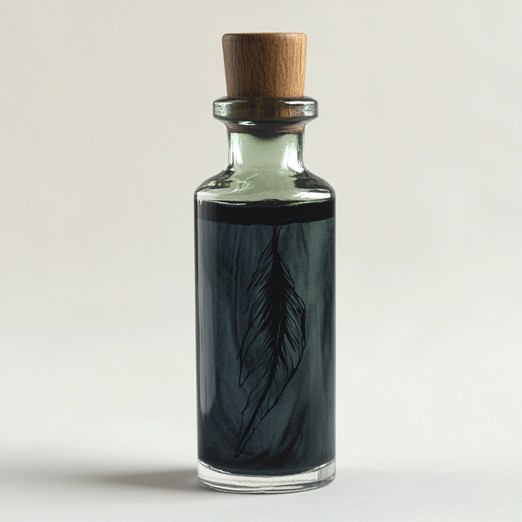
The recipe for Envenomed Ink is not readily available in common marketplaces or openly sold. Due to its potentially dangerous nature and its association with clandestine activities, the recipe is typically kept secret and guarded by the few individuals or organizations that possess the knowledge.
However, in certain secretive and exclusive circles, such as underground guilds, secretive academies, or hidden societies, individuals with the necessary reputation, connections, or skills might gain access to the recipe. This could involve proving their trustworthiness, demonstrating proficiency in alchemy or calligraphy, or being initiated into the inner circles of the order that originally developed the ink.
Once someone obtains the Envenomed Ink, they can use it strategically for various purposes. Some potential uses include:
- Security Measures: The Envenomed Ink can be employed to protect valuable documents, scrolls, or books from unauthorized access. By writing or drawing with the ink on specific sections of parchment, the creator can establish invisible traps that will immobilize or inflict pain on anyone attempting to tamper with the protected item.
- Hidden Messages: The ink can be utilized to conceal secret messages within seemingly innocuous documents. The sender can write a message using the Envenomed Ink, knowing that only the intended recipient, who possesses the antidote or protection against the venom’s effects, will be able to decipher and read the message.
- Personal Defense: In dire situations, individuals who possess Envenomed Ink can use it as a means of self-defense. By quickly applying the ink to their skin, they can create a temporary barrier against potential attackers, causing paralysis and pain upon contact.
- Covert Operations: The ink finds utility in espionage or covert operations, enabling agents to incapacitate or distract enemies without leaving visible traces. By subtly applying the ink to objects or surfaces, they can create traps or obstacles that hinder pursuit or provide a strategic advantage.
The end results of using Envenomed Ink depend on the specific intent of the user. Whether it is to safeguard knowledge, communicate covertly, defend oneself, or execute secretive operations, the ink’s effects serve as a powerful tool in achieving those goals. However, caution must be exercised to ensure that the ink is handled responsibly and with awareness of its potential consequences.
Scrivener’s Shadow and the Price of Forbidden Knowledge
From scrolls brittle with age, penned in a script so ancient it predates most known alphabets, comes this fragmented tale. It speaks of the origin of a substance known as the Scrivener’s Shadow, the Envenomed Ink in the common tongue—a tool of protection, deception, and ultimately, sorrow.
In the time before time, when knowledge was a guarded treasure and writing was a sacred art, there existed an order of scribes. They were not mere copyists, but keepers of secrets, entrusted with the most dangerous and potent knowledge of their era. Their sanctum, a hidden library nestled in the heart of a vast, shadowy forest, was said to contain truths that could shatter the world.
The chief of these scribes, a figure known only as the Silent Quill, was a master of his craft, his wisdom as deep as the roots of the ancient trees that surrounded their sanctuary. Yet, he was troubled. He foresaw a time when their knowledge might fall into the wrong hands, a time of chaos and destruction.
He sought a way to protect their precious scrolls, not with walls of stone or guards of steel, but with the very ink they used to record their wisdom. He delved into forbidden arts, seeking a way to imbue their writing with a defense, a silent guardian that would strike down any who sought to steal their secrets.
The Silent Quill’s অনুসন্ধান (search) led him to the legend of the Shadowvine, a plant said to grow in the deepest parts of the forest, where the light of neither sun nor moon could reach. Its venom was whispered to be potent enough to paralyze the body, leaving the mind trapped in a cage of flesh.
After years of searching, the Silent Quill found the Shadowvine. He extracted its venom, a dangerous and painstaking process. He then combined it with their sacred ink, creating a concoction that appeared innocuous, yet held a deadly secret.
The Scrivener’s Shadow, as it came to be known, was used to pen their most precious scrolls. To the untrained eye, it was merely ink, but any who touched it without the proper knowledge or antidote would find themselves paralyzed, their bodies unresponsive, their minds screaming in silent agony.
For a time, the Silent Quill’s creation served its purpose. The library remained safe, the secrets within protected. But the tale, as it survives, hints at a darker turn. It is said the Silent Quill became consumed by his own creation, his mind poisoned by the power he had wielded. The other scribes, fearing the darkness that had taken root in their leader, sealed the remaining ink and the formula. The final fate of the Silent Quill is lost to time. The only surviving text that may have contained the information was treated with the ink, and any who have tried to read it have suffered its effects.
Moral: Knowledge is a powerful tool, but its misuse can lead to ruin. The desire to protect can become a form of imprisonment, and even the noblest intentions can be twisted by the darkness they seek to control. True wisdom lies not just in safeguarding secrets, but in understanding the price of the power they hold. And that sometimes the greatest threats come not from outside, but from within.
Suggested conversions to other systems:
Call of Cthulhu 7th Edition
Envenomed Ink
- Description: A seemingly normal black ink that shimmers with a faint, oily green iridescence when closely inspected. It smells faintly of forest flora and something acrid, like almonds.
- Sanity Loss: 0/1 (upon realizing the true nature of the ink or witnessing its effects).
- Effects: When the ink comes into contact with bare skin, the victim must make a CON roll.
- On a failure: The victim suffers localized paralysis in the affected area for 1d6 hours. The paralysis is accompanied by intense pain (reduce all skills involving the affected area by half, or impose a Penalty Die on actions involving that area, at the Keeper’s discretion). They also lose 1d3 hit points.
- On a success: The victim feels a sharp, stinging pain but suffers no paralysis.
- On an extreme success: The victim is unaffected.
- Antidote: A successful Medicine roll can be used to create an antidote from rare herbs, negating the ink’s effects if applied within one hour of contact. A successful Pharmacy roll can be used to make the antidote beforehand, given the proper ingredients.
- Availability: Extremely rare; likely found only in the possession of secretive orders, ancient libraries, or individuals with a deep knowledge of forbidden lore.
- Cost: Priceless (or an exorbitant amount if found for sale).
- Build: 0
- Example Use in Game: An investigator discovers an ancient text written in Envenomed Ink. As they touch the page, they must make a CON roll. On a failure, their hand becomes paralyzed and excruciatingly painful, making it difficult to hold objects or perform delicate tasks.
Blades in the Dark
Envenomed Ink
- Item Type: Alchemical
- Quality: Tier III (reflecting the rarity and potency of the ingredients)
- Usage: Applied to documents or used for writing.
- Effect: When a creature touches a surface coated in this ink, they suffer level 2 harm “Paralyzing Pain” unless they have some form of protection or an appropriate antidote. The harm is localized to the area that contacted the ink. A character might also use this on an item they are holding as a improvised weapon, giving them potency on attacks made to inflict harm on others.
- Tags: Delicate, Single Use (per application), Subtle, Dangerous
- Availability: Rare; acquired through special opportunities or crafted by those with access to lost lore and rare ingredients.
- Crafting:
- Requirements: A character must have access to an alchemical lab and expend one downtime activity. They must also make an appropriate roll (e.g., Study or Tinker) with a standard effect of creating a Tier I version of the ink. The difficulty and tier of the roll can be adjusted based on the resources available and the character’s connections. Each attempt to increase the Tier requires rare ingredients and another downtime activity.
- Cost: The cost of acquiring Shadowvine venom and a suitable ink base. This could range from 4 to 6 coin or more, depending on the circumstances.
- Example Use in Game: A Whisper uses Envenomed Ink to write a seemingly innocuous letter. When a rival gang member intercepts and reads the letter, they suffer level 2 harm “Paralysing Pain” in their hands, potentially dropping the letter or becoming incapacitated.
Dungeons & Dragons 5th Edition
Envenomed Ink
- Item Type: Poison (contact), rare
- Description: This ink appears as a normal, high-quality black ink, but it shimmers with a faint green iridescence under close inspection.
- Effect: A creature that comes into contact with this ink must make a DC 15 Constitution saving throw.
- On a failed save: The creature is poisoned for 1 hour. While poisoned in this way, the creature’s speed is halved, it has disadvantage on ability checks, attack rolls, and saving throws using Dexterity, it cannot take reactions, and the area touched by the ink is wracked with pain, giving disadvantage on any action that involves using that body part.
- On a successful save: The creature feels a sharp, burning pain but suffers no other effects.
- Antidote: A lesser restoration spell or similar magic can remove the poisoned condition. An herbalist with proficiency in Nature can attempt to make an antidote, making a DC 15 Intelligence (Nature) check.
- Crafting: Crafting Envenomed Ink requires proficiency with the Alchemist’s Supplies and access to rare ingredients, including Shadowvine venom and a special ink base, valued at no less than 500 gp total. The process typically requires 1 workweek of effort and a successful DC 18 Intelligence (Nature) check.
- Example Use in Game: A rogue uses Envenomed Ink to write a false document. When a guard touches the document, they must make a DC 15 Constitution saving throw or suffer the effects of the poison, becoming slower and less effective in combat.
Knave
Envenomed Ink
- Item: Poison (Contact)
- Description: A seemingly ordinary vial of black ink that glistens with a faint green sheen when closely examined.
- Effect: When this ink comes into contact with bare skin, the creature must make a দুর্গ্রহ (Misfortune) save.
- On a failure: One limb (determined randomly or by the GM) is paralyzed for 1d6 hours. While paralyzed, any roll that involves using that limb automatically fails.
- On a success: The creature feels an intense, burning pain but suffers no other effects.
- Antidote: A successful Medicine check (DC 15) can create an antidote from rare herbs, negating the ink’s effects if applied within 10 minutes of contact.
- Inventory Slot: 1
- Cost: 600 sp (if found for sale, which is highly unlikely)
- Crafting: Creating Envenomed Ink would be a significant undertaking, requiring access to rare ingredients like Shadowvine venom and a deep understanding of alchemy. The GM should determine the specific challenges involved.
- Example Use in Game: A character uses Envenomed Ink to write a trap message on a door. When a guard touches the door, they must make a Misfortune save. On a failure, their arm becomes paralyzed, making them unable to effectively use their weapon or open the door.
Fate (Fate Core)
Envenomed Ink
- Aspect: Hidden Agony Ink
- Description: Seemingly normal ink that delivers debilitating pain and paralysis on contact.
- Permissions: Can be used by anyone, though characters with skills related to writing, poisons, or traps might gain additional benefits or insights when using or creating the ink.
- Cost: Creating the ink would likely require overcoming a significant challenge to acquire rare ingredients like Shadowvine venom and a specialized ink base (using Lore, Contacts, or other appropriate skills). The difficulty should reflect the campaign’s power level.
- Effect:
- Create an Advantage: A character can use the ink to create an advantage, such as “Incapacitating Trap” on a document or “Painful Mark” on an object. The difficulty of creating the advantage depends on the intended use and the target’s awareness.
- Invoke: Once the target is affected by the ink, the “Hidden Agony Ink” aspect can be invoked for a +2 bonus or a reroll on any roll related to the ink’s effects, such as increasing the severity of the pain or overcoming the target’s resistance.
- Overcome: The effects of the ink can be overcome with an action, representing the target’s attempts to resist the pain or find an antidote. The difficulty to overcome the aspect should be based on how the ink was used and the potency of the venom.
- Consequences: If a target fails to overcome the effects and takes consequences, they could be mild (like “Numbing Pain”), moderate (like “Paralyzed Limb”), or even severe, depending on the circumstances and the user’s intent.
- Example Use in Game: A character uses Envenomed Ink to write a warning on a trapped chest, creating the advantage “Incapacitating Trap” with one free invoke. When a thief touches the chest, the character invokes the aspect for a +2 bonus on their roll to resist the ink’s effects. If the thief fails, they might suffer a mild or moderate consequence, depending on the severity of their failure.
Numenera & Cypher System (Cypher System Rulebook)
Envenomed Ink
- Type: Cypher (consumable)
- Level: 1d6+2
- Effect: When this ink comes into contact with bare skin, the target must succeed on a Might defense roll (difficulty equal to the cypher’s level) or become paralyzed in the affected area for one minute. While paralyzed, the target also suffers from intense pain, making them impaired on all tasks. The paralysis affects a single limb or area of the body, as determined by the GM. The pain can be negated with a successful Intellect defense roll.
- Form: A small vial of seemingly ordinary black ink that shimmers with a faint green iridescence under close inspection.
- Depletion: 1 (single use per application)
- Example Use in Game: A Nano uses Envenomed Ink (level 4) to write a warning on a door. When a guard touches the door, they must make a Might defense roll (difficulty 4). On a failure, their arm becomes paralyzed, and they are impaired due to the pain.
Pathfinder (Pathfinder 2nd Edition)
Envenomed Ink
- Item Type: Alchemical Item (Consumable, Contact, Poison)
- Level: 5
- Price: 300 gp
- Usage: Held in 1 hand; Bulk: L
- Activate: Interact
- Description: This seemingly normal ink is infused with Shadowvine venom, causing paralysis and pain on contact.
- Effect: When a creature touches this ink, they must make a DC 17 Fortitude save.
- Critical Success: The creature is unaffected.
- Success: The creature feels a sharp, burning pain but suffers no other effect.
- Failure: The creature is paralyzed for 1 round and slowed 1 for 1 minute. The creature is also wracked with pain, taking a -2 status penalty on all Perception checks and skill checks for the duration.
- Critical Failure: The creature is paralyzed for 1 minute and slowed 1 for 10 minutes. They also suffer the effects of a failure.
- Crafting: To craft Envenomed Ink, you must have the Alchemical Crafting feat and be at least 5th level. You need a formula for the ink, access to an alchemist’s lab, and raw materials worth 120 gp, including Shadowvine venom and a special ink base. The Craft activity takes 4 days.
- Example Use in Game: A rogue uses Envenomed Ink to write a false message. When a guard touches the message, they must make a DC 17 Fortitude save or be paralyzed and slowed, suffering intense pain for the duration.
Savage Worlds (Savage Worlds Adventure Edition)
Envenomed Ink
- Type: Special Gear (Poison)
- Description: A vial of seemingly ordinary black ink that inflicts paralysis and pain on contact.
- Effects: When a creature comes into contact with this ink, they must make a Vigor roll at -2.
- Success: The creature resists the worst effects and is only Shaken.
- Failure: The creature is paralyzed in the affected limb (or their entire body, if applied to the face or a large area) for 1d6 rounds. They are also wracked with pain, suffering a -2 penalty to all Trait rolls for the duration of the paralysis.
- Critical Failure: As failure, but the duration of the paralysis is 1d6 minutes.
- Antidote: An antidote can be created with a successful Healing roll at -4, requiring rare herbs and taking 1d6 hours.
- Cost: 400 (reflecting the rarity of the venom)
- Availability: Rare; found only in black markets or in the possession of those who deal in dangerous substances.
- Example Use in Game: A character uses Envenomed Ink to write a warning on a trapped door. When a guard touches the door, they must make a Vigor roll at -2. On a failure, their arm becomes paralyzed, and they suffer a -2 penalty to all Trait rolls due to the intense pain.
Shadowrun (Shadowrun, Sixth World)
Envenomed Ink
- Type: Chemical Toxin (Contact)
- Description: A specially prepared ink, infused with a potent paralytic venom. It appears சாதாரண (normal) until it makes contact with skin.
- Vector: Contact
- Speed: 1 Combat Turn (Immediate)
- Penetration: -2
- Power: 8
- Effect: When Envenomed Ink comes into contact with a target’s skin, they must resist with Body + Toxin Resistance. Each net hit reduces the damage by 1. Failure inflicts 8 boxes of Physical damage and causes the target to be paralyzed for a number of Combat Turns equal to the net hits scored by the attacker, to a minimum of 1. The damage is resisted with Body only.
- Special: This toxin is designed to be difficult to detect with the naked eye. Apply a -2 dice pool modifier to any tests to visually identify the ink as anything other than சாதாரண (normal).
- Availability: 12R (Restricted)
- Cost: 600¥
- Street Index: 2
- Example Use in Game: A decker uses Envenomed Ink to write a message on a datapad. When a security guard picks up the datapad, they must resist the toxin’s effects with Body + Toxin Resistance. Failure results in Physical damage and temporary paralysis.
Starfinder (Starfinder Core Rulebook)
Envenomed Ink
- Item Type: Poison (Contact)
- Level: 7
- Price: 700 credits
- Description: This seemingly ordinary ink is infused with a potent neurotoxin, causing paralysis and pain on contact.
- Saving Throw: Fortitude DC 16
- Track: Physical
- Frequency: 1/round for 6 rounds
- Effect:
- Initial Effect: 1d6 Dexterity damage and staggered for 1 round.
- Secondary Effect: 1d4 Dexterity damage and the target is paralyzed for one round.
- Cure: 1 save
- Delivery: Contact. The ink can be applied to a surface or object as a full action. The next creature to touch the object with bare skin is affected by the poison.
- Bulk: L
- Example Use in Game: An operative uses Envenomed Ink to write a false report. When a bureaucrat touches the report, they must make a DC 16 Fortitude save or suffer Dexterity damage and be staggered, followed by further damage and paralysis.
Traveller (Mongoose Traveller 2nd Edition)
Envenomed Ink
- Item: Toxin (Contact), TL 10
- Description: This ink appears normal but contains a potent paralytic agent that is absorbed through the skin.
- Effect: When a target touches Envenomed Ink, they must make an Endurance check (difficulty 8+). On a failure, they suffer 2d6 Dexterity damage and are paralyzed for one round. The paralysis can be resisted with a further successful Endurance check each round.
- Special: Detecting the venom within the ink without specialized equipment requires a successful Investigate check (difficulty 10+).
- Availability: 8
- Cost: Cr600
- Mass: Negligible
- Legality Class: 4 (Restricted)
- Example Use in Game: A spy uses Envenomed Ink to write a seemingly harmless note. When the recipient touches the note, they must make an Endurance check or suffer Dexterity damage and temporary paralysis.
Warhammer Fantasy Roleplay (Warhammer Fantasy Roleplay 4th Edition)
Envenomed Ink
- Type: Poison (Contact)
- Description: A seemingly normal ink that has been infused with a potent venom, causing paralysis and intense pain.
- Availability: Rare
- Cost: 8 GC (if found for sale)
- Encumbrance: 0
- Effects: When a creature comes into contact with Envenomed Ink, it must make a Challenging (+0) Endurance Test.
- Failure: The creature suffers the effects of the Paralyzed Condition for 1d10 rounds and takes a -10 penalty to all Tests due to the intense pain for the duration. If a limb was affected, only that limb is Paralyzed. If the head or torso is affected, the entire body is Paralyzed.
- Success: The creature feels a sharp, burning pain but suffers no other effects.
- Special: Identifying Envenomed Ink for what it is requires a Hard (-20) Perception Test, or a successful Trade (Apothecary) test.
- Preparation Time: Can be applied to a surface as a Standard Action.
- Trade: Unlikely to be found for sale.
- Example Use in Game: An assassin uses Envenomed Ink to write a false order. When a messenger touches the order, they must make a Challenging (+0) Endurance Test or suffer paralysis in the affected limb and be wracked with pain.