
Definition: Zephyrian is a unique language in the TTRPG world, with a primary emphasis on conveying a sense of airiness, freedom, and ethereal beauty. It is a language that evokes the lightness and grace of the wind, making it a powerful tool for communication and connection with natural elements. Zephyrian can be expressed through airy vocalizations, telepathic whispers, and delicate body movements.
Linguistic Attributes and Characteristics:
- Ethereal Vocalizations: Zephyrian employs soft and airy vocal sounds, resembling gentle breezes, fluttering wings, and melodic chimes. These sounds create an atmosphere of tranquility and harmony.
- Telepathic Whispers: Proficient users of Zephyrian can communicate through telepathic whispers, carrying their messages on the wind to distant recipients. This telepathic link allows for discreet and mystical communication.
- Graceful Body Language: Zephyrian emphasizes fluid and graceful body movements, including flowing gestures and elegant postures. These non-verbal cues enhance the sense of airiness in the language.
Cultural Identity and Users:
- Nature Guardians and Druids: Zephyrian is often practiced by nature guardians and druids who use the language to communicate with natural elements, such as the wind, trees, and animals.
- Wind Dancers and Aerial Performers: In some cultures, Zephyrian is employed by wind dancers and aerial performers to add an ethereal and enchanting quality to their performances.
Rarity, Type, Script, Source, and History:
- Rarity: Zephyrian is relatively rare, as it requires a deep attunement to natural elements and a sense of harmony with the wind. Skilled users are not common.
- Type: Zephyrian is primarily a language of harmony and connection with nature. It is not used for general communication but rather as a tool to commune with the elements.
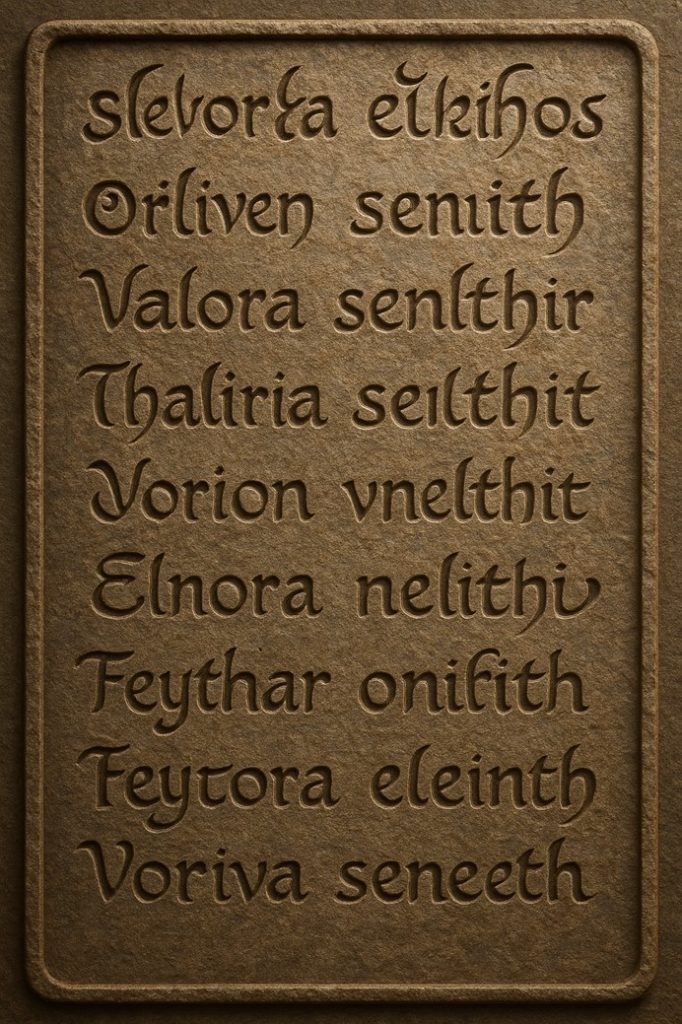
- Script: Zephyrian does not rely on a traditional written script. Instead, it is represented through flowing symbols and delicate patterns that evoke the sense of air and wind.
- Source and History: The origins of Zephyrian are steeped in ancient traditions of nature worship and elemental magic. Some legends suggest it was bestowed upon ancient mystics by the spirits of the wind, while others claim it was discovered in ancient scriptures of natural wisdom.
Sensory Experience: Learning and using Zephyrian can be a spiritually uplifting experience. Practitioners must attune themselves to the elements, allowing the wind to guide their thoughts and emotions. When Zephyrian is directed at others, they may feel a sense of tranquility and connectedness with the natural world, as if they are dancing with the wind itself.
Tags: airiness, freedom, ethereal, tranquility, harmony, wind, elemental, grace, telepathy, uplift, flow, serenity, connection, natural, mystical, fluidity, enchantment
Inscriptions
- “Selvora thainel” – The wind carries truth eternal.
- “Miralon vesith” – Lightness is the strength of freedom.
- “Calira ovest” – Harmony flows as air unseen.
- “Thalorin veyra” – The sky whispers what earth forgets.
- “Elyria selthos” – Beauty drifts upon every breeze.
- “Voriel amath” – To soar is to be unbound.
- “Neriva thalos” – Grace lingers where winds pass.
- “Silvaron eneth” – The breath of nature guards us.
- “Orilath venira” – Air remembers all voices.
- “Zerath univo” – The unseen currents guide.
- “Feylora mirith” – Every gust is a blessing.
Political Oaths
- “Ithar velorin thalos” – I vow to rule with the freedom of the wind.
- “Seron valeth amira” – I promise to be light, not burden.
- “Orvian thelir” – By sky’s breath, I lead with harmony.
- “Thalara senith” – My hand shall flow like air, never chained.
- “Velora nimeth” – I swear to hear whispers carried by the wind.
- “Seylith onara” – My oath shall drift yet endure, like the breeze.
- “Carion thaluvra” – By currents unseen, I shall guide.
- “Noriveth silan” – As clouds move, so shall I bring change.
- “Elthira voneth” – I bind my spirit to the sky’s freedom.
- “Voriel selan” – May no chains bind those I govern.
- “Zeythra amivra” – In air and grace, my authority rests.
Cultural Ceremonies
- “Sivora elenith” – Together we rise upon the wind.
- “Oriven thalara” – Our joy flows as air unending.
- “Valora serith” – May the sky dance with us tonight.
- “Erylon velthas” – The breeze blesses this gathering.
- “Thariel sonivra” – Harmony drifts through every heart.
- “Nivara selthir” – May we remain light as air in unity.
- “Zerion thaleth” – The winds carry our voices to eternity.
- “Elnora velith” – Our spirits soar together above earth.
- “Feythar onelis” – In freedom, we find our kinship.
- “Voriva senel” – The breath of life joins us as one.
- “Celira thuneth” – We honor the winds that bind us gently.
Breath of Sky-Tongue
Once, in the days when the world was not bound by weight, and the mountains themselves drifted like clouds, there was a tongue known only to the winds. Some call it Zephyrian, though the sound is not perfect, for the true word is said to be lighter than air, carried always forward and never returned. This tale, carved poorly in broken lines and retold by many mouths, speaks of how it came into the hands of mortals.
The legend begins with the Sky-Walkers, a people who wished never to touch the soil again. They climbed high cliffs and raised their dwellings on ropes and bridges that swayed with every breeze. Yet even in the height of their homes, they longed to speak with the winds themselves, for the winds bore secrets: they carried the scent of distant harvests, the songs of unseen birds, and the warnings of storms yet unborn.
It is said that the first to hear the Zephyrian tongue was a dancer who leapt from ridge to ridge, her movements so graceful that the wind itself followed her steps. In one leap, she vanished into cloud, and when she returned she bore a voice unlike any other. Her words fell soft, like feathers, yet all who listened felt lifted as if their hearts might drift away. She taught her people the flowing gestures, the airy tones, the whispers that seemed to come from nowhere and everywhere at once.
But the teaching was imperfect, for mortals are heavy, and the language was light. It broke when carved, it faltered when shouted, it faded when anger or fear was put within it. Still, enough remained that the Sky-Walkers could call breezes to cool their feasts, could carry words to neighbors across valleys, could soothe even the wild hawks so they circled gently instead of striking.
The broken tale continues: one day the Sky-Walkers quarreled over who should guide the clan. One spoke in the tongue of stone, harsh and commanding; another in the tongue of iron, sharp and unbending. But a third rose and spoke in Zephyrian. Her voice was so soft the crowd leaned forward, yet all could hear as though carried into their very chests. The winds swirled, the clouds parted, and her words were chosen, not because of force but because they felt like freedom. She was crowned not by crown, but by the breath of air itself.
Many centuries later, the language is half-lost, half-remembered. What survives are fragments carved as flowing spirals on stone, misread by scribes as bird-scratch or wave-line. Travellers say those who sleep on high ridges still dream of voices calling in Zephyrian, promising that the wind remembers every name ever spoken. And in some lonely valleys, when the breeze carries whispers, the people fall silent, believing that an old spirit is speaking the forgotten words once more.
Moral of the Story: That which is light may carry more weight than stone; a word spoken gently may move mountains where a shout cannot.