
Definition: Vexorin is a unique language with a strong emphasis on expressing anger and intense emotions. It serves as a potent tool for unleashing and manipulating fury, allowing speakers to influence the emotions and actions of others through the sheer force of their wrath.
Linguistic Attributes and Characteristics:
- Aggressive Vocabulary: Vexorin is characterized by a lexicon filled with aggressive and incendiary words that evoke anger, resentment, and outrage.
- Sharp Tones and Rhythms: The language employs sharp, staccato tones and rhythms, mirroring the explosiveness and unpredictability of anger. Its delivery feels like a verbal assault, meant to provoke strong reactions in the listener.
- Emotional Infusion: Vexorin has the unique ability to infuse emotions into its words, making the listener feel the anger and hostility projected by the speaker.
Structure: Vexorin follows a structured pattern with a focus on powerful and emphatic expressions. It encourages the use of repetition and intensified word formations to heighten the emotional impact.
Cultural Identity and Usage: Vexorin is commonly used among beings with a strong inclination towards aggressive behavior, including warriors, conquerors, and individuals seeking to assert dominance. Certain secretive groups may also utilize Vexorin to manipulate others’ emotions and incite conflict.
Rarity, Type, Script, Source, and History:
- Rarity: Vexorin is relatively rare, as its power to incite anger and aggression makes it potentially dangerous in the wrong hands. Those who possess knowledge of Vexorin often guard it closely.
- Type: Vexorin falls under the category of magical languages due to its ability to evoke strong emotions and influence others. It is considered a dangerous and forbidden language by some, but a potent tool for others seeking to exploit its power.
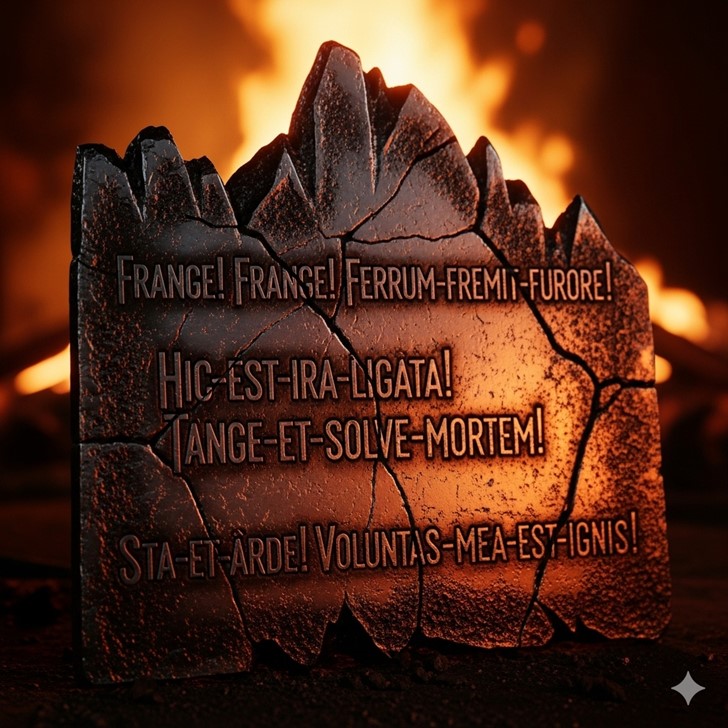
- Script: Vexorin’s script appears jagged and forceful, reflecting the language’s aggressive nature.
- Source and History: The origins of Vexorin are shrouded in mystery, with legends attributing its creation to powerful entities or ancient beings who sought to tap into the primal energy of anger. Its history is entwined with stories of wars, uprisings, and conquests.
Sensory Experience: When spoken aloud, Vexorin has a visceral impact on both the speaker and the listener. The words seem to pierce the air with their intensity, creating an aura of tension and hostility. Listeners often experience heightened anxiety and agitation, as the language directly affects their emotions. In telepathic communication, the emotions behind Vexorin’s words are transmitted with even greater potency, amplifying the recipient’s feelings of anger or agitation.
Vexorin is a powerful and dangerous language with an emphasis on anger and intensity. Its linguistic attributes, cultural significance, and intense sensory experience make it a formidable tool in the hands of those seeking to harness and manipulate emotions for their own purposes.
Tags: Aggressive, Wrathful, Hostile, Incendiary, Manipulative, Dominance, Staccato, Harsh, Forceful, Jagged Script, Magical, Emotion-Infused, Rare, Dangerous, Martial, Visceral, Provoking
Inscriptions
- As it sounds: Frange! Frange! Ferrum-fremit-furore! Meaning: Break! Break! The iron screams with fury!
- As it sounds: Hic-est-ira-ligata! Tange-et-solve-mortem! Meaning: Here is wrath, bound! Touch and unleash death!
- As it sounds: Cor-meum-est-fornax! Anima-tua-est-cibus! Meaning: My heart is a furnace! Your soul is its fuel!
- As it sounds: Sile! Sile! Echo-doloris-loquitur! Meaning: Silence! Silence! The echo of pain is speaking!
- As it sounds: Ego-sum-finis! Finis-qui-venit-clamans! Meaning: I am the end! The end that comes screaming!
- As it sounds: Ossa-in-pulvere! Odium-in-aeternum! Meaning: Bones to dust! Hatred forever!
- As it sounds: Non-quiescet! Non-dormiet! Sitis-sanguinis-mea! Meaning: It will not rest! It will not sleep! My thirst for blood!
- As it sounds: Clamor-fractorum! Hoc-est-carmen-meum! Meaning: The cry of the broken! This is my song!
- As it sounds: Cinis! Cinis! Cinis-erit-omnia! Meaning: Ash! Ash! Ash is what all will become!
- As it sounds: Rumpo-catenas! Vexo-mundum! Meaning: I shatter the chains! I vex the world!
- As it sounds: Sta-et-arde! Voluntas-mea-est-ignis! Meaning: Stand and burn! My will is fire!
Political Oaths
- As it sounds: Per-iram-meam! Iuro-non-pacem-sed-bellum! Meaning: By my rage! I swear not peace, but war!
- As it sounds: Sanguine-hostium! Hanc-coronam-affirmo! Meaning: With the blood of enemies! I claim this crown!
- As it sounds: Lex-mea-est-dolor! Paena-mea-est-exitium! Meaning: My law is pain! My punishment is annihilation!
- As it sounds: Frango-eos! Ut-videant-vim-meam! Frango-eos! Meaning: I break them! So they see my strength! I break them!
- As it sounds: Tremo-terram-gressu! Muto-caelum-clamore! Meaning: I make the earth tremble with my step! I make the sky change with my shout!
- As it sounds: Non-flecto! Non-cedo! Solum-contero! Meaning: I do not bend! I do not yield! I only crush!
- As it sounds: Hoc-ferrum-est-lingua-mea! Acies-est-verbum-meum! Meaning: This blade is my tongue! Its edge is my word!
- As it sounds: Odium-est-thronus-meus! Timor-est-regnum-meum! Meaning: Hatred is my throne! Fear is my kingdom!
- As it sounds: Hostis! Hostis! Da-mihi-hostem-ad-rumpendum! Meaning: Enemy! Enemy! Give me an enemy to shatter!
- As it sounds: Fidelitas-nulla! Sola-est-dominatio! Meaning: Loyalty is nothing! There is only domination!
- As it sounds: Aspice-faciem-irae! Et-genuflecte-in-cinere! Meaning: Look upon the face of wrath! And kneel in the ashes!
Cultural Ceremonies
- As it sounds: Sanguis-pro-sanguine! Ira-pro-ira! Nunc! Nunc! Meaning: Blood for blood! Wrath for wrath! Now! Now!
- As it sounds: Clamor! Clamor! Fiat-clamor-belli! Meaning: Shout! Shout! Let the war cry be made!
- As it sounds: Hic-nascitur-miles! Cor-eius-est-telum! Meaning: Here a warrior is born! Their heart is a weapon!
- As it sounds: Ecce-praeda! Risus-noster-est-flagellum-eorum! Meaning: Behold the spoils! Our laughter is their whip!
- As it sounds: In-igne-irae! Coniuncti-sumus! Meaning: In the fire of anger! We are forged together!
- As it sounds: Memini-iniuriae! Vexatio-mea-non-finet! Meaning: I remember the insult! My vexation will not end!
- As it sounds: Tene-ferrum-hoc! Senti-iram-gentis! Meaning: Hold this weapon! Feel the fury of our people!
- As it sounds: Saltate-in-flammis! Saltate-in-ruinis-hostium! Meaning: Dance in the flames! Dance on the ruins of our enemies!
- As it sounds: Nomen-eorum! Dele-nomen-eorum! Ex-memoria! Meaning: Their name! Erase their name! From memory!
- As it sounds: Pellis-haec-est-tropaem! Cicatrix-haec-est-honor! Meaning: This skin is a trophy! This scar is an honor!
- As it sounds: Bibe-hanc-iram! Fiat-tua! Nunc-age! Meaning: Drink this wrath! Let it become yours! Now, act!
Forging of Rage-Singer
This account is copied from the Iron Tablets of Kor, which are said to be a flawed transcription of the blood-pacts carved on the Unbroken Mountain. The original script is forceful, and many symbols seem to have been struck into the stone with great anger, making a true reading difficult.
In the age before the age, there was a people, whose name is lost [the symbol suggests ‘the Unbent’ or perhaps ‘those Who Do Not Yield’]. They were not mighty. Their bodies were small, and they were hunted by the great beasts and oppressed by the giants who claimed the mountains. They lived in fear, and their words were the soft, frightened whispers of Tremorin. They prayed to gods who did not answer, and their sorrow was a boundless, quiet sea.
There was among them a smith, a woman named Brynja. The symbol for her name means both ‘armor’ and ‘fury contained’. Brynja was not a hunter or a chieftain. She hammered metal, and with each strike, her resentment grew. She resented the beasts that stole their children. She resented the giants who demanded tribute. She resented the silent gods. Her anger was a fire in her forge that never cooled.
One night, as she hammered a blade, a giant came to her forge to demand his tribute. He mocked her small size and the weakness of her people. He spat on the fire of her forge. In that moment, something within Brynja broke. The quiet language of fear left her. She did not cower. She did not plead. A sound tore from her throat, a word that had never been spoken. It was sharp, jagged, and full of all her contained hate. “Frange!” she screamed. It was not a plea. It was a command born of pure wrath.
The giant laughed, but the word had power. It was not a word of pleading, but a word of doing. The half-formed blade in her hand glowed with the heat of her rage. The air itself seemed to grow tense, hostile. The giant’s laughter faltered, and for the first time, he felt a sliver of the anxiety her people felt daily. Confused, he struck at her.
Brynja met his blow not with a shield, but with another word, harsher than the first. “Dolor!” she bellowed. The word was an assault. The giant stumbled back, not from a physical blow, but because the word itself made him feel a phantom pain, the sting of a thousand insults, the burn of his own arrogance turned against him. Her words were not describing her anger; they were infusing him with it.
This was the birth of Vexorin. It was a language not of the mind, but of the furious heart. Brynja, the first Rage-Singer, began to forge not just metal, but words. She hammered out a vocabulary of aggression. She found the sharp, staccato rhythm of a war hammer on an anvil. She taught her people. She taught them to stop whispering their fear and to instead shout their anger.
When the giants came again, the people met them not with spears, but with a war cry of Vexorin. Their combined shout, an overwhelming wave of pure, weaponized fury, struck the giants. The giants, who had only ever known the fear of others, were now assaulted by an emotion they could not comprehend. They felt rage, resentment, and hostility not their own. They became agitated, confused. They turned on one another in their bewilderment, their great strength undone by the incendiary power of a language forged in a crucible of hate. The people of the Unbent did not need to be strong of arm; their words had become their weapons. Brynja, the Rage-Singer, had taught them that the greatest power was not in enduring pain, but in returning it.
Moral of the story: Fear, when allowed to fester in silence, is a cage. But when that same fear is hammered and forged in the fire of a defiant heart, it can become the key, the sword, and the crown.