
From: Bloodmarked Scions
Level One Stats:
- Arcana Check Bonus: +2 bonus to Arcana checks related to shadow or necromantic magic
- Skills: Provides a bonus to Arcana checks related to shadow or necromantic magic
- Cost: 200 gold pieces (or the equivalent value)
- Tags: Magical, Forbidden, Arcane, Shadowcraft, Necromantic, Ritualistic, Cursed, Dark Arts, Tome, Esoteric, Occult, Eldritch
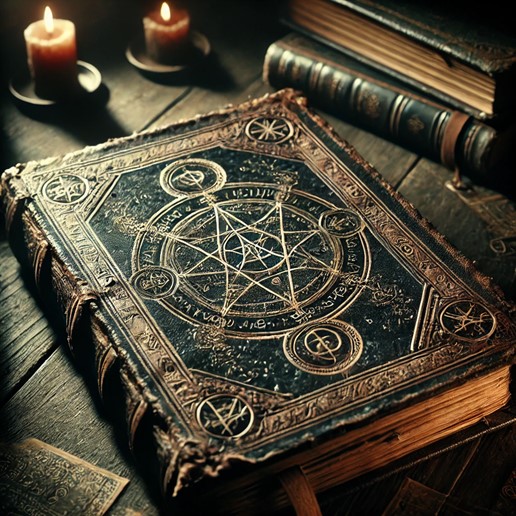
Lore and Use: The Grimoire of Shadows is an ancient tome bound in dark leather, its pages filled with cryptic symbols and spells. This grimoire contains a collection of shadow magic, dark rituals, and forbidden knowledge. The origin of the grimoire may be shrouded in mystery, but its power and potential for both good and evil are undeniable.
The Grimoire of Shadows grants the character a +2 bonus to Arcana checks specifically related to shadow or necromantic magic. Its dark and forbidden contents provide the character with deeper insights into the manipulation of shadows and the secrets of necromancy. This bonus reflects the character’s enhanced understanding and mastery of these specific magical disciplines.
Furthermore, the grimoire grants the character access to a selection of shadow-themed spells and rituals. These spells and rituals are typically centered around manipulating shadows, creating illusions, draining life force, or summoning and controlling undead creatures. The specific spells and rituals available can be determined by the game’s rules and the character’s proficiency in shadow or necromantic magic.
The Grimoire of Shadows is highly coveted by those who seek to harness the power of darkness. Its possession often carries a sense of danger and intrigue, as it contains forbidden knowledge that can corrupt or empower those who delve into its pages. The character may attract the attention of shadow-wielding individuals, secretive organizations, or even rival spellcasters who desire the grimoire’s power for their own purposes.
However, the grimoire’s contents and its association with dark magic can also bring challenges and consequences. The character may face prejudice or suspicion from others who view the grimoire as a tool of evil. Authorities or religious organizations may consider the possession or use of the grimoire as illegal or heretical, leading to potential conflicts and confrontations.
The character must also be cautious when utilizing the grimoire’s powers. The darker nature of the magic contained within may carry a moral burden, and the character’s choices and actions may have unforeseen consequences. Additionally, the character may encounter beings or forces attracted to the dark energies of the grimoire, which could lead to dangerous encounters or unexpected alliances.
The Grimoire of Shadows provides a bonus to Arcana checks related to shadow or necromantic magic and grants access to a selection of shadow-themed spells and rituals. It represents a gateway to the forbidden and mysterious realms of shadow magic and necromancy, offering both power and peril to those who wield it. The character’s possession of the grimoire opens up opportunities for exploration, experimentation, and the potential for wielding formidable dark magic.
Spells found in the Grimoire of Shadows:
- Veil of Twilight
- School: Illusion
- Casting Time: 1 action
- Range: Self (20-foot radius)
- Duration: Concentration, up to 10 minutes
- Description: The caster surrounds themselves with a shroud of shadowy mist, obscuring their form and those within the radius. Creatures within the area gain a +5 bonus to Stealth checks and have advantage on saving throws against being detected by sight. The shadows also reduce the light level by one step (bright light to dim light, dim light to darkness). The caster can see through the mist clearly, and enemies have disadvantage on attack rolls against creatures within the Veil.
- Shadowrend
- School: Necromancy
- Casting Time: 1 action
- Range: 60 feet
- Duration: Instantaneous
- Description: The caster conjures a jagged blade of pure darkness that strikes a single target within range. The target must make a Constitution saving throw. On a failed save, the target takes 4d8 necrotic damage and is weakened, reducing their Strength score by 2 (minimum of 1) until they complete a long rest. On a successful save, the target takes half damage and suffers no Strength reduction. The darkness clings to the wound, making magical healing less effective, reducing any healing by half for 1 hour.
- Wraithwalk
- School: Transmutation
- Casting Time: 1 action
- Range: Self
- Duration: Concentration, up to 1 minute
- Description: The caster’s body becomes ethereal and shadow-like, allowing them to move through solid objects and avoid physical attacks. The caster gains resistance to all non-magical damage, and they can move through creatures and objects as if they were difficult terrain. If the caster ends their turn inside an object, they take 1d10 force damage. While in this form, the caster cannot attack or cast spells that require somatic components.
- Necrotic Tether
- School: Necromancy
- Casting Time: 1 action
- Range: 30 feet
- Duration: Concentration, up to 1 minute
- Description: The caster conjures a tether of dark energy that links them to a target creature within range. The target must make a Wisdom saving throw. On a failed save, the tether drains life force from the target, dealing 2d10 necrotic damage each turn the tether is maintained. The caster heals for half the damage dealt. The tether remains until the target moves out of range, the caster ends the spell, or the target succeeds on a subsequent Wisdom saving throw at the end of each of its turns. If the target dies while tethered, the caster gains temporary hit points equal to the target’s original hit points.
- Umbral Legion
- School: Conjuration
- Casting Time: 1 minute
- Range: 90 feet
- Duration: Concentration, up to 10 minutes
- Description: The caster summons a legion of shadowy figures from the nether realms to fight on their behalf. The shadows form 4d6 shadow warriors, each with the stats of a Shadow (as per your game’s rules), but with increased hit points (an additional 10 HP each). These shadow warriors follow the caster’s commands and attack enemies within the caster’s line of sight. They are immune to necrotic damage and have resistance to all non-magical attacks. The shadows disperse when the spell ends or when they are destroyed. While the spell is active, the caster can command the shadows to perform complex maneuvers or create distractions, using the shadows’ presence to control the battlefield.
The Grimoire of Shadows is a rare and forbidden artifact, coveted by those who dabble in shadow magic and necromancy. Its sale and acquisition are shrouded in secrecy, often taking place in hidden or obscure locations where the laws of the land are either bent or outright ignored. Below are the types of shops where the Grimoire of Shadows might be bought or sold in the world of Saṃsāra, along with the associated costs:
- The Obsidian Veil
- Type: Underground Curio Shop
- Location: In the shadowed alleys of a bustling metropolis, beneath a seemingly ordinary apothecary, hidden behind a concealed door.
- Description:
- The Obsidian Veil is known only to those who move in the circles of the arcane and forbidden. The shop is filled with shelves lined with ancient tomes, cursed relics, and powerful artifacts. The air is thick with the scent of incense and dust, and the walls are adorned with faded tapestries depicting long-forgotten rituals.
- The shopkeeper is an enigmatic figure, cloaked in robes that seem to absorb the light. Transactions here are conducted in whispers, and payment is often made in rare ingredients, valuable secrets, or other arcane items.
- Cost: 600 gold pieces (or equivalent value in rare magical components or services).
- The Midnight Bazaar
- Type: Black Market Stall
- Location: A secretive marketplace that appears only under the cover of darkness in the ruins of an ancient city, accessible by those with knowledge of its ever-changing location.
- Description:
- The Midnight Bazaar is a gathering of traders and merchants dealing in the illicit and the arcane. Here, one can find anything from cursed weapons to bottled souls. The Grimoire of Shadows might be sold by a masked merchant, whose stall is filled with forbidden texts and dangerous artifacts.
- The Bazaar is frequented by those who walk the thin line between light and dark—mercenaries, warlocks, and shadowy figures of all kinds. Bargaining is fierce, and those who wish to make a purchase must be prepared to offer more than just coin.
- Cost: 500 gold pieces, or 400 gold pieces with a successful Charisma (Persuasion) check, plus a favor or service owed to the merchant.
- The Ebon Library
- Type: Hidden Arcane Library
- Location: Beneath an ancient cathedral in a city known for its scholars and spellcasters, the entrance to the Ebon Library is through a secret passage known only to those initiated into its ranks.
- Description:
- The Ebon Library is a repository of forbidden knowledge, accessible only to those who have proven themselves worthy—or desperate enough to seek its secrets. The walls are lined with shelves that reach up to the vaulted ceiling, filled with scrolls, books, and grimoires bound in dark leather and etched with eldritch symbols.
- The curators of the library are scholars who have forsaken the light in pursuit of ultimate knowledge. They are willing to part with the Grimoire of Shadows, but only to those who demonstrate an understanding of its power and potential.
- Cost: 700 gold pieces, or 500 gold pieces plus an arcane ritual or service performed on behalf of the curators.
- The Wandering Shadow
- Type: Traveling Merchant
- Location: A nomadic trader known to frequent the outskirts of war-torn regions, haunted ruins, and the edges of dark forests.
- Description:
- The Wandering Shadow is a mysterious figure who appears when least expected, offering items of power to those in need—or to those willing to pay the price. His cart is a rickety affair, pulled by a spectral horse, and filled with a chaotic assortment of goods, from minor trinkets to powerful artifacts.
- The Grimoire of Shadows is kept in a locked chest, only shown to those who express a specific interest in shadow magic or necromancy. The trader speaks little but has a keen eye for those who might misuse or misunderstand the grimoire’s power.
- Cost: 550 gold pieces, or 450 gold pieces if the buyer offers something of equal or greater value in trade (such as another magical item or a piece of valuable information).
- The Void’s Embrace
- Type: Forbidden Relics Shop
- Location: Hidden deep within the underbelly of a floating island city, accessible only through a labyrinthine network of tunnels and passages.
- Description:
- The Void’s Embrace is a shop known only to those who have been initiated into the darker aspects of magic. The shop is carved into the stone of the floating island, with its entrance guarded by wards and magical traps. Inside, the walls are lined with relics that exude an aura of malevolence, and the air is thick with the scent of sulfur and blood.
- The proprietor is a reclusive sorcerer who deals in items that others dare not touch. The Grimoire of Shadows is one of the most dangerous items in his collection, and he does not part with it lightly.
- Cost: 750 gold pieces, or 600 gold pieces with a successful Wisdom (Insight) check to understand the true nature of the grimoire and its risks.
These shops provide different atmospheres and challenges for acquiring the Grimoire of Shadows, reflecting its rare and dangerous nature in the world of Saṃsāra. Each venue offers the grimoire at a slightly different price, influenced by the shop’s secrecy, location, and the merchant’s willingness to part with such a powerful artifact.
The Grimoire of Shadows is a powerful and versatile tool that can be wielded both defensively and offensively, depending on the environment and the situation. Below are scenarios across different environments, highlighting how a character might roleplay its use:
- Urban Environment
- Defense:
- Veil of Twilight: When pursued by city guards or rival spellcasters through narrow alleys, the caster uses Veil of Twilight to envelop themselves and their allies in a shroud of shadowy mist. The dense urban landscape, with its tall buildings and narrow streets, amplifies the spell’s effectiveness. The shadows blend seamlessly with the night, making it nearly impossible for pursuers to track them. The caster can lead their group through side streets and hidden passages, all while remaining unseen.
- Wraithwalk: Cornered in an abandoned warehouse, the caster activates Wraithwalk to slip through walls and floors, evading capture. The ethereal form allows them to pass through locked doors or barricades, turning what would have been a dead end into an escape route. The caster can then reappear behind their enemies or continue fleeing without leaving a trace.
- Offense:
- Shadowrend: In a dimly lit tavern where tensions are high, the caster targets a threatening individual with Shadowrend. The dark blade forms in their hand, and with a swift gesture, it strikes the target from across the room. The unexpected attack causes panic, and the debilitating effects of the spell leave the target weakened and vulnerable. The caster might then use the ensuing chaos to their advantage, either by making a quick exit or by pressing the attack.
- Necrotic Tether: During a confrontation in a city’s underground market, the caster connects themselves to a powerful adversary with Necrotic Tether. The shadowy bond drains life force from the target, weakening them while restoring the caster’s vitality. The confined space of the market amplifies the tension, as the tethered target struggles to break free or flee, their life force ebbing away with each passing moment.
- Defense:
- Wilderness Environment
- Defense:
- Veil of Twilight: While traveling through a dense forest or along a mountain path, the caster senses an ambush. They quickly cast Veil of Twilight, blending themselves and their companions into the natural shadows of the environment. The thick trees or rocky outcrops provide additional cover, making it difficult for the ambushers to pinpoint their location. The group can then either avoid the conflict or reposition themselves for a counterattack.
- Wraithwalk: Facing a deadly trap in an ancient ruin or cave, the caster uses Wraithwalk to phase through dangerous obstacles, such as collapsing ceilings or spiked pits. In the wilderness, where natural hazards abound, this ability can mean the difference between life and death. The caster might also use this form to scout ahead without triggering traps, returning to their physical form only when the danger has passed.
- Offense:
- Umbral Legion: In a darkened forest or moonlit glade, the caster summons an Umbral Legion of shadowy warriors. The terrain and the natural shadows make the summoned legion even more formidable, as they blend seamlessly into the environment. These shadow warriors can harry and distract a large group of enemies, allowing the caster and their allies to strike from the cover of darkness or to pick off isolated targets one by one.
- Shadowrend: Stalking a powerful beast or enemy through the wilderness, the caster uses Shadowrend to strike from a distance, weakening the creature before it can retaliate. The spell’s necrotic energy saps the creature’s strength, making it easier for the caster and their allies to bring it down. The wilderness, with its many places to hide and ambush, becomes the perfect setting for such a debilitating and deadly strike.
- Defense:
- Dungeon Environment
- Defense:
- Veil of Twilight: Navigating a dark and labyrinthine dungeon filled with traps and monsters, the caster casts Veil of Twilight to obscure their party’s movements. The dungeon’s narrow corridors and low light conditions enhance the effectiveness of the spell, allowing the party to move undetected past patrols or to set up ambushes of their own. The mist also helps to obscure their trail, making it harder for enemies to follow.
- Wraithwalk: When trapped in a collapsing chamber or faced with an impenetrable door, the caster activates Wraithwalk to phase through the solid stone walls. This ability can allow the caster to bypass locked doors, escape deadly traps, or even move through enemy lines without being seen. In the dungeon environment, where space is often confined and danger is omnipresent, this spell can be a vital tool for survival.
- Offense:
- Necrotic Tether: Confronted by a powerful dungeon boss or guardian, the caster uses Necrotic Tether to drain the life force from their enemy while bolstering their own strength. The dark and oppressive atmosphere of the dungeon heightens the drama of the encounter, as the enemy’s life force is visibly siphoned away, leaving them weakened and vulnerable to further attacks.
- Umbral Legion: Deep within the heart of a dungeon, surrounded by enemies, the caster summons an Umbral Legion to turn the tide of battle. The shadow warriors engage the dungeon’s monsters, creating confusion and fear among the ranks. The narrow corridors and echoing halls amplify the presence of the shadow legion, making them seem even more numerous and formidable. The caster can then direct the legion to hold off the enemies while they and their allies escape or press forward to strike at the dungeon’s core.
- Defense:
- Social or Political Environment
- Defense:
- Veil of Twilight: In a high-stakes negotiation or meeting where assassination or treachery is a concern, the caster subtly prepares Veil of Twilight. If the situation turns hostile, they can quickly shroud the area in shadow, creating confusion and allowing for a strategic retreat. The sudden darkness can disrupt the plans of would-be assassins or rivals, giving the caster and their allies a crucial advantage.
- Wraithwalk: When spying on a political rival or eavesdropping on a secret meeting, the caster uses Wraithwalk to pass through walls and floors without being detected. This ethereal form allows them to gather information or escape from a compromised situation without leaving any trace. The ability to move unseen through solid barriers makes the caster an invaluable asset in any intrigue or covert operation.
- Offense:
- Shadowrend: In the midst of a political gathering or courtly event, where open violence is forbidden but tension is high, the caster might use Shadowrend to subtly eliminate a rival. The attack is swift and silent, leaving the target drained and weakened without obvious signs of aggression. The caster can then blend back into the crowd or use the ensuing confusion to achieve their objectives.
- Necrotic Tether: During a tense standoff or duel of wits, the caster might use Necrotic Tether to slowly sap the strength of their opponent while bolstering their own. The tether’s dark energy can be concealed under the pretense of a magical duel or ritual, with the caster gaining the upper hand as the target grows weaker and more desperate. The psychological impact of seeing one’s life force drained away can also be a powerful tool in negotiations or intimidation.
- Defense:
These scenarios demonstrate how the Grimoire of Shadows can be used creatively for both defense and offense in various environments, allowing the caster to adapt to the unique challenges of each situation.
Perception of Activation:
- Sight
- What’s Perceived: Upon activating the Grimoire of Shadows, the immediate environment dims as if a thick shadow spreads from the book. The once faintly glowing symbols on the cover ignite with a dark, pulsating energy, shifting in color between deep violet and jet black. The pages of the grimoire turn on their own, revealing shadowy tendrils that reach out from the text, intertwining with the caster’s hands. The surrounding area seems to warp slightly, as if space itself bends under the influence of dark magic.
- Description: The visual effect is both mesmerizing and ominous, with an eerie beauty that hints at the power contained within the grimoire. The shadows cast by the book dance and flicker unnaturally, adding to the atmosphere of arcane dread.
- Positives: The enhanced visual awareness may reveal hidden or invisible entities or objects in the vicinity, allowing the caster to perceive what would normally be unseen.
- Negatives: The warped perception of space can be disorienting, making it difficult to gauge distances accurately. The caster may also become more susceptible to visual illusions or hallucinations.
- What’s Perceived: Upon activating the Grimoire of Shadows, the immediate environment dims as if a thick shadow spreads from the book. The once faintly glowing symbols on the cover ignite with a dark, pulsating energy, shifting in color between deep violet and jet black. The pages of the grimoire turn on their own, revealing shadowy tendrils that reach out from the text, intertwining with the caster’s hands. The surrounding area seems to warp slightly, as if space itself bends under the influence of dark magic.
- Sound
- What’s Perceived: A low, resonant hum fills the air, vibrating through the bones and resonating in the ears. This hum is punctuated by whispers in an ancient, forgotten language, barely audible but persistent, as if the voices are coming from the shadows themselves. Occasionally, a sharp, crackling sound like distant thunder accompanies the activation, as the grimoire channels dark energy.
- Description: The auditory experience is unsettling, with the constant hum creating a sense of pressure, and the whispers evoking a feeling of unease. The sounds seem to come from all directions, making it hard to pinpoint their source.
- Positives: The whispers might convey ancient knowledge or secrets to the caster, providing insights into the nature of the magic being wielded.
- Negatives: The continuous hum and whispers can cause distraction, leading to difficulty in focusing on other tasks or spells. Prolonged exposure might induce headaches or a sense of paranoia.
- What’s Perceived: A low, resonant hum fills the air, vibrating through the bones and resonating in the ears. This hum is punctuated by whispers in an ancient, forgotten language, barely audible but persistent, as if the voices are coming from the shadows themselves. Occasionally, a sharp, crackling sound like distant thunder accompanies the activation, as the grimoire channels dark energy.
- Touch
- What’s Perceived: The grimoire feels cold to the touch, as if it absorbs warmth rather than radiates it. Upon activation, the temperature drops further, and the surface of the book becomes rougher, as if covered in a thin layer of frost. The shadowy tendrils emerging from the pages feel both intangible and solid at once, like a dense fog that pushes back against the hand.
- Description: The tactile sensation is both chilling and invigorating, as if the book is drawing the caster’s life force into itself. The sensation of the tendrils is peculiar, evoking a mixture of discomfort and fascination.
- Positives: The chilling effect may enhance the caster’s alertness, sharpening their focus and reflexes in the short term.
- Negatives: The cold can numb the fingers, reducing dexterity and making it harder to perform precise movements. Extended contact may lead to frostbite-like symptoms or a draining of physical vitality.
- What’s Perceived: The grimoire feels cold to the touch, as if it absorbs warmth rather than radiates it. Upon activation, the temperature drops further, and the surface of the book becomes rougher, as if covered in a thin layer of frost. The shadowy tendrils emerging from the pages feel both intangible and solid at once, like a dense fog that pushes back against the hand.
- Smell
- What’s Perceived: A pungent, metallic scent of blood and decay permeates the air, mixed with the faint odor of sulfur and burnt wood. This smell grows stronger as the activation continues, filling the lungs with a heavy, oppressive aroma that is difficult to ignore.
- Description: The smell is overwhelming, carrying the essence of death and destruction. It evokes a visceral reaction, a reminder of the dark forces at play.
- Positives: The potent scent may heighten the caster’s awareness of their surroundings, especially in detecting the presence of undead or other dark entities.
- Negatives: The overpowering odor can be nauseating, leading to dizziness or shortness of breath. It might also linger in the environment, attracting unwanted attention from other creatures sensitive to such scents.
- What’s Perceived: A pungent, metallic scent of blood and decay permeates the air, mixed with the faint odor of sulfur and burnt wood. This smell grows stronger as the activation continues, filling the lungs with a heavy, oppressive aroma that is difficult to ignore.
- Taste
- What’s Perceived: A bitter, acrid taste fills the caster’s mouth, as if they had just licked a piece of iron or consumed something burnt. The taste is strong and unpleasant, coating the tongue and making it difficult to swallow.
- Description: The taste is metallic and ashen, an unsettling sensation that persists for some time after activation. It leaves the caster feeling as though they have ingested something toxic.
- Positives: The harsh taste might trigger a heightened sense of urgency, pushing the caster to act swiftly and decisively.
- Negatives: The lingering bitterness can cause a dry mouth and a sense of dehydration, which may impair speech or concentration. It can also make food and drink unpalatable for hours afterward.
- What’s Perceived: A bitter, acrid taste fills the caster’s mouth, as if they had just licked a piece of iron or consumed something burnt. The taste is strong and unpleasant, coating the tongue and making it difficult to swallow.
- Extra-Sensory Perception (ESP)
- What’s Perceived: A flood of visions invades the caster’s mind, showing glimpses of shadowy realms, ancient rituals, and the faces of those who have wielded the grimoire before. These visions come with a feeling of being watched, as if unseen entities are observing the caster through the shadows. There is also a sense of weight, as if the caster is temporarily connected to the very fabric of darkness itself.
- Description: The ESP experience is intense and overwhelming, with the visions and sensations merging into a single stream of consciousness. The caster feels a deep connection to the shadow magic they are wielding, but also the burden of the knowledge it brings.
- Positives: The visions may provide valuable foresight, revealing potential dangers or opportunities. The connection to the shadow realms can also enhance the caster’s spellcasting abilities, making their magic more potent.
- Negatives: The overwhelming nature of the ESP experience can lead to mental exhaustion or confusion. The feeling of being watched may induce paranoia, making it difficult for the caster to trust their own perceptions or the intentions of others. The connection to darkness might also leave a lingering sense of dread or moral conflict.
- What’s Perceived: A flood of visions invades the caster’s mind, showing glimpses of shadowy realms, ancient rituals, and the faces of those who have wielded the grimoire before. These visions come with a feeling of being watched, as if unseen entities are observing the caster through the shadows. There is also a sense of weight, as if the caster is temporarily connected to the very fabric of darkness itself.
- Positives of Activation:
- Enhanced Perception: Activation heightens the caster’s awareness, making them more attuned to hidden forces, entities, or dangers in their environment.
- Empowerment: The grimoire grants increased potency to shadow and necromantic spells, making the caster more formidable in combat or rituals.
- Access to Forbidden Knowledge: The grimoire offers insights and secrets that are not available through other means, providing the caster with a significant advantage in understanding and manipulating dark magic.
- Negatives of Activation:
- Physical and Mental Strain: The activation process is taxing, potentially causing physical symptoms such as numbness, nausea, or headaches, as well as mental effects like confusion or paranoia.
- Moral Corruption: Prolonged use of the grimoire may lead to a moral decline, as the caster becomes more attuned to the dark forces and temptations within the book.
Attraction of Dark Entities: The activation of the grimoire may draw the attention of malevolent spirits, demons, or other dark forces, leading to potential conflicts or dangerous encounters.
Crafting Recipe: Grimoire of Shadows Replica
- Materials Needed:
- Dark Leather Hide (1 piece)
- High-quality leather from a shadow beast or a creature with natural darkness affinity.
- Shadow Ink (1 vial)
- Ink made from the essence of shadows, harvested from a Shadow Elemental or distilled from a rare nocturnal plant like the Midnight Bloom.
- Aged Parchment Pages (50 pages)
- Pages made from the skin of an ancient, magic-infused creature, treated to withstand the ravages of time and dark magic.
- Obsidian Binding Clasps (2 clasps)
- Clasps made from polished obsidian, engraved with runes of protection and secrecy.
- Void Dust (1 small pouch)
- Powdered remains of a fallen star or an ancient artifact, used to imbue the grimoire with its otherworldly power.
- Necromantic Essence (1 vial)
- Extracted from a necromancer’s phylactery or gathered from the remnants of a powerful undead.
- Shadow Crystal (1 crystal)
- A crystal infused with the essence of pure darkness, often found in the deepest caverns or from the heart of a Shadow Elemental.
- Dark Leather Hide (1 piece)
- Tools Required:
- Runic Engraving Tools
- Fine tools for inscribing arcane symbols into leather and stone.
- Alchemy Set
- Required for creating and mixing the Shadow Ink and Necromantic Essence.
- Enchantment Forge
- A magical forge used to infuse the items with dark magic during the binding process.
- Binding Press
- A specialized press for assembling the pages and binding them with the leather cover.
- Mortar and Pestle
- Used to grind the Void Dust into a fine powder and mix it with other components.
- Runic Engraving Tools
- Skill Requirements:
- Arcana (Expert)
- A deep understanding of dark magic, shadow manipulation, and necromantic rituals.
- Leatherworking (Proficient)
- The ability to work with rare and magical leathers, preparing and shaping them for bookbinding.
- Enchanting (Proficient)
- Knowledge of binding magical essences and imbuing items with persistent arcane effects.
- Calligraphy (Adept)
- Skill in inscribing intricate and magical symbols, ensuring the accuracy and potency of the runes.
- Arcana (Expert)
- Crafting Steps:
- Prepare the Leather Cover:
- Treat the Dark Leather Hide using a combination of Void Dust and Necromantic Essence to imbue it with the power of shadows. Carefully stretch and shape the leather into a cover, ensuring that it is perfectly sized for the parchment pages. Use the Runic Engraving Tools to etch protective symbols into the leather, enhancing the grimoire’s resistance to physical and magical damage.
- Create the Shadow Ink:
- Using the Alchemy Set, distill the essence of shadows harvested from a Shadow Elemental or Midnight Bloom. Mix this essence with Void Dust until the ink reaches a thick, dark consistency. The ink should be so black that it seems to absorb light rather than reflect it.
- Inscribe the Parchment Pages:
- With the Shadow Ink and a fine quill, carefully inscribe the Aged Parchment Pages with the dark runes and spells that will make up the grimoire’s contents. Each page must be inscribed with precision and intent, focusing on maintaining the flow of magic throughout the text. The calligraphy should be flawless to ensure the potency of the spells.
- Bind the Grimoire:
- Use the Binding Press to align and secure the parchment pages. Carefully attach the pages to the Dark Leather Cover using the Obsidian Binding Clasps. Ensure that the clasps are engraved with protective and binding runes to keep the dark magic contained within the grimoire.
- Imbue the Grimoire with Magic:
- Place the assembled grimoire into the Enchantment Forge. Position the Shadow Crystal above the grimoire, allowing its dark energy to flow into the book during the enchanting process. Channel your Arcana skill to infuse the grimoire with the powers of shadow magic and necromancy. This process should take several hours, during which the caster must maintain complete focus to avoid corrupting the grimoire.
- Final Blessing and Sealing:
- As a final step, perform a necromantic ritual to seal the magic within the grimoire. This requires a drop of the caster’s blood mixed with the remaining Necromantic Essence, which is then used to trace a final rune on the inside cover of the book. This rune binds the magic to the grimoire, ensuring its potency and loyalty to its creator.
- Resting Period:
- Allow the grimoire to rest in a dark, undisturbed place for a full lunar cycle. This resting period is crucial for the stabilization of the grimoire’s magic and to prevent unintended activation or corruption. After this period, the Grimoire of Shadows Replica is complete and ready for use.
- Prepare the Leather Cover:
Note: Crafting the Grimoire of Shadows Replica is a dangerous process that involves powerful dark magic. Only those with sufficient skill and understanding of these forces should attempt it. Mishaps during the process could lead to unintended consequences, such as the grimoire becoming cursed or the caster being corrupted by the dark energies involved.
Tale of the Shadow’s Whisper
Long ago, in the days when the sky was not yet fully awake, there was a man, or perhaps a spirit, who walked between the lights. His name, lost to the winds, was said to be carved in the bark of ancient trees and whispered by the cold winds of the deep night. This man, or spirit, he did not know warmth, for his heart was made of ice and shadow. He sought not the light of day nor the company of others, but rather the knowledge hidden in the darkest corners of the world.
It was said, in the old tongues now forgotten, that this man, or spirit, found a stone. But it was not a stone as we know stones, but a thing of great heaviness, dark as the void, and colder than the mountain peaks. In this stone, he carved with tools not of this world, carving with whispers and with the breath of the night itself. From this stone, he fashioned a book, though it was not a book as we know books. It was a thing that breathed, a thing that watched, a thing that remembered all things that it touched.
They say, in those days when the moon was still young, that the man, or spirit, bound the shadows into this book. He bound them with words that no living creature could speak, words that made the air tremble and the earth weep. These words were written in ink made from the tears of the sky, in the blood of forgotten gods, and in the dust of a thousand bones.
But the book, or the stone, was not content to be silent. It whispered to the man, or spirit, teaching him things that no mind should know, showing him places that no eyes should see. The man, or spirit, grew powerful, yes, but also thin, like a shadow stretched too far. The light could not touch him, nor could the warmth of the fire. He became as a wraith, a being of darkness, a ghost of the man he once was.
In time, the book, or the stone, grew restless. It wished to be read by others, to be held by others, to teach and to whisper and to bind. And so, it called to those who walked in the twilight, to those who did not fear the night. It passed from hand to hand, from shadow to shadow, always seeking, always teaching, always whispering.
But those who held the book were not like the man, or spirit. They were flesh and blood, and they could not bear the weight of its whispers. They became mad, or they became cruel, or they became nothing at all. The book fed on their fears, on their desires, on their very souls, until they were no more than shadows themselves.
The book, or the stone, still wanders the world, they say. It is found in places where the light does not reach, in the ruins of forgotten cities, in the caves where the earth breathes darkness. Those who seek it do not find it, and those who find it do not seek it. But all who hold it, all who hear its whispers, are lost to the shadows.
Moral of the Story: To seek what lies in the darkest of shadows is to risk becoming a shadow oneself, for knowledge without light can consume even the strongest of hearts.
Suggested conversions to other systems:
Call of Cthulhu (7th Edition)
Name: Grimoire of Shadows
- Type: Mythos Tome
- Sanity Loss: 1D4/1D10
- Cthulhu Mythos Gain: +8%
- Skill Checks: +10% to Occult and Cthulhu Mythos checks related to shadow or necromantic rituals.
- Spells Contained: Call Forth the Wraiths, Binding of Shadows, Drain Vital Essence.
- Mechanics:
- Reading Time: 48 hours
- Language: Written in an ancient, barely decipherable language, requiring an Extreme Language (Other) roll to understand.
- Magic Point Cost: Varies per spell, typically between 6 and 12 points.
- Corruption: Prolonged use of the grimoire increases the risk of permanent mental damage. Every 5 spells cast from the book requires a Sanity check (1D6 loss on failure).
Blades in the Dark
Name: Grimoire of Shadows
- Item Type: Arcane Implement
- Load: 2
- Mechanics:
- Effect: When using the Grimoire of Shadows, you gain potency in any action involving shadow or necromantic magic, such as Attune or Command. The book also allows access to forbidden rituals at the cost of 2 stress per use.
- Special Ability: Wielder of Shadows: The user can perform a unique downtime activity to commune with the shadows, gaining insight into the past or future (requires 2 stress). However, this action permanently reduces the character’s Resolve by 1.
- Harm: Overuse of the grimoire can cause severe harm. For every 3 uses, the character must resist a level 2 harm (“Shadow-Touched”) or take it.
Dungeons & Dragons (5th Edition)
Name: Grimoire of Shadows
- Wondrous Item (Legendary)
- Requires Attunement by a Sorcerer, Warlock, or Wizard
- Bonuses:
- Arcana: +2 bonus to Arcana checks related to shadow or necromantic magic.
- Spells Contained: The grimoire contains the following spells, which you can cast while attuned: Shadow Blade (2nd level), Summon Shadowspawn (3rd level), Negative Energy Flood (5th level), Shadow of Moil (4th level). These spells do not count against the number of spells you can prepare.
- Mechanics:
- Dark Whispers: The grimoire can be used to cast Suggestion once per day without expending a spell slot, but doing so causes you to make a DC 15 Wisdom saving throw or suffer 1 level of exhaustion.
- Cursed: Each time you cast a spell from the grimoire, there is a 10% chance you attract a hostile shadow entity. Roll 1d100; on a 10 or lower, the entity appears within 60 feet of you.
Knave
Name: Grimoire of Shadows
- Type: Spellbook
- Slots: 2 (must be kept in your inventory to use)
- Mechanics:
- Arcana Bonus: +1 to all rolls involving shadow or necromantic magic when the grimoire is in your inventory.
- Spells: The grimoire contains the following spells, which you can prepare during downtime: Shadowform (turn into a shadow for 10 minutes, move through small spaces), Necrotic Touch (deal 1d8 necrotic damage, heal half the damage dealt), Animate Shadow (create a shadowy servant that lasts for 1 hour).
- Dark Influence: For each spell cast from the grimoire, there is a 1-in-6 chance of drawing the attention of dark forces. If this occurs, you must save vs. Wisdom or suffer a corruption effect (such as taking damage, losing a random memory, or attracting a malevolent spirit).
Fate Core
Name: Grimoire of Shadows
- Aspect: Ancient Tome of Shadow and Necromancy
- Invoke: Gain a +2 bonus when using shadow or necromantic magic in a related situation, such as summoning shadows or raising the dead.
- Compel: The grimoire’s dark influence causes unintended consequences, such as attracting malevolent spirits, corrupting the user, or triggering an unforeseen event.
- Stunt: Whispers of the Shadows – Once per session, the grimoire allows you to use shadow magic to perform a major feat (e.g., creating an impenetrable barrier of darkness, summoning a horde of shadows) but at the cost of a Fate point and a minor consequence (e.g., mental strain, loss of trust from allies).
- Stress Cost: Using the grimoire requires spending 1 mental stress per use, representing the strain of channeling dark forces.
Numenera & Cypher System
Name: Grimoire of Shadows
- Type: Artifact
- Level: 1d6 + 4
- Effect: The grimoire contains dark spells and knowledge related to shadow and necromantic magic. It grants the user access to a unique ability or esotery for each tier:
- Tier 1: Shadow Blade – Summon a blade made of pure darkness that deals 4 points of damage and grants an asset on Speed defense rolls for one minute.
- Tier 2: Animate Shadow – Animate your own shadow to act as a separate entity for one hour, performing tasks or fighting alongside you.
- Tier 3: Necrotic Wave – Emit a wave of necrotic energy in a short-range cone, dealing 6 points of damage and causing targets to suffer a -1 penalty to all actions for one minute.
- Tier 4+: Gain an additional shadow or necromancy-related ability or enhance an existing one.
- Depletion: 1 in 1d20 (each use risks depleting the grimoire’s power).
- Danger: Prolonged use may cause the user to attract the attention of dark forces or to suffer permanent mental or physical corruption (GM’s discretion).
Pathfinder (2nd Edition)
Name: Grimoire of Shadows
- Item Type: Wondrous Item (Artifact)
- Bulk: L (Light)
- Required Proficiency: Arcana (Expert) or Occultism (Expert)
- Bonuses:
- Skill Check: +2 circumstance bonus to Arcana or Occultism checks related to shadow or necromantic magic.
- Spells Contained: The grimoire contains the following spells:
- 1st Level: Shadow Trap (can cast 3 times/day).
- 2nd Level: Animate Dead (can cast 2 times/day).
- 3rd Level: Vampiric Touch (can cast 1 time/day).
- 5th Level: Shadow Walk (can cast 1 time/day).
- Curse: Each time a spell is cast from the grimoire, there is a 20% chance the user suffers 1d6 persistent mental damage, representing the grimoire’s corrupting influence. The damage persists until the grimoire is released or successfully removed by a Remove Curse spell.
- Destruction: The grimoire can only be destroyed by being immersed in the pure light of a holy relic for 24 hours.
Savage Worlds
Name: Grimoire of Shadows
- Item Type: Arcane Item
- Power Points: 15
- Powers Contained:
- Shadow Strike (Bolt): A bolt of shadow deals 2d6 damage.
- Summon Shadows (Summon Ally): Summon a shadowy figure to fight alongside the caster, with the stats of a Shadow (undead).
- Necrotic Drain (Drain Power Points): Drain power points or energy from a target.
- Mechanics:
- Arcane Skill: The user gains a +1 bonus to their Arcane Skill when using shadow or necromantic powers.
- Corruption: Each use of a power from the grimoire forces the caster to make a Spirit roll. On a failure, they gain a level of Fatigue from the mental strain. On a critical failure, they suffer a permanent Hindrance (e.g., Vengeful, Mania).
- Reliability: The grimoire is unstable and can backfire. Roll 1d6 each time a power is used. On a roll of 1, the spell fails spectacularly, causing damage to the caster or summoning an uncontrolled entity.
Shadowrun (6th Edition)
Name: Grimoire of Shadows
- Item Type: Magical Artifact
- Rating: 6
- Availability: 16F
- Cost: 120,000¥
- Bonuses:
- Arcana: +2 dice pool bonus to Arcana tests involving shadow or necromantic magic.
- Spellcasting: +1 dice pool bonus when casting spells from the Illusion or Necromancy categories.
- Contained Spells:
- Shadowcloak: Create an area of magical darkness that reduces visibility by 50% and grants the caster +2 dice to Stealth rolls.
- Wraithform: Transform into a semi-ethereal form, gaining immunity to non-magical attacks for a number of rounds equal to the caster’s Magic attribute.
- Mechanics:
- Drain: All spells cast from the grimoire inflict Stun damage instead of Physical, but the Drain Value is increased by +2.
- Corruption: Each time the grimoire is used, the caster must make a Willpower + Logic (3) test. Failure results in accumulating a point of Essence loss due to the corrupting nature of the magic.
- Mishap: On a critical glitch while casting a spell from the grimoire, a hostile spirit (Force 6) is summoned and attacks the caster.
Starfinder
Name: Grimoire of Shadows
- Item Level: 10
- Price: 50,000 credits
- Bulk: L
- Magic Item (Worn)
- Bonuses:
- Mysticism: +2 insight bonus to Mysticism checks related to shadow or necromantic magic.
- Spell Focus: +1 to the caster level of any spells with the darkness or necromancy descriptors.
- Contained Spells:
- 1st Level: Grave Words (at will).
- 3rd Level: Animate Dead (3/day).
- 4th Level: Shadow Walk (1/day).
- Mechanics:
- Dark Bargain: Once per day, the user can gain a +4 bonus to a single spell attack roll or save DC, but they take 2d6 damage and are fatigued for 1 hour.
- Curse: Each use of the grimoire’s spells imposes a cumulative -1 penalty to saving throws against fear and mind-affecting effects until a Remove Affliction spell is cast.
Traveller (Mongoose 2nd Edition)
Name: Grimoire of Shadows
- Item Type: Ancient Artifact
- TL: 15
- Price: 250,000 Credits (if sold on the black market)
- Effect: The grimoire is a compendium of ancient knowledge, specifically related to dark and forbidden sciences. It can be used as an educational tool and a powerful, albeit dangerous, device.
- Skill Boost:
- Provides a +2 DM bonus to any task involving Life Sciences (xenobiology or necrobiology) or Social Sciences (xenology) if the user spends at least one hour studying the tome before the task.
- Contained Rituals:
- Dark Transference: Allows the transfer of life energy from one sentient being to another, healing injuries or even reversing death (at the cost of the donor’s life force).
- Shadow Veil: Grants the user the ability to become invisible to technological sensors for a number of minutes equal to their Endurance DM.
- Risk: Each use of the grimoire carries a risk of severe mental degradation. After each use, the user must roll 2d6+Intelligence DM. On a result of 8 or less, the user suffers from a permanent -1 DM to Intelligence due to the corrupting influence of the knowledge within.
Warhammer (Warhammer Fantasy Roleplay 4th Edition)
Name: Grimoire of Shadows
- Item Type: Arcane Tome (Chaos Artifact)
- Encumbrance: 1
- Rarity: Very Rare
- Magic: The grimoire contains dark rituals and spells focused on necromancy and shadow manipulation.
- Bonuses:
- Language (Magick): +10% bonus to tests related to Language (Magick) when deciphering the runes and glyphs within.
- Dark Lore: +1 SL to any spellcasting roll when using Dark Magic (Shyish).
- Spells Contained:
- Steal Life (CN 12): Drains vitality from a target and restores the caster’s Wounds equal to the amount drained.
- Cloak of Shadows (CN 8): Creates an aura of shadow around the caster, giving them +10% to Stealth and causing any attack against them to suffer a -1 penalty to the attack roll.
- Curse: Each time a spell from the grimoire is cast, the caster must make a Willpower Test. On a failure, they gain 1 Corruption Point. If the caster has 6 or more Corruption Points, they suffer from a permanent mutation (GM’s choice).
Comments
One response to “Grimoire of Shadows”
[…] Grimoire of Shadows: […]