
From: Shroudheart Oni
Tier One Stats:
- Life Steal: Heals the Shroudheart Oni for a percentage of the damage dealt
- Skills: None
- Cost: 350 gold pieces
- Tags: Two-Handed Weapon, Life Steal, Demonic, Abyssal, Pact Weapon, Vampiric, Rare, Sinister
Lore: The Bloodhunter Glaive is a menacing and bloodstained glaive, infused with the corrupting energies of demons. Crafted in the depths of the Abyss by demonic weapon-smiths, this wicked weapon exudes an aura of darkness and malevolence. Legends speak of a pact forged between the Shroudheart Oni and a powerful demon, granting the creature the power to drain the life force of its victims.
Use: When the Shroudheart Oni strikes a foe with the Bloodhunter Glaive, the glaive’s demonic enchantments come to life. With each successful hit, a portion of the victim’s life force is siphoned, and the Shroudheart Oni is healed for a small amount of hit points equal to a percentage (e.g., 10%) of the damage dealt. This life steal ability allows the creature to sustain itself in battle, gaining vitality from its enemies’ suffering.
The Bloodhunter Glaive is sought after by warriors who crave both power and sustenance. Its demonic infusion and life-stealing properties make it a fearsome weapon in the hands of those who embrace the darkness. The glaive’s rarity and unique abilities contribute to its value, often fetching a price of around 350 gold pieces in markets where weapons of dark origin are traded. Acquiring the Bloodhunter Glaive may require confronting powerful demons, overcoming dark rituals, or striking sinister bargains with entities from the Abyss.
In the world of Saṃsāra, the Bloodhunter Glaive, with its demonic origins and life-stealing properties, wouldn’t be found in your average blacksmith’s shop. Instead, it’d likely be traded in the following types of establishments:
- Hidden Black Markets: Tucked away in the shadowy corners of bustling cities or deep within labyrinthine cave systems, black markets thrive on the trade of illicit and dangerous goods. Here, shrouded figures whisper of the Bloodhunter Glaive, its price fluctuating based on the desperation of the buyer and the seller’s knowledge of its true power. Expect to pay a premium, potentially far exceeding its base value of 350 gold pieces.
- Occult Emporiums: Run by enigmatic proprietors with knowledge of forbidden lore, these shops cater to those seeking arcane artifacts and dark knowledge. The Bloodhunter Glaive might be displayed discreetly, its sinister aura drawing the attention of those who crave power at any cost. A knowledgeable proprietor might demand a higher price, recognizing the glaive’s unique qualities.
- Demonic Pacts: In the darkest depths of Saṃsāra, where the veil between worlds is thin, those desperate for power might seek out demonic entities to forge a pact. The Bloodhunter Glaive could be offered as a reward for completing a task or fulfilling a dark bargain. The cost here is not measured in gold, but in the currency of one’s soul and the potential consequences of consorting with demonic forces.
- Haunted Ruins: Whispers tell of ancient battlefields and forgotten temples where the Bloodhunter Glaive might lie dormant, waiting to be claimed by a worthy (or perhaps, unworthy) wielder. Treasure hunters and those seeking to prove their mettle might brave these perilous locations, risking their lives for the chance to possess such a potent weapon. The cost here is the courage to face the unknown and the potential to awaken ancient evils.
No matter the location, acquiring the Bloodhunter Glaive will likely involve more than a simple transaction. It might require proving one’s worth, overcoming trials, or making sacrifices. The true cost of wielding such a weapon extends far beyond its monetary value, as it binds the user to a legacy of darkness and the insatiable hunger for power.
In the world of Saṃsāra, the Bloodhunter Glaive’s unique properties lend themselves to a variety of combat roles, both offensive and defensive, across diverse environments.
- Offensive Roleplay
- Open Battlefield: The Bloodhunter Glaive’s reach and life steal ability make it devastating in open combat. A wielder could aggressively press the attack, using sweeping arcs to cleave through multiple enemies, gaining sustenance with each strike and becoming increasingly difficult to kill.
- Close Quarters: In tight spaces like alleyways or dungeons, the glaive’s long handle can be a hindrance. However, a skilled wielder can use its reach to their advantage, thrusting and stabbing to keep enemies at bay while draining their life force.
- Aerial Combat: Against airborne foes or on elevated platforms, the glaive’s reach and sweeping attacks can be used to disrupt flight patterns, ground opponents, or sever wings. The life steal can provide a crucial advantage in prolonged aerial duels.
- Defensive Roleplay
- Last Stand: When surrounded and outnumbered, the Bloodhunter Glaive can become a lifeline. Each successful strike not only damages the enemy but also heals the wielder, allowing them to fight on even when injured.
- Protecting Allies: The glaive’s reach can be used to intercept attacks aimed at allies, while the life steal ability can help sustain the wielder as they defend others.
- Strategic Retreat: When facing overwhelming odds, the Bloodhunter Glaive can provide a fighting chance for escape. The life steal ability allows the wielder to maintain their strength even while retreating, making them a difficult target to pursue.
- Environmental Interactions
- Forests and Jungles: The glaive’s reach can be used to clear vegetation, creating paths and sightlines. The life steal can be particularly useful in these environments, where ambushes and hidden threats are common.
- Mountains and Cliffs: The glaive can be used as a makeshift climbing tool, its sharp point providing purchase on rock faces. The life steal ability could be crucial for surviving falls or encounters with dangerous creatures.
- Urban Environments: In cities, the glaive’s reach can be used to control crowds or defend narrow passages. The life steal could provide an advantage in prolonged battles amidst the urban sprawl.
Character Roleplay: The Bloodhunter Glaive’s demonic nature and life-stealing properties will undoubtedly influence the wielder’s personality and actions. They might become increasingly reliant on the glaive’s power, their thirst for blood and sustenance growing with each kill. The constant struggle between their humanity and the demonic influence of the weapon can create compelling internal conflicts and moral dilemmas.
No matter the environment or situation, the Bloodhunter Glaive is a weapon of immense power, capable of turning the tide of battle in the hands of a skilled and determined wielder. Its demonic nature and life-stealing abilities make it a fearsome tool, but also a dangerous one, with the potential to corrupt and consume those who succumb to its dark allure.
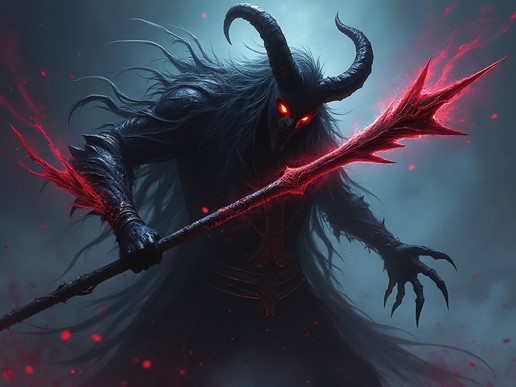
Perception of Activation:
- Sight: The glaive’s blood-red runes ignite with an eerie glow, pulsing with demonic energy. The metal seems to shimmer and writhe as if alive, casting flickering shadows on the surroundings.
- Sound: A low, guttural growl emanates from the weapon, like the distant roar of a hungry beast. A faint, whispering chorus of tormented souls can sometimes be heard, adding to the unsettling atmosphere.
- Touch: The glaive’s grip tightens, almost as if it has a will of its own. A tingling sensation courses through the wielder’s hand, a mix of warmth and a chilling numbness.
- Smell: The metallic scent of blood fills the air, even if no wounds are present. It’s a primal, visceral odor that stirs both hunger and revulsion.
- Taste: A coppery tang coats the wielder’s tongue, a lingering reminder of the glaive’s thirst for life. It’s both invigorating and unsettling, a constant reminder of the weapon’s power.
- Extra-Sensory Perceptions:
- Empathy: A wave of primal hunger washes over the wielder, a deep-seated desire to inflict pain and draw sustenance from the life force of others. It’s a powerful, seductive feeling that can easily overwhelm the unwary.
- Aura Sight: The glaive’s aura blazes with a dark, crimson light, radiating waves of malevolent energy. Those sensitive to auras may perceive the weapon’s true nature, recognizing its demonic origins and insatiable hunger.
- Telepathy: Faint whispers echo in the wielder’s mind, urging them to unleash the glaive’s power, to revel in the suffering of their enemies. These insidious thoughts can be difficult to resist, especially in the heat of battle.
- Positives:
- Heightened Senses: The activation of the glaive enhances the wielder’s senses, making them more alert and responsive to their surroundings.
- Enhanced Vitality: The life steal ability provides a constant source of sustenance, allowing the wielder to fight on even when injured.
- Psychological Advantage: The glaive’s fearsome appearance and demonic aura can instill terror in opponents, giving the wielder a psychological edge in combat.
- Negatives:
- Temptation: The glaive’s demonic influence can be seductive, tempting the wielder to indulge in their darkest impulses.
- Dependence: The constant influx of life energy can become addictive, leading to a reliance on the glaive’s power.
- Corruption: Prolonged use of the glaive can gradually erode the wielder’s humanity, twisting their soul and making them more susceptible to demonic influence.
Crafting Recipe: The Bloodhunter Glaive
- Materials Needed:
- Base Glaive: A well-crafted glaive, preferably made from a durable metal like steel or mithril.
- Demonic Blood: A vial of blood from a powerful demon, preferably one associated with pain, suffering, or life-draining abilities.
- Soul Shard: A fragment of a tormented soul, often found in haunted places or extracted from powerful undead creatures.
- Abyssal Ore: A rare and volatile ore found in the depths of the Abyss, known for its ability to channel demonic energy.
- Tools Required:
- Forge: A powerful forge capable of reaching high temperatures and withstanding the volatile nature of Abyssal Ore.
- Anvil: A sturdy anvil capable of withstanding heavy blows and the infusion of demonic energy.
- Hammer and Tongs: High-quality tools for shaping and manipulating the metal.
- Ritual Dagger: A ceremonial dagger used for inscribing runes and channeling demonic energy.
- Protective Gear: Heat-resistant gloves, apron, and eye protection to shield the crafter from the intense heat and potential backlash of demonic energy.
- Skill Requirements:
- Weaponsmithing: Expert-level proficiency in forging and shaping weapons.
- Runecraft: Advanced knowledge of demonic runes and their meanings.
- Demonology: Understanding of demonic entities and the safe handling of their essence.
- Magic Control: Ability to channel and manipulate magical energy, particularly of a dark or demonic nature.
- Crafting Steps:
- Preparation: Prepare the forge, ensuring it reaches a high enough temperature to melt the Abyssal Ore. Inscribe the base glaive with the necessary demonic runes using the ritual dagger and demonic blood.
- Infusion: Carefully melt the Abyssal Ore in the forge, then add the demonic blood and soul shard to the molten metal. Channel demonic energy into the mixture, focusing on imbuing it with the desired life-stealing properties.
- Forging: Pour the infused metal onto the anvil and begin shaping it into the desired form, incorporating the base glaive into the design. Use the hammer and tongs to carefully craft the blade, ensuring its balance and sharpness.
- Quenching: Once the glaive is shaped, quench it in a mixture of water and demonic blood to temper the metal and further infuse it with dark energy.
- Awakening: Perform a ritual to awaken the demonic essence within the glaive. This might involve chanting incantations, offering sacrifices, or drawing upon the crafter’s own life force.
- Binding: Once awakened, the glaive must be bound to its wielder. This might involve a blood oath, a pact with a demonic entity, or a ritual that links the weapon to the wielder’s soul.
Warning: Crafting the Bloodhunter Glaive is a dangerous undertaking. The volatile nature of Abyssal Ore and the corrupting influence of demonic energy can pose significant risks to the crafter. Failure to properly control the process can result in injury, madness, or even demonic possession. Only the most skilled and experienced craftspeople should attempt to create such a potent and perilous weapon.
Tale of the Blood-Drinker’s Pact
In the eons before time was time, when the abyss yawned wider and the veil between worlds was thin, there lived a warrior named Shroudheart. A creature of shadow and steel, Shroudheart sought power beyond mortal limits, a hunger that gnawed at his soul like a ravenous beast.
One moonless night, deep within a forsaken temple where the air crackled with unseen energies, Shroudheart knelt before a grotesque idol. Its eyes, aglow with infernal fire, pierced his very being. A pact was offered, a bargain whispered in the language of shadows. Power, eternal life, and dominion over his foes, all in exchange for his fealty.
Shroudheart accepted, his heart echoing with the demon’s laughter. The idol pulsed, and from its maw emerged a glaive, its blade gleaming with an unholy light. The Bloodhunter Glaive, they called it, a weapon forged in the heart of the abyss, its metal infused with the essence of countless tormented souls.
With the glaive in hand, Shroudheart became an unstoppable force. His enemies fell before him, their lifeblood fueling his own. But the glaive’s hunger was insatiable, and with each kill, Shroudheart felt his humanity fading, replaced by a cold, relentless thirst.
He waged war across the land, his name whispered in fear and reverence. But the more he conquered, the more hollow his victories felt. The glaive’s whispers grew louder, urging him to greater acts of violence, to bathe the world in blood.
In the end, Shroudheart stood alone atop a mountain of corpses, the glaive’s demonic power coursing through his veins. His eyes, once filled with ambition, now mirrored the abyss itself. The world he sought to conquer lay in ruins, and he, the victor, was but a hollow shell, a puppet dancing to the demon’s tune.
Moral: Power without restraint is a curse, a path that leads to ruin. The pursuit of eternal life and dominion over others can consume the soul, leaving naught but a shadow of one’s former self.
Suggested conversions to other systems:
Call of Cthulhu (7th Edition)
Name: Bloodhunter Glaive
- Type: Mythos Artifact
- Damage: 1d10+2
- Life Steal: On a successful hit, the wielder heals 1d4 hit points as they drain the life force of their target.
- Sanity Cost: Each time the glaive is used in combat, the wielder must make a Sanity check (1/1d6 loss) due to its demonic influence.
- Mythos Knowledge: Requires 20% in Cthulhu Mythos to use without penalty. Wielding the glaive without this knowledge imposes a penalty die on all attack rolls.
- Magic Points: The wielder must expend 1 Magic Point per successful attack to activate the life-steal effect.
- Corruption: Prolonged use of the glaive leads to a permanent loss of 1 point in POW (Power) for every 10 successful uses.
Blades in the Dark
Name: Bloodhunter Glaive
- Item Type: Heavy Weapon (Two-Handed)
- Load: 2 (Heavy)
- Life Steal: When you deal harm with the Bloodhunter Glaive, you recover 1 stress. If you inflict severe harm (level 3 harm), recover 2 stress instead.
- Devil’s Bargain: Each time you use the glaive in a desperate situation, you may choose to push yourself at no stress cost, but you gain a permanent trauma after the mission.
- Demonic Influence: Each use of the glaive adds +1 to your heat at the end of the score due to the attention it draws from otherworldly forces.
- Attunement: Requires attunement to demonic energy (1 downtime action to attune). While attuned, you may resist consequences with Resolve by channeling the glaive’s dark power, but each resistance roll adds 1 stress.
Dungeons & Dragons (5th Edition)
Name: Bloodhunter Glaive
- Weapon (Glaive), Rare (Requires Attunement)
- Damage: 1d10 slashing
- Life Steal: When you hit a creature with the Bloodhunter Glaive, you regain hit points equal to half the damage dealt (rounded up). This effect does not work on constructs or undead.
- Properties: Heavy, Reach, Two-Handed
- Curse: While attuned to the glaive, you gain vulnerability to radiant damage and disadvantage on saving throws against effects that turn undead.
- Demonic Pact: The first time you attune to the glaive, you must succeed on a DC 15 Wisdom saving throw, or your alignment shifts one step toward evil.
- Awakening: Once per long rest, you can activate the glaive’s demonic power to gain advantage on all attack rolls for 1 minute, but after the effect ends, you must succeed on a DC 15 Constitution saving throw or suffer one level of exhaustion.
Knave
Name: Bloodhunter Glaive
- Type: Melee Weapon (Two-Handed)
- Damage: d10 (1 slot)
- Life Steal: For every successful hit, you heal 1 hit point. If this brings you above your current maximum hit points, you instead gain temporary hit points equal to the amount healed (these last until your next rest).
- Encumbrance: 2 slots
- Demonic Influence: Each time you use the glaive, roll a d20. On a roll of 1, the weapon’s dark influence seeps into you, causing you to lose 1 point of Wisdom.
- Corruption: If your Wisdom reaches 0 while using the glaive, you fall under the permanent control of a demonic entity, losing your character to the GM’s control.
- Special: If you slay a creature with the glaive, roll a d6. On a 6, the creature’s soul is bound to the glaive, granting you an additional hit point and increasing the weapon’s damage to d12 until your next rest.
Fate Core
Name: Bloodhunter Glaive
- Aspect: Demonic Weapon of Life-Stealing Power
- Invoke: Gain a bonus when using the glaive in combat, particularly when seeking to drain life force from enemies.
- Compel: The weapon’s demonic influence tempts you to act violently or recklessly, possibly causing collateral damage or putting allies at risk.
- Stunt: Life-Steal Strike: Once per session, you may invoke the Bloodhunter Glaive’s aspect to recover 2 stress boxes after successfully dealing stress to an opponent.
- Drawback: The Bloodhunter Glaive increases your susceptibility to mental attacks (add +2 to the difficulty of any defense against mental or psychic stress).
- Cost: If the glaive is used in a morally questionable manner, gain 1 point of Fate for every significant use, but suffer consequences tied to demonic corruption.
Numenera & Cypher System
Name: Bloodhunter Glaive
- Level: 5
- Damage: 6 points (Medium Weapon)
- Life Steal: When you successfully hit a target, you regain 2 points of health. This does not work against inanimate objects or creatures without a life force (e.g., robots, undead).
- Cost: 2 Intellect points per use of the Life Steal ability.
- Special: Each time you use the Life Steal ability, roll a d20. On a roll of 1, the glaive’s dark energy inflicts 2 points of damage to your Intellect Pool due to demonic backlash.
- Demonic Influence: When wielding the glaive, you suffer an asset penalty on defense rolls against mental or fear-based attacks.
- Suggested GM Intrusion: The glaive’s demonic influence tempts the character to act in ways contrary to their moral code, possibly leading to severe consequences for them or their companions.
Pathfinder (2nd Edition)
Name: Bloodhunter Glaive
- Type: Rare Magical Weapon (Glaive)
- Damage: 1d10 slashing
- Critical Effect: On a critical hit, the Bloodhunter Glaive deals an additional 1d6 negative energy damage, which heals the wielder for the same amount.
- Life Steal: Whenever you strike a creature that is not a construct or undead, you regain hit points equal to half the damage dealt.
- Traits: Reach, Sweep, Fatal d12
- Curse: The wielder gains the cursed condition when they first attune to the weapon. This curse makes the wielder vulnerable to positive energy, increasing damage from positive energy sources by 1d6.
- Demonic Pact: Once per day, the wielder can invoke the glaive’s demonic power to gain a +2 status bonus to attack rolls for 1 minute, but they must succeed at a DC 17 Will save after the effect ends or take 1d4 persistent negative energy damage.
- Attunement: Requires a character to perform a 1-hour ritual to bind the glaive to themselves. Breaking this bond requires a Remove Curse spell or similar magic.
Savage Worlds (Adventure Edition)
Name: Bloodhunter Glaive
- Damage: Str+d10 (Two-Handed)
- Life Steal: On a successful hit, the wielder may recover 1 Wound or 2 Fatigue levels once per round. This ability cannot be used against non-living or undead targets.
- Demonic Influence: Whenever the wielder uses the Life Steal ability, they must make a Spirit roll at -2. On a failure, they gain a level of the Corruption Hindrance as the demonic influence begins to take hold.
- Reach: The Bloodhunter Glaive has a reach of 1, allowing the wielder to attack opponents who are further away.
- Curse: The wielder suffers a -2 penalty on rolls to resist fear or mind-control effects while attuned to the weapon.
- Special Ability: Blood Pact: Once per session, the wielder can double the damage of an attack made with the Bloodhunter Glaive, but they must immediately roll on the Fear Table, with a +2 penalty due to the intense demonic energy coursing through them.
Shadowrun (6th Edition)
Name: Bloodhunter Glaive
- Type: Melee Weapon (Exotic)
- Damage: STR + 4P
- AP: -2
- Life Steal: For every successful melee attack that deals damage, the wielder heals 1 box of Physical damage. This effect does not work on drones, vehicles, or non-living targets.
- Essence Cost: -0.5 (due to demonic attunement and essence drain effect).
- Reach: +1
- Special: Demonic Influence: Each time you use the Bloodhunter Glaive, roll a d6. On a roll of 1, the demonic energy siphons 1 point of your Edge pool, which is transferred to the weapon’s power.
- Drawback: The glaive causes a +2 to the target number of social skill tests involving non-hostile interactions due to the sinister aura it exudes.
- Availability: 20F (Restricted, requires special contacts to acquire).
- Price: 25,000 nuyen
Starfinder
Name: Bloodhunter Glaive
- Level: 6
- Type: Melee Weapon (Advanced)
- Damage: 2d8 slashing
- Critical Effect: Drain Life – On a critical hit, the weapon heals the wielder for 1d6 HP and deals 1d6 additional negative energy damage to the target.
- Special Properties: Reach, Unholy (deals additional 1d6 damage to good-aligned creatures), Corrosive (1d4 acid damage per round for 1d4 rounds on critical hits).
- Demonic Curse: The wielder must succeed on a DC 16 Will save once per day or take 1d4 Wisdom damage as the glaive’s demonic influence saps their mental strength.
- Cost: 6,000 credits
- Bulk: 2
- Weapon Category: Advanced Melee Weapons
Traveller (Mongoose 2nd Edition)
Name: Bloodhunter Glaive
- Type: Melee Weapon
- Damage: 4d6 (cutting)
- Traits: AP 4 (Armor Piercing), Reach (allows the wielder to strike from a distance), Life Steal (heals the wielder for 1d6 damage when dealing a successful hit).
- Demonic Influence: Each time the glaive is used in combat, roll 2d6. On a roll of 2 or 3, the glaive drains 1 point from the wielder’s END (Endurance) temporarily (regained after a long rest).
- Special: Corrupting Presence: The glaive’s dark energy imposes a -1 DM to all Social rolls made in the presence of anyone who can sense its malevolent aura.
- Cost: Cr 75,000
- Availability: Very rare, typically found in ancient ruins or black market auctions.
Warhammer 40,000 Roleplay (Wrath & Glory)
Name: Bloodhunter Glaive
- Type: Melee Weapon (Relic)
- Damage: 10 + 1ED (Extra Damage dice)
- AP: -3
- Keywords: Cursed, Demonic, Life-Steal
- Special: Life-Steal: Whenever you inflict damage with the Bloodhunter Glaive, you regain 1d3 Wounds. If this brings your Wounds above their maximum, you gain those points as temporary Wounds that last until the end of the encounter.
- Demonic Corruption: Each time you use the glaive, make a Corruption Test (DN 3). Failure results in gaining 1 point of Corruption.
- Reach: The glaive’s reach allows for engagement with enemies from a safer distance.
- Demonic Aura: Any non-daemonic creature within 3 meters must make a Willpower test (DN 4) or suffer from Fear (1) for the duration of the encounter.
- Cost: 20 Influence
- Rarity: Archeotech (Ancient and rare)