
In the world of Saṃsāra, a unique magical crop known as Arracha can be found. This peculiar plant thrives in the temperate regions of the realm, where the climate is mild and the soil is rich in minerals.
Lore: Arracha is a legend among the inhabitants of Saṃsāra, as it is believed to have been created by the gods themselves as a gift to mortals. According to ancient texts, the plant was birthed from the tears of the goddess of nature, who wept upon witnessing the suffering of her children due to famine and hardship. Its name, Arracha, is derived from the ancient language of the elves, meaning “divine sustenance.”
Use: Arracha is primarily cultivated for its edible roots, which are highly nutritious and possess remarkable healing properties. When consumed, the roots can restore energy, alleviate minor ailments, and even accelerate the recovery of injuries. Additionally, the leaves of the plant are used in various medicinal concoctions, particularly for treating respiratory ailments and enhancing overall vitality.
Environment: Arracha thrives in fertile, well-drained soils and prefers moderate temperatures with abundant sunlight. It is commonly found in the vast agricultural plains and valleys of Saṃsāra, where farmers have mastered the art of cultivating this prized crop.
Harvesting: The harvesting of Arracha is a delicate process that requires patience and care. The roots are carefully unearthed during the autumn months, when the plant has reached its full maturity. Farmers use specialized tools to gently loosen the soil and extract the roots without causing damage. The leaves are harvested throughout the growing season, as needed, for medicinal purposes.
Season: Arracha is a perennial crop, meaning it can be harvested year after year. However, the prime season for harvesting the roots is during the autumn months, when the plant’s energy is concentrated in the subterranean tubers.
Tags: Edible, Medicinal, Healing, Restorative, Divine, Ancient
Positives:
- Highly nutritious and energy-restoring
- Accelerates healing and recovery from injuries
- Treats respiratory ailments and enhances overall vitality
- Perennial crop, ensuring a consistent supply
- Revered and valued by the inhabitants of Saṃsāra
Negatives:
- Delicate harvesting process, requiring skilled labor
- Limited growing regions due to specific climate and soil requirements
- Susceptible to certain pests and diseases if not properly tended
As a tier one character in the world of Saṃsāra, the opportunity to harvest Arracha would be a remarkable experience. Immersing oneself in the age-old traditions of cultivating this sacred crop would not only provide sustenance but also a profound connection to the land and the divine forces that shaped it.
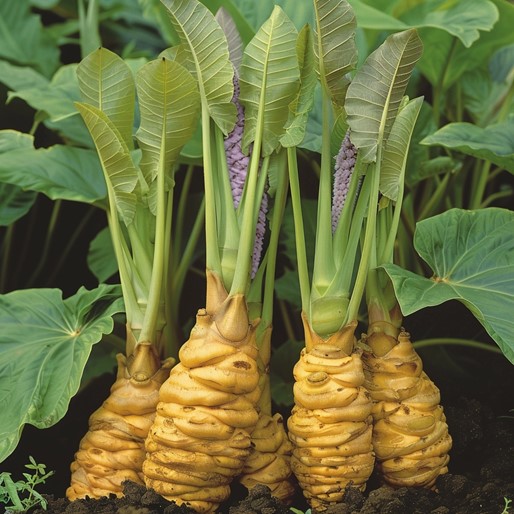
Arracha is a unique and visually striking crop in the world of Saṃsāra. Here is a detailed description of its appearance:
- Stems and Leaves: The plant grows to a height of about three to four feet, with slender yet sturdy stems that are a deep emerald green in color. The stems are adorned with large, broad leaves that are arranged in a spiral pattern. These leaves are a vibrant shade of jade, with intricate veins running through them like delicate lace. The edges of the leaves are gently serrated, giving them an almost regal appearance.
- Flowers: During the spring and early summer months, Arracha produces beautiful, trumpet-shaped flowers that bloom in clusters atop the stems. The petals are a mesmerizing blend of lavender and lilac hues, with delicate streaks of gold radiating from the center. These flowers exude a subtle, sweet fragrance that can be detected from a distance, attracting various pollinators to the plant.
- Roots: The true treasure of Arracha lies beneath the soil in its intricate root system. The roots are thick and bulbous, resembling large tubers or knobby ginger roots. Their exterior is a rich, golden-brown color, with a rough, textured surface. When freshly unearthed, the roots have a distinct earthy aroma that is both comforting and invigorating.
Arracha is a plant that exudes an aura of magical elegance and vitality. Its vibrant colors, intricate patterns, and unique features make it a true marvel of nature in the world of Saṃsāra, captivating the senses of all who behold it.
In the bustling markets and trading hubs of Saṃsāra, Arracha is a highly sought-after commodity, valued both for its culinary and medicinal properties. The crop can be found in specialized shops and stalls dedicated to the trade of rare and magical ingredients.
Apothecaries and Herbalists: These establishments are the primary source for acquiring Arracha roots and leaves. Apothecaries and herbalists possess extensive knowledge of the plant’s healing properties and use it as a key ingredient in various concoctions and remedies. They typically sell Arracha in dried or fresh form, carefully packaged and labeled with instructions for proper usage.
The prices for Arracha in these shops can vary depending on factors such as quality, freshness, and rarity. A standard bundle of dried Arracha roots suitable for a single treatment or a few meals can cost anywhere from 5 to 10 gold pieces. Fresh roots, which are more potent and have a shorter shelf life, can fetch prices ranging from 10 to 20 gold pieces per bundle.
Exotic Ingredient Merchants: In the larger cities and trading hubs, specialized merchants deal in the trade of exotic and rare ingredients from across the realm. These merchants often acquire Arracha from the remote regions where it is cultivated and bring it to the urban centers for sale.
At these exotic ingredient markets, Arracha can be found in various forms, including whole plants, roots, leaves, and even processed products like tinctures and powders. The prices here tend to be higher due to the rarity and demand for the crop.
A fully mature Arracha plant, suitable for replanting or cultivation, can cost upwards of 50 to 100 gold pieces, depending on its quality and the seller’s reputation. Tinctures and powders, which are more concentrated and have a longer shelf life, can range from 20 to 40 gold pieces per vial or pouch.
Farmers and Growers: For those seeking to acquire Arracha directly from the source, there are opportunities to purchase the crop from the farmers and growers who cultivate it. This option is often more cost-effective but may require travel to the rural regions where the plant thrives.
Prices at the farm gate can vary based on factors such as the current harvest yield, market demand, and the farmer’s negotiation skills. A bulk purchase of fresh Arracha roots may cost anywhere from 2 to 5 gold pieces per pound, while purchasing an entire field or plot of the crop can range from hundreds to thousands of gold pieces, depending on the size and maturity of the plants.
Regardless of the source, Arracha commands a premium price in the markets of Saṃsāra due to its rarity, magical properties, and the labor-intensive process involved in its cultivation and harvesting.
While Arracha is primarily valued for its culinary and medicinal properties, the unique qualities of this magical crop can also be harnessed for defensive and offensive purposes in the world of Saṃsāra.
Defensive Applications:
- Healing and Regeneration: The roots of Arracha possess potent healing properties that can accelerate the recovery of injuries and ailments. When consumed or applied topically, they can mend wounds, restore energy levels, and bolster the body’s natural defenses. This makes Arracha an invaluable resource for soldiers, adventurers, and anyone engaged in combat or dangerous situations, allowing them to recover quickly and maintain their fighting strength.
- Protective Wards: The leaves of Arracha, when combined with specific magical incantations and rituals, can be used to create protective wards. These wards can be inscribed on armor, weapons, or even directly onto the skin, providing a magical barrier against physical and magical attacks. The intricate patterns and symbols drawn with Arracha leaf extract are believed to channel the plant’s innate connection to nature, offering a form of mystical shielding.
- Toxin Neutralization: Certain preparations of Arracha roots and leaves can act as potent antidotes, neutralizing the effects of various poisons and toxins. This defensive property can be invaluable in scenarios where opponents employ poisoned weapons or venomous creatures, allowing warriors to counteract the debilitating effects and continue fighting effectively.
Offensive Applications:
- Incendiary Compounds: The sap extracted from Arracha stems, when combined with specific alchemical reagents, can create a highly combustible substance. This volatile compound can be used to create incendiary weapons, such as flaming arrows or explosive devices, providing a potent offensive capability against structures, fortifications, or even large creatures.
- Paralytic Agents: Certain preparations of Arracha leaves and roots can induce a temporary paralytic effect when ingested or introduced into the bloodstream. These paralytic agents can be coated onto weapons or used as projectiles, rendering opponents immobile and vulnerable to further attacks or capture.
- Psychoactive Properties: In rare cases, specific strains of Arracha have been known to possess psychoactive properties when consumed in concentrated forms. These psychoactive effects can induce hallucinations, disorientation, or even temporary madness in opponents, disrupting their ability to think clearly and coordinate their actions during combat.
While Arracha is primarily revered for its life-giving and healing qualities, its unique magical properties can be harnessed for both defensive and offensive purposes by those skilled in the arts of alchemy, herbalism, and arcane rituals. However, it is important to note that the offensive applications of Arracha are often considered ethically questionable and may be subject to regulations or taboos within certain communities or cultures of Saṃsāra.
The Legacy of Arracha, Woven into the Fabric of Eternity
In the dawning age of creation, when the celestial hands of the gods sculpted the realms of Saṃsāra, a great conflict arose among the divine beings. The god of nature, Viridian, wept bitter tears as his brethren sought to subjugate the mortals with their whims and fancies.
As Viridian’s tears fell upon the fertile soil, a wondrous plant sprouted forth, its verdant tendrils unfurling with each droplet that graced the earth. This plant, born of divine sorrow and love, was christened Arracha, a name that would echo through the ages.
The mortals, ever curious and resourceful, discovered the wondrous properties of Arracha. Its roots, imbued with the essence of life itself, could mend wounds and restore vitality. Its leaves, infused with the breath of nature, could cleanse the air and soothe the afflicted.
Word of Arracha’s miracles spread like wildfire, and soon, the gods themselves took notice. Enraged by the mortals’ newfound resilience, they sought to destroy the sacred plant, unleashing their fury upon the lands.
But Viridian, ever the protector, stood defiant. He wove intricate spells, imbuing Arracha with the power to endure the onslaught of the gods. The plant’s roots delved deeper into the earth, fortifying its connection to the realm, while its leaves unfurled to shield the mortals from harm.
In the final moments of the celestial battle, Viridian sacrificed himself, his essence merging with the very fabric of Arracha. From that day forth, the plant became an eternal testament to the god’s love for his children, a beacon of hope and resilience in the face of adversity.
To this day, the mortals of Saṃsāra revere Arracha, tending to its growth with reverence and gratitude. For it is said that as long as Arracha thrives, the legacy of Viridian’s sacrifice will endure, a reminder that even in the darkest of times, the seeds of hope can take root and blossom into something extraordinary.
Moral of the Story: The true strength of a people lies not in their might or power but in their resilience, compassion, and the bonds they forge with the natural world around them.
Arracha, the sacred crop of Saṃsāra, finds its way into various culinary and crafting traditions due to its versatile nature and magical properties. Here are a few detailed recipes and crafted items that incorporate this wondrous plant:
- Arracha Vitality Stew:
- Ingredients:
- 2 pounds of fresh Arracha roots, peeled and diced1 pound of lean meat (such as venison or boar), cubed4 cups of vegetable broth1 large onion, diced3 cloves of garlic, minced2 carrots, sliced1 cup of diced celery1 tablespoon of dried thymeSalt and pepper to taste
- Instructions:
- In a large pot, sauté the onions and garlic in a little oil until fragrant. Add the meat and brown it on all sides. Pour in the vegetable broth and Arracha roots, then add the carrots, celery, thyme, salt, and pepper. Bring to a boil, then reduce heat and let simmer for at least an hour, or until the Arracha roots and meat are tender. Serve hot, garnished with fresh Arracha leaves.
- Ingredients:
- Arracha Regenerative Salve:
- Ingredients:
- 1 cup of fresh Arracha leaves, finely chopped1/2 cup of beeswax1/2 cup of almond oil2 tablespoons of honey1 teaspoon of ground cinnamon
- Instructions:
- In a double boiler, melt the beeswax and almond oil together. Once melted, remove from heat and stir in the chopped Arracha leaves, honey, and cinnamon. Mix well until fully incorporated. Pour the mixture into sterilized jars or containers and allow to cool completely. Apply the salve to cuts, bruises, or other minor injuries to aid in the healing process.
- Ingredients:
- Arracha Talisman:
- Ingredients:
- A fresh Arracha rootA piece of leather or clothA length of twine or cordDecorative beads or charms (optional)
- Instructions:
- Clean and dry the Arracha root thoroughly. Using a sharp knife or carving tool, etch protective symbols or runes onto the surface of the root. These can be symbols specific to your culture or traditions, representing strength, resilience, or protection. Once the etchings are complete, wrap the root in the leather or cloth, securing it with the twine or cord. Optionally, add decorative beads or charms to the talisman for additional embellishment. This talisman can be worn or carried as a protective charm, believed to shield the wearer from harm or misfortune.
- Ingredients:
- Arracha Herbal Tea:
- Ingredients:
- 1 cup of fresh Arracha leaves1 tablespoon of dried chamomile flowers1 teaspoon of honey (optional)4 cups of water
- Instructions:
- In a teapot or saucepan, bring the water to a boil. Remove from heat and add the Arracha leaves and chamomile flowers. Cover and let steep for 5-7 minutes. Strain the tea into cups or mugs, and stir in honey if desired. This soothing herbal tea is believed to promote relaxation, aid in respiratory health, and provide a gentle boost of energy and vitality.
- Ingredients:
These recipes and crafted items showcase the versatility of Arracha, allowing the inhabitants of Saṃsāra to harness its magical properties for nourishment, healing, protection, and overall well-being.
Comments
2 responses to “Arracha”
[…] From: Arracha […]
[…] From: Arracha […]