
From: Lineage 5821 of the Kaelic Veilweavers
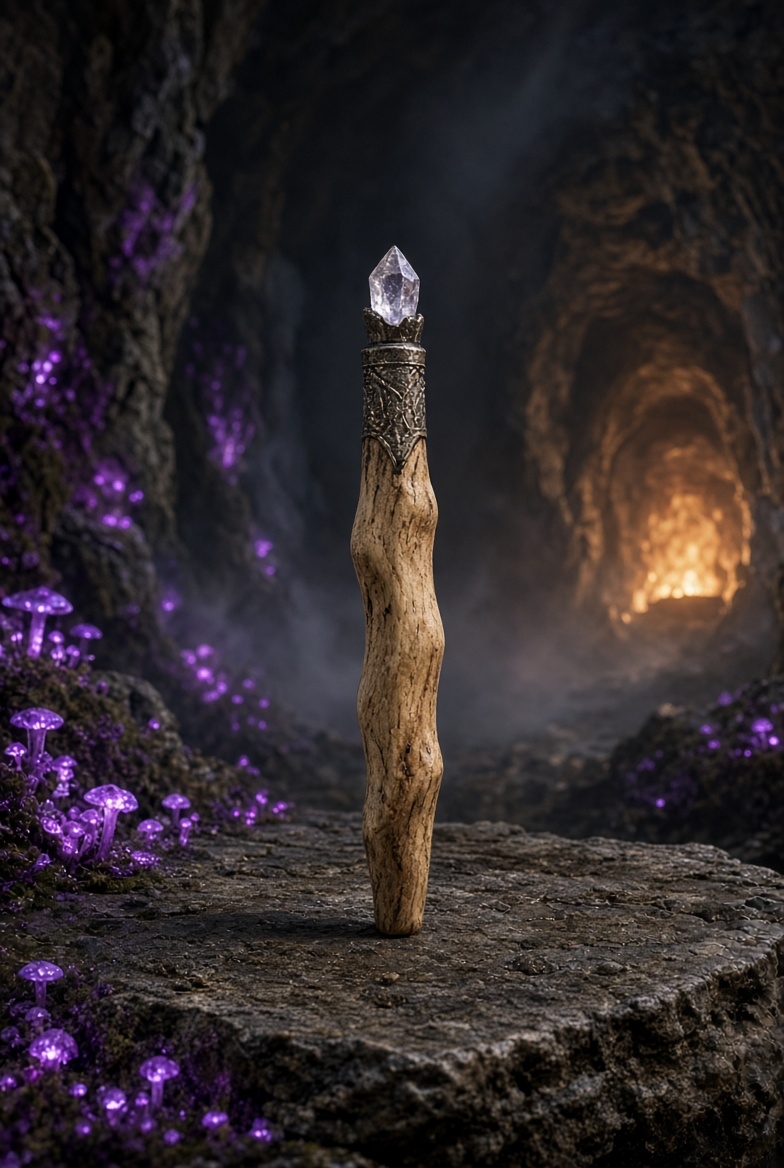
This handheld stylus consists of a short bone or treated-wood handle capped with a fine metal point capable of inscribing or reading Tar-Mark symbols on gear or temporary surfaces. The tip incorporates a minute crystal fragment that resonates when the avatar channels a Tar-Sef click producing a faint audible confirmation of successful alignment with existing Kaelic Tracings or inscribed conduits. The tool is sized to fit within a belt pouch and can be operated one-handed while the other hand maintains a weapon or stabilizes a form. When held it supports the skill of Precision Crafting by allowing the avatar to verify or add minor enhancements to a Dermal Weave or personal seal without requiring a full workshop. The stylus does not generate its own magical effect beyond the resonance aid and follows the fundamental rules of a simple tool. Its hit points are calculated from avatar maximum plus resilience times tier. The design draws on the Sef-Kal heritage of tool-making and the later integration of steam-assisted finishing to ensure the point remains sharp in damp subterranean conditions.
Tracings Resonance Stylus 3941 was shaped in the lineage workshops as a portable means for Kaelic Veilweavers to check or add small Tar-Mark alignments on personal gear and Dermal Weaves without returning to a full forge. The short handle of bone or treated wood was sized for one-handed use so that the other hand could remain on a weapon or steady a form during minor adaptation. The fine metal point was finished with steam-assisted methods drawn from Sef-Kal tool traditions so that it would hold an edge in damp cavern air. A minute crystal fragment set in the tip responded to a channeled Tar-Sef click with a faint audible tone when the point met a correctly aligned Tracing or conduit. This resonance confirmed successful contact or inscription without producing any broader magical effect of its own. The stylus fit easily in a belt pouch and could be drawn used and returned as part of ordinary crafting or verification actions. It supported Precision Crafting by letting the user verify or place minor enhancements on the spot. Hit points followed the standard calculation of avatar maximum plus resilience times tier. The tool remained a simple implement whose value lay in the confirmation it provided rather than in any independent power.
• Tier one stats place the item at Common rank with a resilience of three. Hit points equal the possessing avatar’s maximum hit points plus three. The stylus is a held apparatus and becomes attuned automatically while gripped. It unattunes if struck while held or if released. It does not occupy a worn armor slot. Armor Check contribution is zero. It produces no independent magical effect beyond the resonance confirmation.
• Skills gained while openly worn or held include two temporary points in Precision Crafting and one temporary point in Tar-Sef Articulation. These points remain active only while the stylus is held and do not count against the character’s maximum trained skill level of six at tier one. The points support inscription verification and the channeling of the confirming click.
• Multiple passives magic consist of continuous readiness of the crystal fragment so that a Tar-Sef click will produce the faint tone on successful alignment. A second passive maintains the metal point in a sharpened state suitable for damp conditions. A third passive keeps the handle balanced for one-handed operation while the other hand is occupied.
• Multiple activatable magics include a once-per-turn ability to channel a Tar-Sef click through the tip producing the audible confirmation if the point is in contact with a valid Tracing or conduit. A second activatable requires an action to retrieve the stylus from a belt pouch perform a short inscription or reading and return it to the pouch as a combined sequence. A third activatable permits the wielder to focus for six seconds and refresh the crystal’s sensitivity so that the next confirmation tone is clearer with the effect lasting until the next long rest.
• Specific slot is the held apparatus slot. The stylus occupies one hand while in use and may be stored in a belt pouch without occupying an armor slot. Only one such secondary stylus is carried in active readiness.
Tags: Resonance Stylus, Crystal Tip, Tar Confirm, Bone Handle, Metal Point, Pouch Fit, One Hand, Weave Check, Seal Add, Damp Sharp, Simple Tool, Short Length, Treated Wood, Faint Tone, Alignment Check, Minor Enhance, Field Use, Steam Finish, Sef-Kal Root, Conduit Read, Handle Balance, No Power
Acquisition and Commerce of Tracings Resonance Stylus 3941
• The Tracings Resonance Stylus 3941 is produced in lineage and guild workshops by artisans who shape the handles set the crystal fragments and finish the metal points. An avatar obtains one by completing downtime assistance with point sharpening and crystal seating then receiving the finished stylus from the supervising worker after a resonance confirmation test. Tasks that require field verification of Tar-Marks or minor on-site enhancements sometimes issue the stylus as equipment retained after the work. Members who have deposited a conduit may request a personal tool in exchange for additional handle or etching assistance. These methods depend on standing and completed effort rather than immediate coin.
• Family shops in the upper cavern levels and along the arteries stock styluses made by resident bone wood and metal workers. These shops occupy rooms near small finishing benches where the proprietor and relatives fit the tips and test the tones. An avatar purchases by presenting coin or World Bank transfer after the seller notes any lineage mark. Suggested values in interior locations commonly range from eight to fifteen gold after the one percent World Bank fee with the amount set by stock and demand from field crafters and Weave maintainers. City entry adds the one percent island tax and state borders add the five percent levy.
• Coastal shops in Ironfang Harbor and Hydra’s Embrace are operated by relocated workshop workers. These outlets sit near docks and display styluses with other small hand tools. Purchase follows standard payment. Suggested values rise with transport and typically fall between twelve and twenty-two gold after fees and the three percent city tax. Sellers may request a brief tone demonstration on a sample mark. Cove stalls on the Obsidian Coast occasionally offer styluses from outside normal channels and accept only physical gold at full or higher rates without bank records.
• Resale occurs at the same shops or with traveling merchants. The receiver inspects the point crystal seating and handle then offers a return based on remaining sharpness and tone clarity and local need for portable verification tools. Interior shops commonly return four to eight gold after fees and taxes. Coastal shops return lower amounts due to transport costs and may decline styluses if recent workshop output has increased supply. All exchanges follow sellers’ market conditions with no fixed price by tier and with the figure set by the proprietor’s judgment of availability.
Roleplay Applications of Tracings Resonance Stylus 3941 Across Environments
• In the upper cavern workshops and near personal gear stores the stylus supports defensive preparation by allowing quick verification or minor addition of Tar-Mark alignments on a Dermal Weave or seal. The confirming tone from a Tar-Sef click indicates successful contact so that the wearer can be certain a stability or identification mark is correctly placed before entering a passage. The tool can be drawn from a belt pouch used one-handed and returned while the other hand remains free. Offensively the same verification can confirm that a minor enhancement on a held weapon or tool is aligned before an engagement so that any existing lineage effect functions as expected.
• Along river edges and temporary camps the stylus functions for field checks. Defensive use involves reading an existing conduit or Tracing on gear to ensure it has not shifted during travel allowing correction before a vulnerable stretch. The damp-sharp point remains effective in moist air. Offensively a short inscription of a minor mark on a temporary surface or tool can be confirmed by the tone supporting a later precision action that relies on that mark. The one-handed operation leaves the other hand available for a weapon or balance.
• On the Mistral Uplands and plateau stops the stylus serves for on-the-move verification. Defensive application includes checking personal seal alignments after wind or movement so that identification or stability functions remain intact. The compact size allows the action behind cover. Offensively confirming a small enhancement on a ranged or reach tool before use supports the reliability of that tool’s existing capabilities. The resonance provides audible assurance without requiring a workshop.
• In the coastal districts of Ironfang Harbor and platform areas the stylus operates among structures and limited time. Defensive roleplay centers on rapid pouch-to-hand verification of gear marks between other tasks ensuring readiness. The tone confirms alignment even in noisier dock conditions if the click is focused. Offensively the tool can add or check a minor mark that aids a subsequent close or precision action relying on lineage training. All uses remain within tier one limits the action economy permitting retrieval use and return in ordinary sequences the automatic attunement while held and the limitation that the stylus provides only confirmation and minor inscription support rather than independent effects.
Perception of Activation:
• User’s Perspective registers as a faint clear tone from the crystal tip when a Tar-Sef click is channeled and the point contacts a valid Tracing or conduit. The tone confirms alignment without any stronger sensation in the hand. The metal point feels steady and sharp against the surface being checked or inscribed. Extra-sensory impressions include a brief silver pinpoint at the contact location visible through the Mind’s Eye and a simple sense of success or lack of tone if alignment is absent. The one-handed balance leaves the other hand free and unburdened. The sensitivity refresh produces a short clarifying vibration in the tip before the next use.
• Observer’s Perspective shows the short stylus moving from pouch to hand the point touching a surface and a very faint audible tone if alignment occurs. No visible light or large effect is produced. The action is small and can be performed while the other hand holds another object. Extra-sensory observers may note the minor harmonic if they are close. Those using true sight perceive a brief ultraviolet flicker at the crystal that fades immediately after the click. The stylus does not alter the wielder’s exposed skin or overall posture beyond ordinary tool handling.
• Positives include the immediate audible confirmation of correct Tar-Mark alignment or successful minor inscription. The one-handed design allows simultaneous weapon hold or form stabilization. The tool supports Precision Crafting verification in the field without a workshop. The point remains effective in damp conditions. Pouch storage and quick retrieval fit ordinary action sequences. The stylus adds no independent magical power that could unbalance other effects.
• Negatives include the very faint volume of the confirmation tone which can be missed in noisy environments. The tool provides no effect if the contacted mark is absent or misaligned. Overlapping the click with rapid movement can make the tone harder to distinguish until the hand steadies. The extra-sensory pinpoint fades at once and leaves no lingering guidance. Repeated uses in quick succession can temporarily dull the crystal’s response so that later tones are even fainter until the sensitivity is refreshed.
Recipe for Tracings Resonance Stylus 3941
• Materials needed consist of a short length of bone or treated wood for the handle. A fine metal point capable of holding an edge. A minute crystal fragment that can produce a tone under Tar-Sef influence. Setting compound for securing the crystal in the tip. Finishing materials to maintain sharpness in damp conditions.
• Tools Required include a small shaping bench and carving implements for the handle. Metal-finishing tools for the point. A setting jig for the crystal fragment. A test surface bearing sample Tar-Marks for resonance checks. Measuring guides for overall length. Basic fastening materials.
• Skill Requirements call for a minimum of four points in Precision Crafting to shape the handle and set the point and crystal. Three points in Tar-Sef Articulation to test and confirm the tone response. Two points in related small-tool finishing. Access to a functional workshop. The crafter must produce a stylus that gives clear confirmation without generating broader effects.
• Crafting Steps begin with shaping the bone or treated-wood handle to a short comfortable length balanced for one-handed use. The fine metal point is formed and sharpened then joined to the handle. The minute crystal fragment is seated in the tip and secured so that it can resonate. The point receives a final steam-assisted or equivalent finish for damp resistance. The completed stylus is tested by channeling a Tar-Sef click against a known valid Tar-Mark to confirm the faint audible tone occurs on alignment and does not occur on misalignment. Final checks ensure the tool fits a belt pouch and can be used while the other hand is occupied. The stylus is then ready for use.
Short Point That Sang Only When Mark Was True
In the time when the makers still carried the plain bone scratcher and the crystal had only begun to answer a careful click there was a shaper of small tools whose hands were called by the old ones the Setter of the Confirming Tip. This one worked in the places where gear was finished and the marks were set by hand. The Setter took the short bone or treated wood that would fit the palm and the fine metal that would hold a point and the minute fragment that could make a tone and the compound that would keep the tip sharp when the air was wet. These the Setter laid on the flat rock and spoke the clicks that the true mark made when the point met it cleanly.
For many cycles the Setter worked. The handle was cut short so that one hand could hold it while the other hand stayed on a weapon or a changing form. The point was drawn fine and finished so that it would not dull in the damp hollows. The fragment was set in the tip so that a spoken click would bring a faint tone only when the point rested on a mark that had been made true. When the tool was given to a young maker the maker drew it from the belt and touched a finished Tracing. The tone came soft and clear. The maker touched a place where the mark was crooked and no tone came. The tool stayed and the other hand remained free.
Other hands tried the shaping. Some made the handle too long and it could not be used while the second hand was occupied. Some set the fragment too large and the tone came even when the mark was false. Some left the point unfinished and it dulled before the first damp day ended. These tools were set in the side places where unfinished gear gathered and no one carried them. The Setter watched. Only when new hands repeated the cutting and the setting and the finishing in the same order did the Setter allow another tool to leave the rock.
The word of the short point that sang only when the mark was true moved through the workshops and the traveling camps. A maker used one and confirmed a Weave alignment before entering a long passage. A traveler used one and added a small true mark to a personal seal then heard the tone that showed the work was sound. Each time the faint song came only for the correct meeting and stayed silent for the incorrect.
Then a group in a deep hollow thought the tool could be made to sing louder and to force a mark true even when the hand had erred. They enlarged the fragment and they hardened the point beyond the old measure and they spoke the clicks harder. The tool they made hummed at every touch. They gave it to their quickest maker and set the maker to finish many seals in haste. The tone came whether the mark was straight or crooked. The seals were carried into use and later failed when the false alignments met stress. The tool remained in the hand and the maker did not trust the tone again.
The others found the tool and carried it to the upper rock where the Setter had worked. They spoke no more clicks over it. From that day the shapers used only the measure of handle point and fragment the Setter had used. They taught the young ones to listen for the faint tone and to accept silence as the sign of error and never to ask the tip to sing for a mark that was not true or to work while both hands were forced to the same task.
The tool that had sung for false marks was left on the rock. Later when the workshops were established and the air-ships passed above the mountains the rock was still there. Travelers said that if one stood close a faint wrongness would be felt in any short point held nearby and that the wrongness warned of any attempt to make the tone come without the true mark or to free both hands from their separate duties. None carried the tool. The story was told whenever a new stylus was finished so that the hands which set the fragment would remember the measure of the confirming song.
The moral of the story is that the short point which sings only when the mark is true will serve only while the hands that make it keep to the first measure and do not ask the tip to give tone for what is false or to free the second hand from its own necessary hold.
Suggested conversions to other systems:
Call of Cthulhu Seventh Edition Adaptation
Confirming Stylus
This item is a short one-handed tool with a crystal-tipped point. While held it grants a bonus die on any Art Craft or relevant skill roll made to inscribe or verify a precise mark or symbol. Once per scene the wielder may spend a point of Luck to receive clear confirmation of successful alignment through a faint tone guaranteeing the work is correct if the skill roll succeeds. The stylus has 3 hit points and is destroyed if reduced to zero. It counts as a small piece of equipment and may be drawn used and stowed in one action if kept in a pouch. It produces no independent supernatural effect. Benefits apply only while held.
Blades in the Dark Adaptation
Tone Tip Stylus
This is a fine quality small tool that provides +1d to any Tinker or Study roll made to inscribe or verify a precise mark. The stylus is held in one hand. While equipped the wielder may push themselves on a verification or minor enhancement task without additional stress. Once per score the wielder may activate the tip to ignore the first level of complication on a precision inscription or check. The item has a quality rating of fine and follows standard gear rules. It occupies minimal load and may be stored in a pouch. It grants no independent special ability beyond the confirmation aid.
Dungeons and Dragons Fifth Edition Adaptation
Resonance Mark Stylus
Wondrous item common. This one-handed tool grants the wielder advantage on any Intelligence or Dexterity check made to inscribe or verify a precise magical or symbolic mark while the stylus is held. Once per short rest the wielder may use a bonus action to channel focus through the tip receiving audible confirmation if the mark is correctly aligned. The item has AC 10 and 5 hit points. It is destroyed at 0 hit points. It weighs 0.5 pounds and may be drawn and stowed as part of the crafting action. It produces no spell or independent magical effect. Benefits apply only while held.
Knave Second Edition Adaptation
True Mark Stylus
This is a one-handed tool that occupies one inventory slot when stored. While held the wielder adds their Intelligence modifier to checks made to inscribe or verify precise marks. Once per day the wielder may spend an action to receive clear confirmation of a successful alignment. The item has 3 item hit points and is destroyed if reduced to zero. Repair costs half the original value. The stylus may be kept in a pouch and functions only while held. It provides no independent power beyond the verification support.
Fate Core Adaptation
Singing Tip Tool
This is an aspect-bearing small stylus that may be invoked when the wielder is inscribing or verifying a precise mark. The tool is held in one hand. While equipped it provides a free invoke once per session on any Crafts roll made for fine inscription or alignment check. The wielder may spend a fate point to receive clear confirmation of success on a single verification. The item has a stress track of one box. If marked it is damaged and loses the free invoke until repaired with a Crafts overcome. Repair requires a scene and materials. The stylus follows normal equipment rules and grants no independent aspect beyond its use.
Numenera and Cypher System Adaptation
Tone Fragment Stylus
Level 1 cypher. This small tool depletes on a roll of 1 on a d6 after each use of the active confirmation. While held it grants an asset on any Intellect task made to inscribe or verify a precise mark or symbol. As an action the wielder may activate the tip to receive clear audible confirmation if the alignment is correct. The item occupies one hand and one equipment slot when stored. Benefits end if the tool is no longer held or is depleted. It produces no broader numenera effect. A non-depleting artifact version could be repaired with small crystal components.
Pathfinder Second Edition Adaptation
Confirming Crystal Stylus
Item 1 held tool. This one-handed device grants a +1 item bonus to Crafting checks made to inscribe or verify precise marks while held. Once per day the wielder may use a single action to focus the tip and automatically confirm whether a mark is correctly aligned without a roll. The item has Hardness 1 and 4 Hit Points. It is destroyed at 0 Hit Points. It has a Bulk of L. It produces no spell or independent magical effect. Benefits apply only while held.
Savage Worlds Adventure Edition Adaptation
Resonance Point
This is a small tool that occupies minimal space. While held the wielder gains a +1 bonus to Repair or Academics rolls made to inscribe or verify fine marks. Once per session the wielder may spend a Benny to receive automatic confirmation of successful alignment on a single check. The item has Toughness 1 for targeting purposes and is destroyed if it takes a Wound. Repair requires a Repair roll and materials. The tool occupies one hand while in use and follows standard equipment rules. It grants no independent power.
Shadowrun Sixth World Adaptation
Tone Tip Stylus
This is an Availability 3 item with a cost of 200 nuyen. It is a compact one-handed tool. While held the wielder gains a +1 dice pool bonus to any Artificing or related test made to inscribe or verify a precise mark. As a Simple Action once per scene the wielder may activate the tip to receive clear confirmation of successful alignment. The item has a Structure rating of 1 and is destroyed if reduced to zero. It may be kept in a pouch and drawn used and stowed in one action. It produces no independent magical or technological effect beyond the confirmation. Benefits apply only while held.
Starfinder Adaptation
Resonance Stylus
This is a level 1 technological or hybrid item with a bulk of L. While held the wielder gains a +1 insight bonus to Engineering or relevant skill checks made to inscribe or verify precise marks. As a move action once per day the wielder may activate the tip to automatically confirm correct alignment on a single mark. The item has 4 hit points and hardness 1. It is destroyed at 0 hit points. It weighs 0.25 pounds and may be drawn and stowed as part of the action. It produces no spell-like effect. Benefits apply only while held.
Traveller Second Edition Adaptation
Confirming Scriber
This is a piece of equipment with a cost of Cr 50 and a mass of 0.1 kg. While held the wielder gains a DM+1 on any Mechanics or Science check made to inscribe or verify a fine mark. Once per day the wielder may use the tool as a minor action to receive clear confirmation of successful alignment. The item has 2 hits and is destroyed at zero. Repair requires a basic Mechanic check. It occupies minimal space and may be stored in a pouch. It provides no independent function beyond verification support. Benefits require it to be held.
Warhammer Fantasy Roleplay Fourth Edition Adaptation
True Point Stylus
This is a Poor quality small tool with an Encumbrance of 0. While held the wielder gains a +10 bonus to any Trade or Lore Test made to inscribe or verify a precise mark. Once per day the wielder may spend an Action to receive clear confirmation of correct alignment. The item has 2 Wounds and is destroyed at zero. Repair requires a simple Trade Test. It may be kept in a pouch and functions only while held. It grants no independent magical ability.