
Lore:
Deep below the rolling moss-covered highlands of southern Vara-Sul lies Underground 47 of the Laughing Veins, a mischievously spirited labyrinth that hums—sometimes literally—with laughter. According to miners’ legend, it was first carved by a guild of alchemists and prankster-engineers who wished to prove that joy itself could be an energy source. They infused the tunnels with giggling air elementals and resonant crystals that respond to sound. When laughter or music echoes through the caverns, the crystals shimmer with light and release gentle warmth. Over centuries, travelers, tinkers, and outcasts made the labyrinth their home, turning it into the cheekiest settlement below ground—half-market, half-comedy stage, and entirely unpredictable.
Reason It Was Built:
Originally conceived as a “joy-powered refinery,” it was intended to collect emotional resonance for experimental alchemy—distilling happiness into liquid aether. The early experiments failed spectacularly (and hilariously), leaving the caverns permanently attuned to amusement. Later generations expanded it into a habitable district for entertainers, illusionists, and trick-forgers who saw humor as both defense and diplomacy.
Social Purpose:
The labyrinth operates as Saṃsāra’s premier underground leisure quarter. Its halls double as theaters, dueling joke-arenas, and glittering taverns. Every inhabitant is expected to contribute a jest or story weekly—refusal marks one as “Stone-Sour,” a mild social stigma. Despite the laughter, it serves a serious role as a neutral ground where rival surface guilds meet under the guise of festival to negotiate trade pacts without drawing blades.
Geological Environment and Amenities:
Carved into strata of pink granite veined with opaline crystal, the tunnels twist through pockets of warm air and mineral springs. Constant low-grade vibration from the resonant stones keeps the air circulating. Amenities include steam-heated bathing pools perfumed by fungal distillers, lantern corridors that brighten with laughter, and “Echo Taverns” where your drink refills when you tell a new joke.
Size and Population:
The labyrinth spans roughly nine square miles across seven levels, each connected by spiral ramps and glimmering lifts powered by laughter resonance. Population hovers around 42,000—a mix of humans, anurans, chimerafelines, dwarrow engineers, and a small colony of mimic merchants. Visitors from the surface can double that number during the annual Festival of Snickers.
Attributes:
• Constant 70°F humidity-balanced air.
• Magic amplification for charm, illusion, and sound spells (+10–15 %).
• Ambient light from laughing crystals—brightness rises with noise level.
• “Cheeky Trickster” law: practical jokes allowed unless they cause injury or theft.
• Architecture favors rounded corridors and mirrored niches for comedic misdirection.
Surroundings:
Above the labyrinth lies the hill town of Merristone, known for its joke markets and copper bells. Nearby geothermal vents vent pleasant steam plumes into a wildflower basin, masking the main entrance. To the east runs the River Quip, whose underground tributary powers the labyrinth’s hydro-music wheels.
Characteristics:
• Sounds echo unpredictably, often returning as distorted giggles.
• Sentient trick doors rearrange passages weekly.
• A guild of jesters called The Crimson Whoopee governs civic affairs.
• Local cuisine includes spore-puffs that burst into confetti when bitten.
• Currency often replaced by “Laugh Tokens,” physical sound-coins that giggle when spent.
Positives:
– Safe and welcoming for newcomers; crime punished by enforced stand-up performance.
– Abundant trade in enchanted instruments, illusion charms, and fermented glow-fungi.
– Strong communal bonds and easy hospitality—perfect starting refuge for level-one avatars.
– Magical energy steady and plentiful; humor reduces Overwhelm risk for Mind’s Eye users.
Negatives:
– Navigational chaos: corridors shift in response to excessive seriousness.
– Prank fatigue; outsiders easily irritated or humiliated by locals’ antics.
– Frequent illusions mask real dangers—occasional cave-ins disguised as “surprise shows.”
– Sound amplification makes stealth nearly impossible.
– The emotional energy draws playful elementals that occasionally overdo the fun, leading to spontaneous custard floods or gravity inversions.
Tags: Cheeky, Underground, Labyrinth, Community, Illusion, Resonance, Joy-Powered, Steam-Magic, Trickster, Safe-Zone, Trade-Hub, Entertainment, Social, Neutral-Ground, Festival, Crystal-Cavern, Humor-Alchemy, Prank-Culture, Lighthearted, Lore-Rich
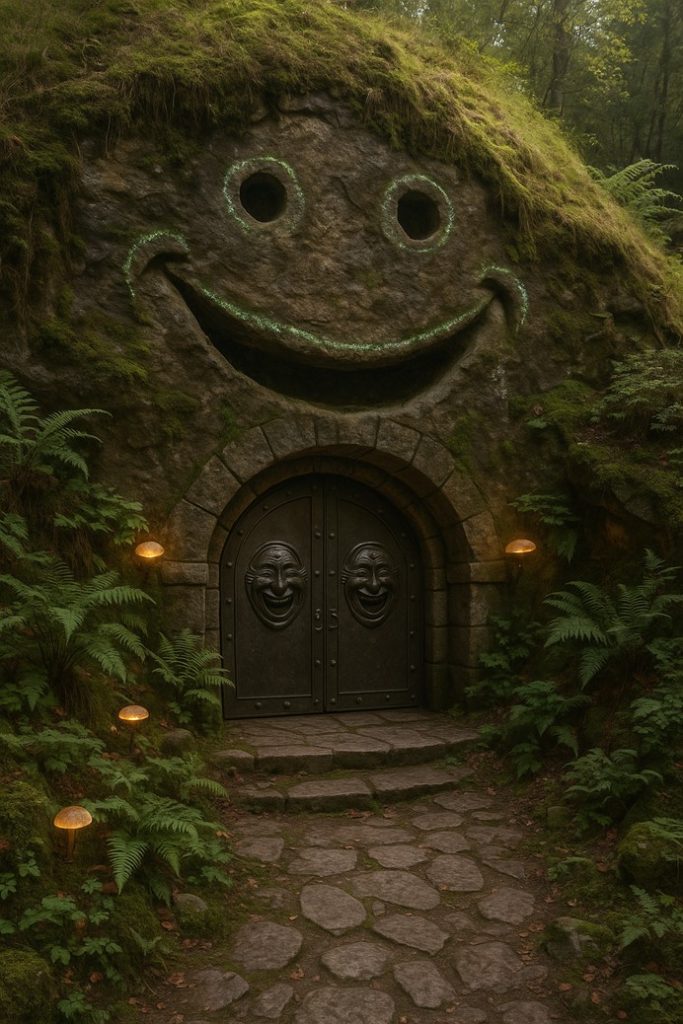
Entrance to Underground 47 of the Laughing Veins
The main entrance hides in plain sight beneath a grassy bluff east of Merristone—a smiling crescent carved subtly into the stone face of a hill. By day it looks like a natural grotto framed by ferns and humming spore-bulbs. By night, faint chuckles echo from within as phosphorescent symbols wink to life across the archway—stylized eyes and mouths that grin wider when approached. The threshold bears the motto in playful runes: “All who frown shall turn around.”
A short descent leads to twin bronze doors shaped like theatrical masks—one laughing, one crying. The left door always opens first, regardless of which handle is pulled, releasing a burst of warm, perfumed air that smells faintly of citrus and smoke. Beyond lies a circular vestibule tiled in mirrored obsidian, where newcomers often startle themselves into laughter seeing their reflections warp into exaggerated expressions. Two mimic doormen named Grin and Guffaw act as greeters, requesting a “toll of mirth”—a joke, a riddle, or a funny story—before allowing deeper entry.
Primary Levels and Key Locations
1. The Welcome Gallery (Level One)
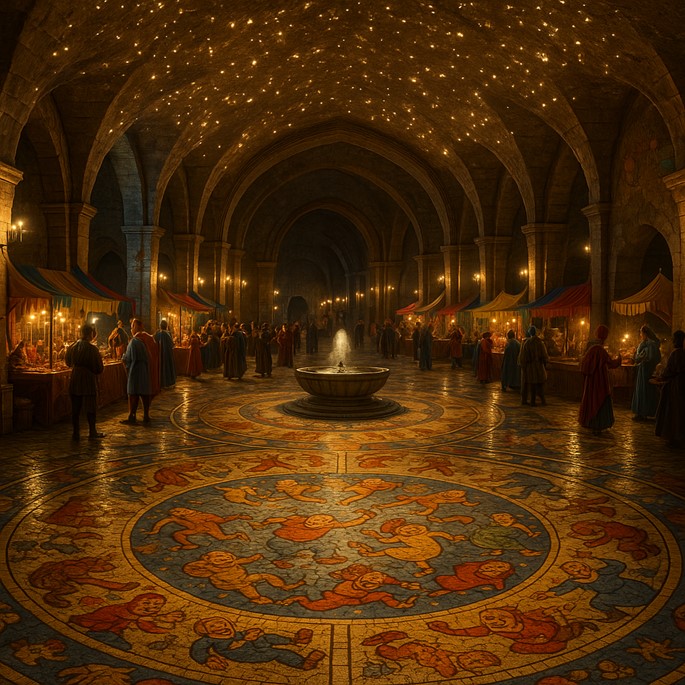
A grand antechamber illuminated by laughter-crystals embedded in the ceiling like a field of stars. The floor mosaics depict historical pranks—pies in faces, vanishing pants, exploding ale kegs—each animated faintly by illusion magic. This level functions as the public plaza, containing:
- The Giggle Gate Market: dozens of brightly colored stalls selling illusion trinkets, joke potions, squeaking shoes, and enchanted whoopee cushions that also serve as air filters.
- The Fools’ Fountain: central basin where enchanted water periodically erupts into giggling bubbles; said to bless newcomers with “light hearts.”
- The Chuckling Choir: street performers who harmonize laughter tones to power the resonance generators.
2. The Ticklish Tunnels (Level Two)

Narrow corridors with gently vibrating walls that “tickle” passing travelers. Residents claim the sensation wards off melancholy and strengthens immunity. This level houses:
- Residences: modest round-door dwellings carved directly into the stone, lined with colorful banners and moving murals that change expressions daily.
- The Smirkhouse Tavern: a massive tavern run by a retired mimic named Madam Grubble; famous for its frothing glow-ale and prank duels.
- The School of Subtle Gags: an academy teaching illusion magic, sleight of hand, comedic timing, and safe pyrotechnic trickery.
3. The Laughing Forges (Level Three)
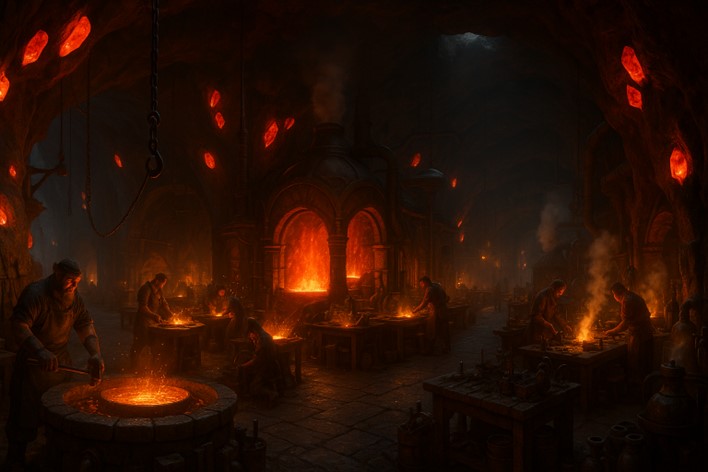
A network of industrial caverns lit by crimson crystal forges that hum to rhythm. Smiths and alchemists specialize in playful engineering—creating automata that juggle, armors that applaud, or blades that hum comedic fanfares.
- Jester’s Crucible: central foundry where laughter resonance is condensed into power cells for lighting and heating.
- Craft Halls of Echo Metal: artisans forge alloys that resonate when struck, producing musical tones.
- Steam Gardens: pipes releasing perfumed steam sculpted into fleeting comic faces.
4. The Prankster’s Promenade (Level Four)
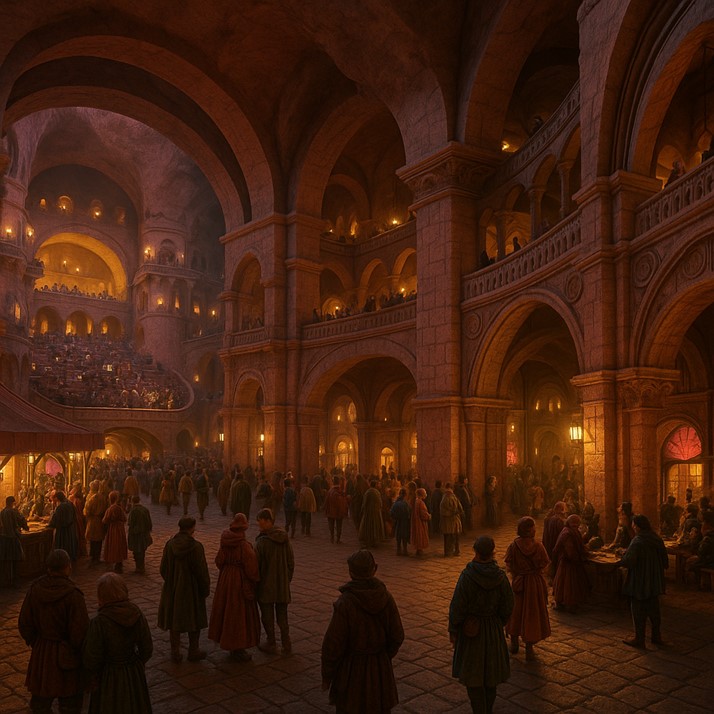
The entertainment district and beating heart of the labyrinth.
- The Grand Chortle Arena: circular amphitheater carved into pink granite where jesters duel with illusions or improvisation; winner receives the Golden Banana Scepter until next week.
- The Hall of Practical Jokes: a museum chronicling the greatest pranks in Saṃsāra’s history, complete with animatronic reenactments.
- The Glow-Brew Cellars: distilleries fermenting laughter-infused beverages—each bottle sealed with a cackling cork.
5. The Whispering Warrens (Level Five)
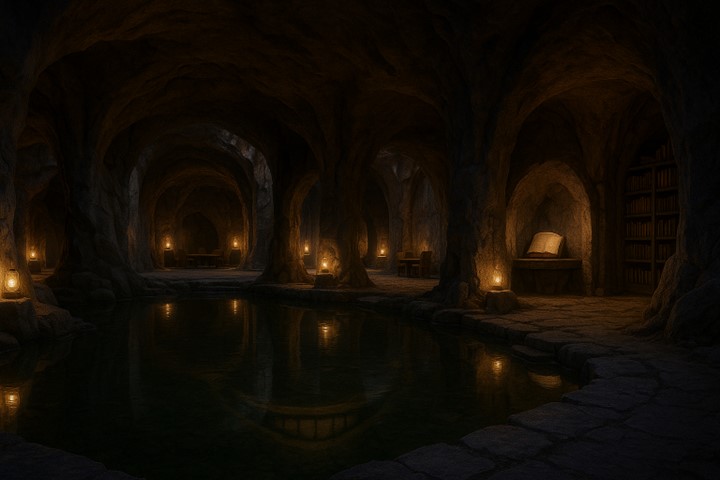
Quieter chambers reserved for meditation, research, and secret councils. The ambient laughter dims here to a soothing hum.
- The Reflective Pool: serene underground lake where reflections grin independently; used for self-examination and emotional attunement.
- Council Cavern of the Crimson Whoopee: semi-political guild hall where jesters, engineers, and merchants settle disputes through pun-contests.
- Hidden Archive of Misplaced Mirth: ancient library recording failed magical experiments, comedic scripts, and scrolls of trick-based enchantments.
6. The Sighing Depths (Level Six)
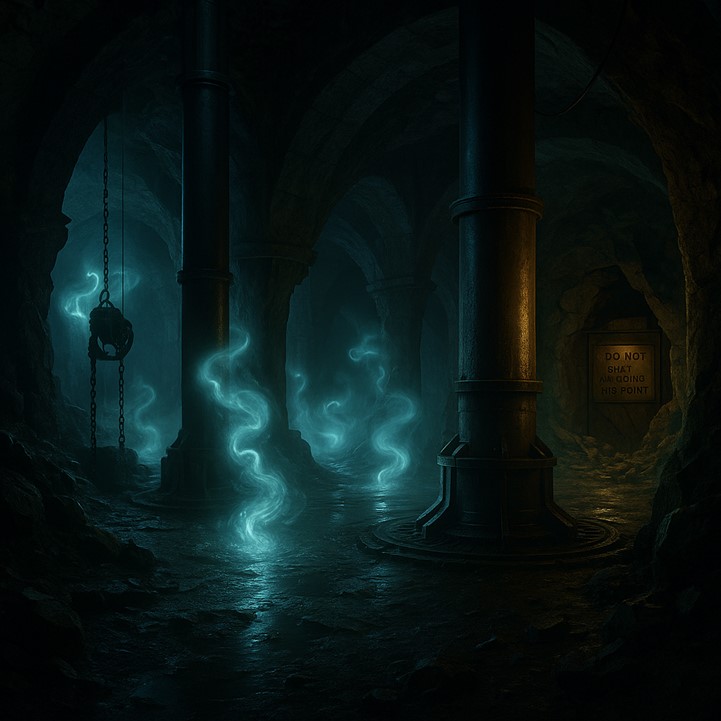
Rarely visited maintenance tunnels where laughter energy condenses into glowing mist. Rumors tell of overcharged resonance forming “Giggle Wisps”—semi-sentient laughter elementals that imitate voices.
- Engine Shafts and Steam Elevators: mechanical lifters connecting the surface and lower levels.
- Collapsed Corridor 9: sealed passage leading to older ruins possibly pre-dating the labyrinth, guarded by illusionary warning signs reading “Do Not Pout Beyond This Point.”
7. The Belly of the Joke (Level Seven)
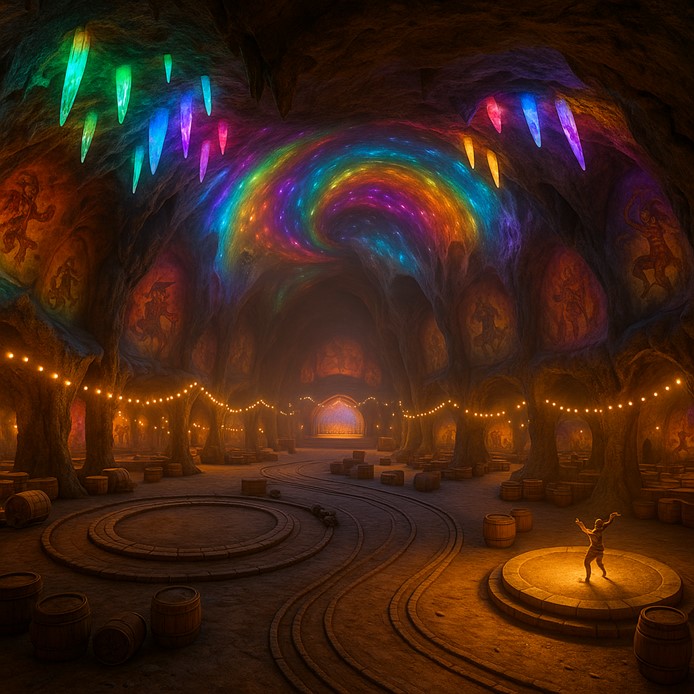
A vast cavern used for the Festival of Snickers. Crystal stalactites emit a rainbow aurora as illusion spells paint the walls with stories of legendary tricksters.
- Festival Grounds: racing tracks for beetle mounts and rolling barrels.
- Stage of Infinite Punchlines: enchanted platform that amplifies laughter into waves of healing energy for the audience.
Environmental Feel and Design Language:
Walls are curved and polished smooth; light ripples like liquid amber through transparent crystal veins. Air carries faint echoes of mirth at irregular intervals—never the same laugh twice. The scent of roasted fungi, ale, and ozone pervades. Decorative bronze pipes run along ceilings, venting faint whistles tuned to comic melodies.
Surrounding Area:
Outside, meadows of rainbow fungi and moss conceal ventilation vents disguised as stone statues of grinning faces. A spiral of carved humor proverbs leads wanderers safely back to the surface town of Merristone.
Tale of Laughing Veins
Joy That Dug Too Deep
Once, long before the first steam hissed from the forges of Saṃsāra, when the light of the upper world still trembled uncertain upon the new-formed mountains, there came a company of beings who found mirth where none should grow. They were called the Delvers of the Grin, miners and alchemists of curious heart, who sought not gold nor gem, but a tone—a resonance that could make the world itself laugh.
In that elder age, the ground still murmured with the songs of its making. The Delvers followed those murmurs downward, saying, “Where the stone giggles, there sleeps joy eternal.” They hollowed chambers, smooth and round, so the echoes would dance more freely, and they embedded crystals in the walls to catch the sound. But the first laughter that filled the halls was not theirs—it came from the stone. It rumbled softly at first, like a belly chuckle under the mountain, then rose in ripples until even the pickaxes beat time to it.
The Delvers grew bolder. They carved faces into the rock so the echoes would have mouths to speak through, and they painted those mouths with powdered joyroot and crushed beetle-shell, so that the smiles would shimmer by lamplight. The deeper they went, the more the laughter followed them. When they finally broke into the great hollow heart of the mountain, they cried, “Here we shall make the world’s first joy-forge!”
They called that cavern The Laughing Veins, for within its walls the veins of crimson crystal pulsed in rhythm with their laughter. Into those crystals they poured sound and delight, hammering joy into solid form. For a time, it was paradise beneath the earth. Children grew up knowing no shadow, for even the dark shimmered with the chuckle of light. The Delvers drank steam that smelled of citrus and sang to the gears that turned their machines.
But laughter, like ore, is not endless. The more they mined it, the thinner it grew, until one day a smith struck his hammer upon a crystal vein and heard not laughter, but a sigh. The mountain had grown weary. Yet they continued, for they had forgotten silence and feared its weight. They built more forges—Jester’s Crucible, Hall of Echo Metal, Steam Gardens—and each drew deeper upon the mountain’s mirth. The stones began to hum unevenly, the laughter breaking into coughs.
Then came Madam Grubble, a mimic who could take the form of any voice. She heard the mountain’s cough and declared, “If the earth may sicken, so too may it be healed.” She brewed the first glow-ale from fermented spores and bottled laughter itself, so that the sound might be returned to the stone when poured. Her tavern, the Smirkhouse, became a sanctuary of shared joy, where all laughter was gifted back to the halls. For a while, the mountain brightened again.
Yet some among the Delvers sought to store too much joy for themselves. They crafted jars of resonant crystal to hoard laughter, believing eternal amusement would make them immortal. The stored laughter soured; it turned into a hollow mockery of itself, a sound without heart. The jars cracked. From them spilled pale vapors—Giggle Wisps, laughter that had forgotten joy. The Wisps drifted through the lowest halls, whispering imitations of the living, echoing voices that never truly laughed.
Fear came to the labyrinth. The once-cheerful halls became quiet, save for the distant giggling mist. The Delvers retreated upward, sealing the deeper tunnels and carving on the doors: “Do Not Pout Beyond This Point.” For centuries the warning was mistaken for jest, but the elders knew it as plea.
Generations passed. The Laughing Veins became legend. New settlers rediscovered the upper tunnels and found that laughter still stirred the stones. They rebuilt the markets and hung banners of every color. From the echo of the first joy-forge they raised the Giggle Gate Market, and from the hollow heart they raised the Grand Chortle Arena, where jesters now duel not with malice but with mirth. They declared that sorrow itself could be smelted into comedy, and thus the Festival of Snickers began, honoring both the joy that built their halls and the silence that nearly claimed them.
In the Whispering Warrens, scholars learned that every echo is the ghost of a forgotten jest. They copied the old scripts of “Comedic Thaumaturgy,” though none could wholly understand them, for the language had been translated and mistranslated across aeons. One scroll begins:
“He who stirs the stone to laughter shall not hear his own voice clear again.”
Some claim it means that laughter binds speaker and echo as one; others believe it warns that the mountain still listens.
When the Festival of Snickers returns each year, they open the sealed gates for a single night. The crimson crystals glow with remembered joy, and the cavern breathes out a deep, contented sigh. Beetle racers thunder through the tracks, illusionary fireworks burst in shapes of smiling faces, and from the Stage of Infinite Punchlines, the laughter swells until it becomes healing light. The sick are cured, the broken mended—at least until dawn, when the magic fades back into gentle hums beneath the stone.
It is said that if one listens closely during the quiet that follows, the mountain itself laughs again—not in mockery, but in relief. For laughter, once shared, can rest.
Moral of the Story: Laughter hoarded becomes hollow, but laughter shared strengthens the world. Joy, like a forge, must breathe between fire and silence—or even the happiest mountain will sigh.