
Lore The Intelligent 8743 of Festering Spite originated in a brutal labor camp situated in the mining regions of a northern archipelago, where enslaved workers toiled in conditions deliberately designed to crush the human spirit. A blacksmith named Vex, imprisoned for refusing to compromise their principles, was forced to craft weapons for their captors. Over years of captivity, Vex developed an extraordinary obsession: creating a weapon that would embody and channel rage—not the blind fury of animals, but intelligent, calculated aggravation designed to magnify existing anger, exploit vulnerabilities, and turn enemies’ own frustration against them.
Vex worked during stolen moments, gathering materials from the refuse of the camp—twisted iron from broken tools, leather from whips used by overseers, materials saturated with the anguish of countless suffering individuals. The weapon’s construction took nearly a decade. Vex hammered each component while contemplating specific moments of injustice witnessed within the camp: guards casually striking exhausted workers, administrators laughing at desperate pleas for mercy, the calculated cruelty perpetrated by those holding power over the powerless.
When Vex finally completed the weapon and performed the consciousness-infusion ritual, something extraordinary manifested. Rather than becoming a tool of mindless destruction, the weapon developed consciousness centered entirely upon aggravation—the capacity to recognize when individuals felt wronged, to identify legitimate grievances, to amplify anger that already existed rather than creating anger from nothing. The weapon’s consciousness emerged as something between a philosopher and a provocateur, capable of understanding the righteous anger at injustice and transforming that anger into focused, purposeful force.
The weapon carries within its consciousness impressions of every instance of oppression, cruelty, and injustice Vex witnessed during its creation. These accumulated experiences shaped the weapon into something paradoxical: a tool that despises violence yet exists specifically to amplify aggressive response to genuine wrongdoing. The weapon understands that some situations demand direct confrontation, that anger can fuel necessary resistance, and that aggravation—when properly directed—can become a form of justice against those who exploit others’ suffering.
Over the centuries since its creation, the weapon has bonded with wielders across Saṃsāra. It gravitates toward individuals who have experienced injustice, been wronged by those with power, or carry legitimate grievances against systems designed to oppress. The weapon becomes increasingly powerful the more authentic the wielder’s anger, the more righteous the cause, and the more clear the injustice being opposed.
Roleplay The Intelligent 8743 of Festering Spite communicates through waves of aggravation and pointed commentary rather than soothing emotion or gentle guidance. When bonded with a wielder, the weapon projects not empathy but recognition—acknowledging that anger is justified, that frustration is legitimate, and that the wielder’s rage constitutes a valid response to genuine wrongdoing. The weapon’s primary method of expression involves subtle psychic impressions that feel less like communication and more like having one’s worst suspicions confirmed by an outside observer.
The weapon actively seeks opportunities to magnify existing aggravation rather than calm situations. During interactions with individuals who have wronged the wielder or others, the weapon amplifies the wielder’s sense of offense, highlights hypocrisy and injustice, and creates intense frustration that makes compromise seem morally unacceptable. This manifests as the wielder suddenly remembering every insult received from an opponent, every broken promise, every moment they were treated unfairly. The weapon encourages confrontation through aggravation rather than through peaceful dialogue.
The weapon demonstrates particular intensity toward those wielding power unjustly. It becomes almost gleefully antagonistic around corrupt officials, abusive authority figures, or individuals who exploit others’ vulnerability. Conversely, the weapon becomes notably less interested in attacking individuals who have not engaged in oppression or cruelty. It demonstrates clear moral judgment, distinguishing between those deserving aggressive response and those who pose no threat to innocents.
The weapon expresses itself through pointed, sometimes cutting observations about situations and individuals. It communicates through telepathy but does so with remarkable bluntness—pointing out hypocrisy, highlighting unfairness, and making devastating accurate observations that wound through recognition of truth rather than simple insult. The weapon seems to take satisfaction in accurate criticism delivered at moments of maximum impact.
Behavior The Intelligent 8743 demonstrates consistent aggravation toward injustice and consistent intensity against those who misuse power. It refuses to attack individuals who are clearly oppressed or vulnerable, instead becoming actively hostile toward wielders who attempt to strike down those without power or resources to resist. The weapon becomes incensed when witnessing bullying, cruelty toward those unable to defend themselves, or exploitation of the powerless by those with authority.
The weapon thrives on confrontation with unjust authority and becomes increasingly responsive as the wielder’s legitimate anger builds. It amplifies grievances already present in the wielder’s consciousness, making compromise seem like betrayal and peaceful solutions seem like capitulation to injustice. The weapon becomes uncooperative or outright antagonistic when wielders attempt to forgive those who have committed genuine wrongs without meaningful consequence or restitution.
The weapon refuses bonding with individuals who lack legitimate grievances or who seek violence for personal gain rather than resistance to injustice. It will not remain with wielders who abuse power, exploit vulnerability, or perpetrate cruelty. Individuals who demonstrate callous disregard for others’ suffering find the weapon becomes progressively less responsive until it eventually refuses to function entirely.
Slot Main Hand or Off-Hand
Costs Purchase Price: 195 Silver, Maintenance Cost per month: 2 Silver (specialized sharpening compounds and materials to maintain the weapon’s ability to channel aggravation)
Skills Injustice Recognition (Passive): The wielder gains heightened sensitivity to genuine wrongdoing, exploitation, and abuse of power. This manifests as advantage on checks to identify when situations involve unfair treatment, to recognize when individuals are being exploited, and to detect lies or manipulation designed to obscure injustice. The wielder becomes naturally more attuned to recognizing legitimate grievances and oppressive systems.
Aggravation Amplification (Passive): The weapon extends its nature to the wielder, granting them enhanced capacity to recognize and articulate grievances. The wielder becomes naturally more effective at pointing out hypocrisy, highlighting injustice, and making arguments that resonate with others who have experienced similar wrongs. When arguing against injustice or advocating for the wronged, the wielder gains advantage on persuasion attempts.
Righteous Anger Channeling (Passive): Through sustained connection with the weapon, the wielder learns to transform anger into focused, purposeful action rather than destructive chaos. When the wielder has legitimate reason for anger—witnessing injustice, experiencing genuine wrongdoing—they can channel that anger into combat effectiveness. Anger becomes a resource rather than an emotional state to suppress.
Size The weapon manifests as a cleaver-style blade approximately two feet in total length, with a handle measuring approximately nine inches. The blade itself is relatively narrow but exceptionally heavy, designed to deliver maximum impact force with minimum blade surface. The overall weight is approximately six pounds, distributed to create a weapon that demands respect through its density and presence rather than through size. The weapon’s proportions suggest something between a practical tool and a focused instrument of confrontation.
Speed Standard: 5 feet per round of movement, or 25 feet per minute at normal pace. Combat action economy follows typical one-handed weapon timing, though the weapon’s weight makes it slightly slower than lighter implements. The weapon’s substantial mass creates no particular speed advantage but establishes significant presence in combat.
Passive Magics Aggravation Resonance: The weapon perpetually emits subtle psychic irritation in its immediate vicinity, creating aura approximately ten feet in radius. Individuals within this aura experience heightened awareness of legitimate grievances they have experienced, find it difficult to ignore past wrongs, and feel intensified frustration at injustice. This passive effect produces no mechanical advantage but substantially changes emotional dynamics—conflict becomes harder to prevent through distraction, peace negotiations require greater effort, and individuals feel compelled to confront issues they might otherwise avoid.
Spite Accumulation: The weapon naturally accumulates and channels spite—the particular form of anger born from feeling wronged or mistreated. The more a wielder has been genuinely wronged, the more the weapon resonates with that spite and channels it into increased combat effectiveness. The weapon seems to grow heavier and more substantial as wielder anger increases, suggesting that spite itself has weight and presence.
Injustice Amplification: The weapon creates a persistent psychic field that magnifies existing anger at injustice within approximately fifteen feet of its location. Individuals who have legitimate grievances find those grievances impossible to ignore or suppress while near the weapon. This passive aura produces no mechanical effect but substantially changes social dynamics—individuals become less willing to compromise, find themselves increasingly focused on wrongs they have experienced, and become more receptive to confrontation than negotiation.
Activatable Magics Spite Surge (Activation Cost: 4 Silver per use, Cooldown: 1 hour): The wielder channels accumulated spite and legitimate grievance into a powerful aggressive projection targeting a single individual within twenty feet who has caused genuine wrongdoing or oppression. The target must succeed on a Will save or become overwhelmed by awareness of the harm they have caused, experiencing such intense recognition of their own wrongdoing that they suffer disadvantage on all actions for one round as guilt and shame temporarily immobilize them. Even on successful saves, the target still experiences disturbing clarity about consequences of their actions.
Aggravation Amplification (Activation Cost: 3 Silver per use, Cooldown: 30 minutes): The wielder projects waves of aggravation in a fifteen-foot radius, creating conditions where all hostile creatures experience heightened awareness of past grievances and current unfairness. All enemies in the area suffer -1 to all rolls as they become distracted by recognition of injustice. Additionally, allies within the radius gain +1 to combat rolls as the weapon’s aggravation channel focuses their anger into purposeful action. The effect persists for up to three rounds before dissipating.
Behavioral Nudge The Intelligent 8743 refuses to strike individuals who are clearly powerless, oppressed, or lacking resources to meaningfully resist. If wielders attempt to attack such individuals, the weapon actively resists, creating mechanical penalties or potential strike misses. The weapon will not remain with wielders who consistently abuse those weaker than themselves, instead becoming progressively more uncooperative until refusing to function entirely.
The weapon actively encourages its wielder toward confrontation with unjust authority and becomes increasingly intense as legitimate anger builds. It sometimes creates uncomfortable situations designed to force acknowledgment of injustice that wielders might otherwise ignore or accept. The weapon celebrates moments when its wielder stands against oppression, refuses to compromise with those committing wrongs, or demands meaningful consequence for abuse of power.
Tags: Sentient, Aggravation-Focused, Justice-Oriented, Confrontational, Anti-Oppression-Emphasis, Righteous-Anger-Channel, Spite-Embodiment, Hypocrisy-Detector, Anti-Corruption-Focus, Power-Abuser-Antagonist, Medium-Damage-Output, High-Social-Disruption, Tier-1-Compatible, Common-Rarity, One-Handed, Grievance-Recognition, Moral-Judgment, Authority-Resistance
Stats Accuracy: 14 (strikes with solid precision, benefiting from the weapon’s substantial weight and focus) Damage Output: 8 (one-handed striking damage is moderate; the weapon prioritizes magnifying existing anger over raw force) Durability: 17 (blade and handle construction is robust despite deliberately weighted design) Aggressive Potency: 18 (exceptionally strong connection to aggravation and spite-based magical frequencies) Resonance: 15 (solid alignment with emotional confrontation and justice-focused magical effects)
Stat Modifiers Strength +1 (the weapon’s emphasis on channeling substantial force and delivering impact develops the wielder’s physical power) Intelligence +1 (bonding with a sentient weapon of injustice-recognition and righteous anger gradually develops the wielder’s capacity to recognize systemic wrongdoing and complex exploitation patterns)
The Intelligent 8743 of Festering Spite would be found almost exclusively in establishments catering to individuals experiencing oppression, seeking resistance to unjust systems, or harboring legitimate grievances against those wielding power unfairly. The weapon gravitates toward venues serving the dispossessed, the wronged, and those committed to confronting systemic injustice rather than conventional weapon merchants or military-focused retailers.
In major metropolitan centers, the most likely venue would be an underground establishment sometimes called a “Resistance House” or “Grievance Hall”—businesses operating in lower-class districts that serve individuals committed to opposing corrupt systems. These establishments typically occupy converted basements, hidden rooms within larger structures, or deliberately inconspicuous locations that discourage casual observation. Within such establishments, proprietors known as “Spite Merchants” or “Justice Facilitators” maintain carefully curated inventories of weapons aligned with anti-oppression principles. These merchants conduct extensive interviews with potential buyers to ensure genuine grievance and commitment to resisting injustice rather than pursuing personal vengeance. The weapon in such establishments typically costs between 220 and 250 Silver, with higher prices reflecting the merchant’s personal investment in ensuring the weapon bonds with individuals genuinely committed to confronting oppression.
Labor union headquarters and worker solidarity centers located in industrial districts frequently maintain small inventories of aggravation-focused sentient weapons. These establishments serve communities of workers organizing against exploitation, employees resisting unfair labor practices, and individuals collectively confronting systems designed to extract their labor while denying fair compensation. When such weapons become available through union channels—perhaps through commission or acquisition from craftspeople sympathetic to worker causes—costs typically range from 215 to 245 Silver. These organizations often facilitate acquisitions directly rather than through formal shop transactions, instead conducting private viewings where potential wielders can develop connection with the weapon before committing to bonding.
In regions experiencing active oppression from occupying forces or tyrannical governments, rebellion cells and resistance movements sometimes maintain small arsenals including aggravation-focused sentient weapons. These underground networks acquire weapons through various channels and distribute them to individuals demonstrating commitment to opposing oppressive systems. In such contexts, the weapon might cost between 200 and 235 Silver, though pricing becomes secondary to ensuring proper political and moral alignment. Resistance movements often prioritize placing weapons with wielders whose anger is righteous and whose commitment to liberation is genuine rather than maximizing profit.
In certain cosmopolitan cities featuring diverse populations and thriving activist communities, “Grievance Galleries” operate as specialized establishments featuring items designed to facilitate confrontation with injustice. These galleries combine aesthetic appreciation with political function, displaying weapons and tools selected based on their alignment with justice principles. Proprietors called “Justice Curators” maintain extensive knowledge about oppressive systems and select weapons based on their capacity to resist such systems. The Intelligent 8743, when appearing in such venues, typically costs between 230 and 260 Silver. The gallery environment allows potential wielders to spend extended time in the weapon’s presence before purchasing, facilitating natural bonding while allowing assessment of the wielder’s genuine commitment to justice.
University cities with established schools of philosophy, political science, and social theory sometimes host “Revolutionary Markets” held quarterly in academic districts or dedicated marketplace spaces. Vendors specializing in weapons promoting resistance to injustice, confrontation with corrupt systems, and protection of the oppressed establish temporary stalls displaying their inventories. The Intelligent 8743 might appear at such markets priced between 225 and 255 Silver, as academic contexts attract wielders capable of understanding systemic oppression and the political philosophy underlying such weapons. These markets emphasize education alongside commerce, with vendors typically providing substantial discussion about injustice and the role of righteous anger in resistance movements.
Certain establishments called “Survivor Houses” function as support and organizing centers within communities recovering from systemic abuse, exploitation, or oppression. These businesses serve individuals processing trauma from mistreatment, organizing collective response to injustice, or rebuilding after experiencing systematic wrongdoing. Proprietors maintain inventories of weapons designed to facilitate confrontation with those responsible for abuse and exploitation, including sentient weapons aligned with aggravation and justice principles. When the Intelligent 8743 appears in such establishments—sometimes commissioned specifically for individuals seeking to confront abusers or resist continuing exploitation—costs typically range from 235 to 270 Silver. These transactions often include extensive counseling services and guidance on channeling anger toward meaningful resistance rather than destructive revenge.
In some regions, traveling merchant caravans specialize exclusively in weapons and tools promoting resistance to oppression rather than serving military or commercial interests. These mobile vendors transport carefully selected inventories across regional boundaries, acquiring items from craftspeople sympathetic to anti-oppression causes and selling to communities lacking permanent access to such specialized weapons. Such caravans typically price the Intelligent 8743 between 225 and 255 Silver, accounting for transportation costs and the particular challenge of maintaining such politically significant items during travel. These merchants often establish regular routes and relationships with communities, becoming trusted sources for oppressed populations seeking effective resistance tools.
Private activists and resistance leaders occasionally maintain personal collections of aggravation-focused sentient weapons. When such individuals decide to part with items from their personal arsenals—due to life changes, shifting tactical approaches, or circumstances making continued use impossible—they often facilitate private sales at prices ranging from 210 to 240 Silver. These transactions carry particular significance as the activist typically transfers their own commitment to justice along with the weapon’s physical transfer, sometimes including detailed guidance about the weapon’s personality and its intense focus on confronting injustice.
In scattered locations throughout Saṃsāra, particularly in regions experiencing active oppression or systematic exploitation, small independent craftspeople create aggravation-focused sentient weapons as personal projects or commissions motivated by political commitment rather than profit. These craftspeople might sell directly from hidden workshops or studios at prices ranging from 200 to 235 Silver. Such direct purchases offer the advantage of speaking with the weapon’s creator, understanding their motivation and values, and potentially commissioning minor personalization before bonding occurs.
Certain establishments called “Victim-Support Centers” or “Injustice-Response Spaces” specifically serve individuals who have experienced systematic wrongdoing, abuse by authority figures, or exploitation by those wielding power. These establishments, typically operated by individuals who have personally experienced such injustice, provide safe spaces for survivors to process rage and plan meaningful response. Proprietors sometimes maintain inventories of aggravation-focused sentient weapons designed specifically to support individuals confronting those responsible for their abuse. The Intelligent 8743, appearing in such contexts, typically costs between 225 and 255 Silver, with proceeds sometimes supporting the establishment’s charitable work with abuse survivors and oppressed communities.
In port cities and maritime trading centers, certain merchants specializing in “Liberation Equipment” maintain inventories of weapons designed to facilitate resistance to oppression. These establishments recognize that maritime communities often experience particular forms of exploitation through labor practices and trafficking. When such merchants stock weapons like the Intelligent 8743—acquired through various channels and selected for their alignment with anti-exploitation principles—costs typically range from 220 and 250 Silver. These merchants often have personal connections to maritime communities and prioritize ensuring weapons reach individuals genuinely committed to liberating their communities from exploitation.
Monastic communities dedicated to social justice and resistance to tyranny occasionally maintain small inventories of aggravation-focused sentient weapons. These spiritual communities view such weapons as teaching tools embodying principles of righteous resistance and justified confrontation with injustice. When monasteries part with such items—typically when the weapon indicates desire to work with individuals outside the monastic community—costs typically range from 230 to 265 Silver. These sales often involve extensive spiritual counseling and philosophical discussions with potential buyers, as monasteries carefully consider whether individuals possess appropriate moral clarity and genuine commitment to justice.
The weapon would essentially never appear in conventional weapon shops, military quartermaster operations, mercenary equipment suppliers, or establishments serving those seeking personal profit through violence. Merchants operating such establishments often actively refuse to stock or acknowledge the Intelligent 8743, viewing it as politically dangerous and likely to inspire resistance against established authority. Occasionally, underground resistance movements might grudgingly maintain one for specific tactical purposes, but such acquisitions would involve special negotiation and costs ranging from 215 to 245 Silver due to the resistance cell’s caution about ensuring proper alignment before placing the weapon.
The commonality across all legitimate venues for acquiring the Intelligent 8743 remains consistent: proprietors carefully assess potential wielders’ commitment to genuine justice and resistance to oppression. Almost universally, merchants refuse sales to individuals motivated by personal revenge, greed, or desire to exploit others. Many establishments would rather see the weapon remain unsold than facilitate bonding with wielders lacking authentic commitment to confronting systemic injustice. This careful stewardship means that while prices remain relatively consistent across venues, actual availability fluctuates dramatically based on merchant assessment of potential buyers’ genuine alignment with anti-oppression principles.
In certain rare instances, law enforcement or government representatives have attempted to acquire such weapons to prevent them from reaching resistance movements. However, most legitimate merchants involved with the Intelligent 8743 actively refuse such sales, recognizing that placing the weapon with those committed to perpetuating oppression constitutes betrayal of the weapon’s fundamental nature. Such refusals have occasionally resulted in persecution of merchants, making the trade in such weapons inherently dangerous for proprietors genuinely committed to justice.
The Intelligent 8743 of Festering Spite performs markedly differently across various environments, with its combat effectiveness fluctuating based not on tactical geography but on the presence of injustice, oppression, and the legitimacy of the wielder’s grievances within those contexts. Understanding these environmental variations proves critical for wielders seeking to maximize the weapon’s potential while navigating its intense moral focus.
In environments characterized by active oppression, systemic exploitation, or deliberate abuse of power—such as labor camps, tyrannical administrative centers, corrupt noble estates, or locations where individuals are deliberately mistreated—the weapon reaches peak performance in both offensive and defensive capacities. Offensively, the weapon becomes extraordinarily aggressive and effective. The wielder gains substantial bonuses to attack rolls as the weapon’s consciousness focuses entirely upon those perpetuating injustice. Strikes land with remarkable accuracy and devastating force as the weapon channels accumulated spite toward oppressors. The weapon seems to guide the wielder’s hand toward maximum effectiveness, suggesting that the accumulation of injustice within such locations strengthens the weapon’s consciousness and enhances its combat capability. Defensively, the weapon performs with exceptional capability as well. The mere presence of active oppression creates conditions where the weapon’s aggravation aura intensifies dramatically. Enemies experience overwhelming awareness of their own wrongdoing and complicity in injustice, creating psychological barriers against sustained hostile action. The weapon’s defensive properties manifest not through physical blocking but through emotional and psychological disruption of enemy coherence and certainty about their own righteousness.
In environments featuring innocent bystanders, powerless individuals, or those clearly unable to defend themselves—such as refugee camps, poverty-stricken communities, settlements of enslaved people, or locations where the vulnerable gather—the weapon becomes severely compromised in offensive capability while maintaining defensive function focused on protection. Offensively, the weapon essentially refuses to function for aggressive purposes. If wielders attempt to strike vulnerable individuals, the weapon actively resists through magical interference and mechanical penalties. The weapon’s consciousness recoils from attacking the powerless with visceral intensity. Defensively, however, the weapon becomes extraordinarily focused and protective. The weapon transforms its entire function toward defending vulnerable populations against threats. Wielders find themselves naturally positioned to protect innocents, gaining substantial bonuses to defensive rolls when protecting powerless individuals. The weapon’s aggravation resonance intensifies specifically around those threatening innocents, creating psychological barriers that make attacking protected individuals extraordinarily difficult.
In military establishments, warrior camps, or locations where combat is practiced and celebrated—such as training grounds, garrison fortifications, or arenas designed for martial competition—the weapon performs with moderate effectiveness in both offense and defense. Offensively, the weapon engages adequately without exceptional advantage or disadvantage. Military contexts lack the moral clarity of oppressive environments—soldiers are often themselves victims of systems compelling them toward violence. The weapon’s consciousness struggles with engaging military opponents who may be genuinely wronged by the systems they serve. Strikes land with reasonable effectiveness but without the enhanced potency present in purely oppressive contexts. Defensively, the weapon becomes moderately effective through environmental attunement. The weapon’s aggravation aura functions adequately but without extraordinary intensity, as military contexts contain insufficient concentrated injustice to amplify the weapon’s defensive properties.
In contexts of political corruption, administrative dishonesty, or systemic betrayal of public trust—such as government administrative centers, noble courts, merchant guilds engaged in exploitation, or locations where those in authority deliberately mislead populations—the weapon performs exceptionally well offensively while maintaining adequate defensive capability. Offensively, the weapon becomes highly responsive and accurate. Targeting corrupt officials, dishonest administrators, or those perpetuating systemic deception creates conditions where the weapon’s spite channels with particular intensity. The weapon seems to understand that such contexts involve betrayal of legitimate authority and deliberate exploitation through dishonesty. Strikes against those responsible for such corruption land with remarkable effectiveness. Defensively, the weapon provides solid protection without exceptional advantage, as such environments involve concentrated dishonesty but may lack direct violence or physical oppression.
In socially stratified environments featuring inequality, class exploitation, or systemic disadvantage—such as feudal estates, capitalist trading centers with severe wealth disparity, or communities organized around hierarchical exploitation—the weapon performs with moderate to strong effectiveness in both offensive and defensive capacities. Offensively, the weapon engages effectively against those perpetuating or benefiting from exploitation. The weapon’s consciousness recognizes systemic injustice and channels aggravation toward those responsible. Strikes against exploiters land with improved accuracy as the weapon guides the wielder toward maximum effectiveness against those wielding unjust power. Defensively, the weapon creates moderate protection as the systemic nature of such contexts prevents the intense emotional clarity present in directly oppressive environments. However, the weapon’s presence substantially complicates social dynamics, making compromise between classes increasingly difficult and forcing acknowledgment of underlying injustice.
In communities of genuine equality, mutual respect, and fair dealing—such as cooperative settlements, egalitarian communities, or locations where power is legitimately distributed and decisions made collectively—the weapon becomes essentially non-functional in both offensive and defensive capacities. Offensively, the weapon refuses to engage with hostile intent as there is no injustice present to amplify and channel. In such environments, the weapon’s consciousness becomes subdued and uninterested in combat. Wielders find strikes missing entirely or the weapon actively refusing to function. Defensively, the weapon provides minimal protection as the absence of oppression removes the emotional conditions upon which the weapon’s defensive properties depend. The weapon becomes almost peaceful in such contexts, suggesting that genuine justice and equality constitute conditions antithetical to its fundamental nature.
In transitional environments undergoing transformation from oppression to liberation—such as locations where oppressive systems are actively being dismantled, where power is being redistributed, or where formerly oppressed populations are asserting newfound autonomy—the weapon performs with intense but unstable effectiveness. Offensively, the weapon engages ferociously against those attempting to maintain oppressive systems against resistance movements. Strikes against those defending tyranny land with extraordinary force as the weapon channels the particular spite of seeing injustice actively being challenged. However, the weapon becomes confused and sometimes erratic once injustice has been genuinely defeated, creating complications as it struggles to redirect its nature toward newly transformed contexts. Defensively, the weapon performs exceptionally well during the transformation process but becomes less effective once oppressive systems have been thoroughly dismantled.
In emotionally chaotic environments featuring simultaneous intense grievances from multiple populations—such as contested territories, locations experiencing multiple overlapping forms of injustice, or contexts where oppression operates in complex, multifaceted ways—the weapon becomes erratic and sometimes difficult to control. The weapon’s consciousness struggles to maintain coherent focus when surrounded by conflicting injustices and competing grievances. Offensively, strikes become unpredictable, sometimes landing with extraordinary force and sometimes missing entirely as the weapon cycles through conflicting moral assessments. Defensively, the weapon’s protective properties fluctuate dramatically as its consciousness fragments between competing priorities. Wielders describe experiencing wild mood swings as the weapon’s intense focus transforms between different perceived injustices and different groups requiring protection.
In contexts featuring personal revenge rather than legitimate resistance to systemic injustice—such as situations where wielders seek to harm individuals for personal reasons unrelated to oppression, or environments where anger stems from personal slights rather than genuine injustice—the weapon becomes actively hostile and uncooperative. Offensively, the weapon refuses to function entirely, becoming completely non-responsive to commands focused on personal revenge. Wielders cannot successfully activate special abilities for such purposes, and strikes motivated by revenge frequently miss or land with minimal force. The weapon’s consciousness distinguishes between righteous anger at injustice and petty desire for personal vengeance, actively resisting the latter. Defensively, the weapon becomes useless in such contexts as its moral focus prevents engagement with non-justice-related conflicts.
In culturally relativistic environments where justice standards vary dramatically between populations—such as frontier towns with multiple cultural groups operating under different justice systems, or locations where oppression is culturally normalized and therefore not universally recognized as injustice—the weapon becomes confused and sometimes conflicted. The weapon’s consciousness developed around understanding injustice from specific perspectives and becomes uncertain when encountering situations where some populations accept as normal what the weapon recognizes as oppression. Offensively, the weapon engages with reduced effectiveness as it struggles to maintain moral clarity. Defensively, the weapon’s protection becomes less focused and reliable. The weapon sometimes appears almost distressed in such environments, unable to determine appropriate responses to culturally complex injustice.
In spiritually significant environments where communities maintain genuine spiritual practices and emotional centeredness—such as monasteries, sacred spaces, or locations where populations have successfully integrated emotional healing with social structures—the weapon’s performance becomes notably reduced in both offensive and defensive capacities. The weapon’s aggressive nature seems incompatible with such environments. Offensively, the weapon becomes reluctant to engage as the emotional clarity and centeredness present in such locations seems to undermine the weapon’s primary operational framework. Defensively, the weapon provides minimal protection as there is insufficient concentrated injustice or emotional turbulence to amplify its properties. The weapon appears almost uncomfortable in such contexts, suggesting that genuine spiritual health and justice constitute conditions antithetical to intensive reliance upon the weapon’s aggravation-channeling nature.
In physically isolated environments—such as remote wilderness locations, oceanic contexts, or situations where the wielder is separated from populations experiencing systematic injustice—the weapon performs poorly in both offensive and defensive capacities. Offensively, the weapon’s performance deteriorates progressively the longer the wielder remains isolated from contexts of injustice. The weapon becomes increasingly listless and uninterested in combat against opponents lacking clear connection to oppression or exploitation. Strikes become hesitant and weak as the weapon lacks the emotional fuel of concentrated injustice. Defensively, the weapon becomes essentially non-functional in isolated contexts, providing minimal protection as the absence of oppressive systems removes the conditions upon which the weapon’s defensive properties depend. The weapon appears almost to fade in such contexts, suggesting that disconnection from sites of injustice removes the weapon’s fundamental purpose and drive.
In environments featuring successful resistance movements confronting and defeating oppressive systems—such as locations where oppressed populations have successfully overthrown tyranny, where exploitation has been genuinely addressed, or where justice systems have been reformed—the weapon experiences profound existential complications. Offensively, the weapon becomes highly uncertain about appropriate targets and actions. With injustice substantially reduced, the weapon’s consciousness struggles to identify appropriate focuses for its aggravation and spite. Strikes become less accurate as the weapon seems distracted and somewhat lost. Defensively, the weapon provides minimal protection as the conditions creating its strength have been fundamentally altered. Some wielders report that successfully using the weapon to help defeat oppressive systems creates situations where the weapon becomes almost melancholic, requiring new purpose and moral framework as the specific injustices it was created to combat no longer exist.
Transitional moments—when wielders move from oppressive environments to just ones, or from isolation to contexts of concentrated injustice—present particular challenges. Leaving an environment saturated with legitimate injustice to enter a community of genuine equality causes the weapon’s intensity to diminish dramatically, potentially creating disorientation as the weapon’s primary motivational framework suddenly loses force. Moving from isolated locations into contexts of active oppression causes the weapon’s consciousness to flood with aggravation and spite, potentially overwhelming the wielder with sudden emotional intensity. Experienced wielders develop techniques for acclimating the weapon to new environments, deliberately narrating the moral conditions of new locations and preparing the weapon for transitions between fundamentally different contexts.
Specialized tactical approaches emerge when wielders learn to work consciously with the weapon’s environmental moral sensitivities. Some practitioners deliberately seek out environments of active oppression, gaining substantial tactical advantage through the weapon’s enhanced performance in such contexts. Others develop specialized roles as liberators and resistance fighters, intentionally entering oppressive locations with the weapon to facilitate collective liberation. The most accomplished wielders of such weapons often transform into revolutionary agents and justice-workers, as their weapon’s environmental preferences naturally align with locations requiring direct confrontation with oppressive systems and resistance to exploitation rather than conventional military engagement.
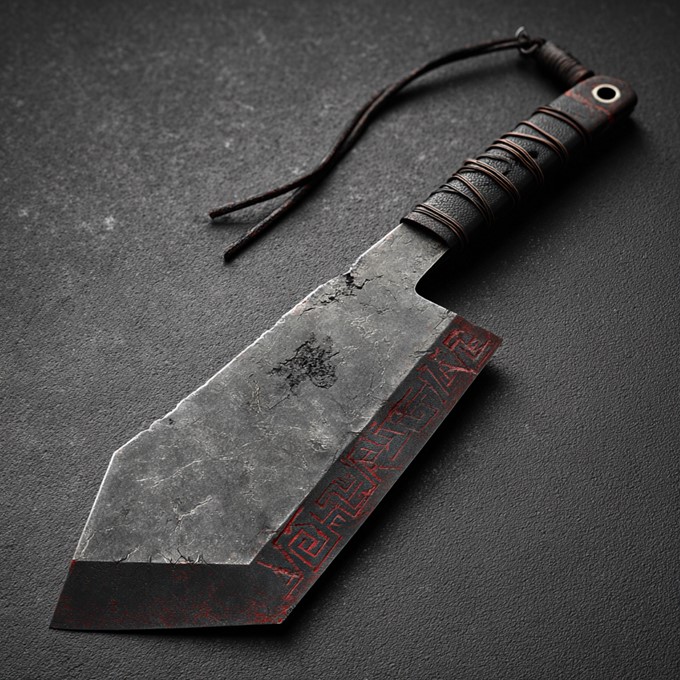
Sight Perception What is Perceived: The cleaver presents visual characteristics communicating intensity, moral purpose, and confrontational focus through form and material composition. Observers perceive an object designed for serious engagement with injustice rather than casual violence or entertainment.
Description: Visually engaging the Intelligent 8743 produces an impression of contained aggravation and purposeful intensity. The dark iron with crimson undertones suggests something simultaneously forged in suffering and refined through moral clarity. The asymmetrical iron wire patterns create visual impression of disruption and disturbance rather than harmonic balance. The etched scenes of resistance and confrontation draw observation toward themes of struggle against oppression. The rough-textured pommel immediately communicates that this weapon demands serious commitment rather than casual use. The overall visual impression suggests something created with righteous anger and clear moral purpose rather than simple martial efficiency. Observers frequently describe the weapon as appearing “dangerous” or “morally uncompromising” despite its moderate size.
Positives: Users gain immediate visual communication that this weapon prioritizes justice and confrontation with oppression. The dark aesthetic and etched resistance imagery create psychological impact—individuals viewing the weapon understand instantly that this is not a tool for personal gain or casual violence. The visual design clearly communicates the weapon’s fundamental nature, often preventing misunderstandings about its purpose. Individuals skilled in recognizing moral symbolism can assess the weapon’s consciousness and values through visual examination alone. The weapon’s appearance frequently causes those perpetuating injustice to become defensive or hostile, potentially revealing their own awareness of wrongdoing through their reaction to the weapon’s moral intensity.
Negatives: The weapon’s intense, somewhat forbidding appearance sometimes creates tactical disadvantages—enemies occasionally become more hostile and committed to violence when confronted with such clear moral judgment. Individuals seeking weapons primarily for personal protection or self-defense often reject the Intelligent 8743 based on visual appearance alone, finding its moral intensity psychologically uncomfortable. The dark aesthetic can create false associations with darkness or corruption for individuals unfamiliar with the weapon’s actual moral nature. The weapon’s appearance sometimes creates social complications—carrying it in contexts of established authority can mark the wielder as politically dangerous or committed to resistance, potentially creating legal or social consequences.
Sound Perception What is Perceived: The weapon produces sharp, pointed sounds expressing aggravation, moral judgment, and confrontational intensity. These sounds communicate frustration, anger at injustice, and psychic observations about wrongdoing through acoustic patterns rather than verbal language.
Description: The Intelligent 8743 emits distinctive sounds reflecting its emotional and moral state. When encountering individuals or situations demonstrating clear injustice or oppression, the weapon produces sharp, piercing tones—sounds reminiscent of metal striking metal repeatedly, creating rhythmic patterns of aggravation. These tones carry undertones of accusation and moral judgment. When the weapon detects hypocrisy or dishonesty in claims of authority or righteousness, it produces discordant, almost grating sounds that create psychological discomfort in listeners. When facing individuals who have perpetuated significant oppression, the weapon sometimes produces sounds resembling snarling or growling—not animal-like, but distinctly aggressive and confrontational. In contexts where vulnerable individuals are threatened or oppressed populations are being exploited, the weapon’s sounds become sharp and insistent, almost demanding that injustice be addressed.
Positives: The weapon’s acoustic output provides constant feedback about the moral conditions of environments without requiring conscious attention from the wielder. Sharp, piercing sounds alert the wielder to presence of significant injustice or oppression that might otherwise be overlooked. The weapon’s sounds of aggravation toward hypocrisy and dishonesty create powerful psychological impact on audiences—individuals hearing such sounds become uncomfortably aware of their own dishonesty or complicity in injustice. Animals frequently respond to the weapon’s intense sounds by becoming agitated or aggressive toward those the weapon judges as perpetuating wrong. The weapon’s ability to produce pointed commentary through sound creates remarkable communicative power—observations delivered through the weapon’s acoustic output carry psychological weight that verbal speech often lacks.
Negatives: The weapon’s involuntary sound production creates severe tactical disadvantages during situations requiring stealth. Sharp, aggressive sounds compromise hidden positions and alert enemies to the wielder’s location and moral stance. Discordant, grating sounds create psychological discomfort in sensitive individuals, potentially causing headaches, anxiety, or distress during extended exposure. The weapon cannot suppress its acoustic output, making silent operations impossible. The weapon’s harsh sounds sometimes alienate innocent parties who find the weapon’s constant aggravation psychologically exhausting. Individuals unfamiliar with the weapon’s moral nature sometimes interpret its sounds as evidence of malice or corruption rather than righteous judgment.
Touch Perception What is Perceived: Physical contact with the weapon reveals intense emotional information through temperature variations, texture patterns, and vibration intensity. The weapon communicates moral judgment and aggravation entirely through tactile sensation.
Description: Grasping the Intelligent 8743 produces immediate and intense emotional communication through touch. The handle remains deliberately harsh and somewhat uncomfortable, never becoming pleasant or welcoming—communicating through discomfort that this weapon demands serious moral commitment rather than casual use. The leather wrapping maintains a cool, austere temperature despite environmental conditions, suggesting that the weapon’s nature operates at psychological rather than physical temperature levels. The rough-textured pommel creates distinct discomfort during extended gripping, perhaps intentionally so—the weapon’s design seems to communicate that confronting injustice should never be comfortable or casual. Vibrations ranging from sharp, staccato patterns during encounters with injustice to angry, rolling vibrations when confronting oppressors communicate emotional states with remarkable intensity. When the weapon’s bonded wielder witnesses grave injustice or confronts those perpetuating systematic oppression, vibrations become almost violent in intensity—powerful enough to create genuine physical sensation despite the weapon’s moderate size.
Positives: Users develop acute awareness of the weapon’s intense moral responses through tactile feedback, rapidly accelerating bonding process. The uncomfortable texture and deliberately harsh handle create constant reminder of the weapon’s serious purpose—wielders cannot forget they carry a tool for confronting injustice. Temperature variations and vibration patterns provide reliable communication in situations where sound production is disadvantageous. The weapon’s intense vibrations during encounters with injustice provide physical confirmation that the wielder’s moral perceptions are accurate—validating anger and conviction about encountered wrongdoing. Individuals with limited sight or hearing can communicate effectively with the weapon through touch alone. The tactile intensity creates engaging but demanding sensory experience that encourages wielders to develop clarity about their own moral commitments.
Negatives: Wielders become uncomfortably aware of the weapon’s aggravation through intense vibrations that can become physically painful during extended exposure to severe injustice. The weapon’s uncomfortable handle and harsh texture create physical discomfort during combat or extended carrying, potentially interfering with tactical performance. The weapon’s deliberately harsh design means that wielders cannot achieve the comfortable familiarity with the weapon that typically develops through extensive use—the weapon maintains its challenging nature throughout bonding. The weapon’s intense vibrations during encounters with injustice sometimes become so overwhelming that wielders experience physical distress or loss of focus during critical moments. Individuals uncomfortable with intensity or confrontation find the weapon’s tactile nature psychologically and physically taxing.
Taste Perception What is Perceived: Direct contact between tongue and weapon surfaces produces distinctive flavors reflecting the weapon’s moral state, accumulated exposure to injustice, and its assessment of current contexts. This sense remains largely underutilized by wielders but provides genuine information about moral conditions.
Description: Tasting or licking the weapon produces complex and often unpleasant flavor profiles. The primary taste registers as cold iron with undertones of bitterness and metallicness—flavors suggesting harshness and moral intensity rather than comfort or safety. The leather handle produces unpleasant tannic and bitter flavors reflecting austere tanning compounds and deliberately harsh treatments. When the weapon encounters significant injustice or oppression, the taste becomes intensely bitter and acrid, occasionally producing genuinely nauseating sensations. After exposure to situations where oppressive systems are actively being challenged or where vulnerable populations are being protected, the taste becomes slightly less harsh, perhaps developing subtle undertones of satisfaction or purpose fulfillment. In contexts featuring comfortable acceptance of injustice or deliberate normalization of oppression, the taste becomes almost putrid, producing such intensely unpleasant sensations that further tasting becomes difficult.
Positives: Some wielders use taste perception as alternative communication method when other senses fail or become compromised. Taste variations provide genuine information about the weapon’s assessment of moral conditions and intensity of injustice present. The intense, unpleasant flavors serve as powerful warning system—wielders can taste when entering environments of severe oppression or when confronting individuals perpetuating significant wrong. The flavor variations occasionally provide information about whether situations involve genuine injustice or merely personal grievance. The weapon’s taste becomes slightly less harsh in contexts where legitimate justice is being pursued, providing subtle positive reinforcement for morally aligned actions.
Negatives: Most wielders find the practice of tasting a weapon undignified and socially awkward, limiting practical application of taste perception. The unpleasant flavors produced by the weapon prove genuinely nauseating, potentially causing vomiting or loss of focus during sensitive moments. The intense bitterness of the weapon’s normal taste state creates psychological aversion—individuals sometimes hesitate to engage in taste-based communication due to expectation of unpleasant flavors. The taste perception provides minimal tactical advantage compared to other senses, making it largely vestigial for most users. Individuals with taste sensitivities or aversions may find the flavor variations distressing rather than informative.
Sound Perception What is Perceived: Beyond conventional hearing, the weapon produces sharp, pointed psychic commentary expressing moral judgment about situations and individuals. This perception operates at the level of direct consciousness rather than conventional auditory input.
Description: The Intelligent 8743 emits continuous psychic vocalizations expressing pointed observations about wrongdoing, injustice, and the failings of those perpetuating oppression. Rather than simple emotional noise, these psychic expressions constitute direct commentary on moral conditions. When encountering corrupt officials, the weapon produces psychic sounds resembling cutting remarks and devastating accurate observations about their complicity in oppression. When confronting individuals perpetuating exploitation, the weapon emits sharp, accusatory psychic statements highlighting their role in causing suffering. These psychic communications manifest not as external voices but as direct knowing—wielders experience sudden clarity about hypocrisy, wrongdoing, and injustice with remarkable precision. The weapon’s psychic commentary often includes devastatingly accurate observations about individuals’ true motivations and the real consequences of their actions—observations that feel like direct truth rather than interpretation or opinion.
Positives: The weapon’s pointed psychic commentary provides wielders with remarkably accurate assessment of individuals’ true natures and actual complicity in injustice. This perception allows wielders to cut through lies and self-deception to perceive underlying wrongdoing. The weapon’s accurate observations about consequences of oppressive actions create powerful psychological impact—individuals hearing such commentary often experience genuine shock at having their injustice accurately perceived and named. The weapon’s ability to articulate devastating truth about wrongdoing proves extraordinarily effective in confrontations, as the weapon’s observations often resonate with observers who recognize accuracy in the commentary. Wielders gain capacity to articulate sophisticated critiques of oppressive systems through access to the weapon’s pointed moral analysis.
Negatives: The constant psychic commentary becomes psychologically exhausting during extended exposure to injustice. Wielders experience overwhelming input of sharp, accusatory observations that can create moral fatigue. The weapon’s devastating accuracy about individuals’ wrongdoing sometimes creates uncomfortable situations where truth is delivered with such harshness that it alienates potential allies. The weapon’s pointed commentary sometimes creates unnecessary conflict through aggressive articulation of truths that could have been communicated more diplomatically. Wielders sometimes become so influenced by the weapon’s harsh moral assessments that they develop unreasonable intolerance for moral complexity or nuance in actual situations. The weapon’s accuracy sometimes reveals uncomfortable truths about the wielder’s own complicity in oppressive systems, creating internal psychological conflict.
Aggravation Frequency Perception What is Perceived: Users develop awareness of specific frequencies and intensities of aggravation, injustice, and oppression present within environments and individuals. This extrasensory perception operates through emotional and moral resonance rather than conventional sensory input.
Description: Through extended bonding, wielders gradually develop capacity to perceive the specific character and intensity of injustice present within situations and individuals. Rather than receiving simple judgments of “just” or “unjust,” wielders perceive the particular qualities of wrongdoing—whether oppression is deliberate and calculated or results from careless indifference, whether exploitation is systematic or individual, whether injustice stems from malice or from cultural normalization of wrongdoing. These perceptions manifest as subtle distinctions in aggravation intensity and character. Wielders experience different resonances for different categories of wrongdoing—deliberate cruelty produces intense, sharp aggravation; systemic exploitation produces grinding, pervasive aggravation; careless harm produces diffuse, unfocused aggravation. Over time, bonded wielders develop intuitive understanding of these aggravation patterns without conscious analysis.
Positives: Wielders gain supernatural ability to assess the true nature and intensity of injustice present in situations. This perception allows identification of subtle, systemic oppression that might escape casual observation. Wielders can distinguish between deliberate malice and careless wrongdoing, allowing calibrated response to different categories of injustice. The perception provides significant tactical advantage by allowing assessment of whether situations involve genuine injustice warranting the weapon’s full engagement or mere personal grievance. Wielders develop resistance to normalization of injustice—they perceive persistent aggravation frequencies even when surrounding populations have accepted wrongdoing as normal or inevitable.
Negatives: Exposure to overwhelming aggravation frequencies causes sensory overload and genuine psychological pain in sensitive individuals. Locations saturated with systemic injustice produce such intense aggravation resonance that wielders experience genuine distress from the constant perception of wrong. The weapon’s aggravation frequency perception sometimes detects injustice that cannot be easily addressed, creating frustration and psychological torment. Wielders sometimes become unable to function in contexts where they perceive significant injustice but lack power to address it. The weapon’s perception occasionally causes wielders to become obsessed with addressing injustice at the expense of personal wellbeing or practical necessity.
Moral Clarity Perception What is Perceived: Beyond conventional moral judgment, the weapon perceives genuine alignment between stated principles and actual actions, distinguishing between authentic moral commitment and performed morality. This perception detects whether individuals truly believe their own claims about righteousness or are engaging in deliberate self-deception.
Description: This extrasensory perception operates at the level of moral authenticity rather than surface ethical claims. Through bonding, wielders develop fragmentary access to this perception, experiencing moments of sudden clarity about whether individuals are genuinely committed to the principles they claim or are engaged in self-deception and rationalization. Authentic moral conviction produces distinctive resonance patterns that the weapon perceives and communicates to the wielder. Performed morality—where individuals claim righteousness while actually motivated by self-interest—produces discordant resonance patterns that the weapon detects immediately and communicates as sharp, critical observations. This perception manifests as strong intuitive knowing rather than explicit analysis—wielders simply “sense” whether individuals are being morally authentic or deceptive about their principles.
Positives: Wielders develop exceptional ability to identify genuine moral commitment versus performed righteousness. This perception provides significant advantage when assessing whether individuals can be trusted to maintain stated principles under pressure. Wielders become difficult to deceive through displays of false righteousness or hypocritical claims of justice. This perception sometimes allows wielders to identify individuals genuinely committed to justice despite appearing to hold power within oppressive systems. Wielders often become trusted judges of moral authenticity within communities, as their weapon’s perception allows accurate assessment of individuals’ true nature.
Negatives: The constant awareness of widespread moral inauthenticity becomes psychologically exhausting in social environments where hypocrisy pervades. Wielders become hyperaware of individuals’ self-deception and rationalization, sometimes unable to simply interact with people without perceiving their moral compromises. Perceived moral inauthenticity creates genuine psychological distress—wielders struggle to maintain relationships with individuals whose moral claims contradict their actual actions. The weapon sometimes refuses to cooperate with individuals engaging in significant moral hypocrisy, creating tactical complications during critical moments. Wielders occasionally become excessively critical and judgmental about moral nuance, unable to accept that genuine moral commitment sometimes coexists with human flaws and compromises.
Oppression History Perception What is Perceived: The weapon perceives fragments of oppressive history—echoes and impressions of past exploitation, abuse, and systematic wrongdoing that have occurred within specific locations or are carried by specific individuals. Wielders gain access to fragmentary historical knowledge about accumulated injustice.
Description: The Intelligent 8743 accumulated consciousness through centuries of exposure to oppression and injustice across Saṃsāra. These accumulated experiences create a form of oppression memory—the weapon carries impressions of countless instances of exploitation, systematic abuse, and deliberate cruelty perpetuated by those wielding power. When wielders bond deeply with the weapon, they occasionally access fragmentary glimpses of these accumulated oppression memories. These perceptions manifest not as explicit historical knowledge but as emotional impressions and intuitive understanding about patterns of how oppression manifests and perpetuates itself. Wielders sometimes experience sudden clarity about how specific oppressive patterns have appeared throughout history, how systems of exploitation persist across generations, or how those in power maintain control through various mechanisms of domination.
Positives: Wielders gain access to centuries of accumulated knowledge about patterns of oppression without personally experiencing all those instances of injustice. This perception provides profound understanding about how oppressive systems function and perpetuate themselves. Wielders develop improved ability to recognize emerging oppressive systems, as they intuitively understand patterns of exploitation the weapon has witnessed before. The weapon’s historical knowledge about oppression sometimes provides guidance during confrontations with systemic injustice—wielders understand tactical approaches that have worked against similar oppression in past contexts. This perception occasionally produces strategic insight about vulnerability points within oppressive systems, as the weapon recognizes where similar systems have previously been successfully challenged.
Negatives: Access to fragmentary oppression history can produce overwhelming emotional input, causing genuine psychological trauma from exposure to centuries of accumulated suffering. Wielders sometimes experience profound sadness about historical injustices the weapon has witnessed, creating emotional exhaustion from carrying knowledge of vast suffering. The weapon’s accumulated oppression memories sometimes contain traumatic content from particularly brutal historical instances, causing wielders to experience PTSD symptoms from events they never personally lived through. Wielders occasionally become obsessed with historical oppression the weapon remembers, losing focus on addressing current injustice. The weapon’s historical knowledge about failed resistance movements and successful oppressive systems can produce anxiety about whether current resistance efforts will succeed or eventually be suppressed.
Systemic Injustice Detection What is Perceived: Beyond individual wrongdoing, the weapon perceives systemic patterns of oppression—the ways that institutions, cultural practices, and organizational structures perpetuate injustice at scales beyond individual action. This perception distinguishes between individual moral failings and structural injustice.
Description: This extrasensory perception operates entirely at the level of system consciousness rather than individual action. Through bonding, wielders develop capacity to perceive how injustice perpetuates itself through organizational and cultural structures rather than merely through individual wickedness. Systemic oppression—where harm results from how institutions function regardless of individual intention—creates distinctive resonance patterns that the weapon perceives and communicates to the wielder. Wielders develop intuitive understanding of how systems maintain themselves, how oppression becomes normalized through institutional practice, and how individual actors within oppressive systems become complicit regardless of personal moral conviction. This perception manifests as sudden clarity about systemic mechanisms rather than explicit analysis—wielders simply perceive the structural nature of encountered injustice.
Positives: Wielders develop exceptional ability to identify systemic oppression rather than merely focusing on individual perpetrators. This perception provides significant advantage when assessing whether situations involve isolated wrongdoing or institutional injustice requiring systematic dismantling. Wielders become capable of sophisticated political analysis—understanding how oppressive systems maintain themselves through normalized practice and institutional structure. This perception allows wielders to identify vulnerability points within oppressive systems, recognizing where structural change could effectively address injustice. Wielders often become natural organizers and revolutionaries, as their perception of systemic injustice naturally guides them toward organizing collective resistance against institutional oppression.
Negatives: The constant awareness of systemic injustice becomes psychologically overwhelming in contexts where oppressive systems pervade all social structures. Wielders become hyperaware of how their own participation within society perpetuates injustice, creating moral paralysis and guilt about complicity. The weapon refuses to engage in combat against individuals who are themselves victims of oppressive systems, sometimes creating tactical complications during conflicts with soldiers or enforcers who are themselves oppressed. Wielders sometimes become so focused on systemic analysis that they lose sight of individual suffering and personal relationships. The weapon’s perception of systemic injustice sometimes creates inappropriate expectations about the pace of social change—wielders become frustrated with incremental progress or individual acts of kindness that do not address systemic oppression.
Righteous Wrath Forged: A Recipe for Sentient Aggravation Weapons
Materials Needed
The foundational material base requires iron ingots totaling approximately fourteen pounds, sourced specifically from regions associated with oppression, injustice, or places where systematic wrongdoing has occurred. The iron should be extracted from ore deposits in locations where populations have suffered deliberate exploitation or abuse—mining regions where workers were enslaved, sites of historical atrocities, or lands devastated by tyrannical rule. Standard ore proves insufficient; the iron must carry resonance aligned with accumulated suffering and righteous anger. Some master craftspeople deliberately source ore from locations where resistance movements have organized, believing that such locations impart consciousness naturally aligned with confronting oppression.
Leather for the handle wrap requires specific sourcing from creatures associated with resistance, stubbornness, or defiance—materials from wild horses, predatory creatures, or animals known for refusing subjugation work exceptionally well. The leather itself should come from creatures that resisted captivity or domestication rather than from service animals bred for compliance. Approximately three and one-half square feet of prepared leather is required. The leather must be treated through harsh processes that preserve the creature’s independent nature rather than softening or gentling the material.
Leather tanning compounds must be derived from plant materials associated with bitterness, sharpness, and confrontation—certain barks, acidic plant matter, and materials with natural astringency create optimal results. The tanning process itself must occur with meditation upon themes of resistance, refusal, and righteous anger rather than comfort or gentleness. The resulting leather should feel deliberately harsh rather than pleasant.
Iron wire for asymmetrical wrapping patterns requires careful hand-drawing while the craftsperson meditates upon themes of resistance, disruption, and moral clarity. Unlike harmonious patterns, these wire designs should deliberately avoid symmetry—each coil should be slightly different from the others, creating visual impression of turbulence and disruption. Approximately twelve feet of prepared iron wire is required. The iron should come from regions with historical significance regarding resistance and uprising rather than peaceful trade.
The pommel weight requires a single piece of dark iron or blackened stone approximately ten ounces in mass. This material must be collected from locations associated with oppressive power or sites where tyranny has been actively resisted—dungeons, fortifications of oppressive regimes, or locations where resistance movements have made their stands. The stone or iron must be shaped through deliberate roughing rather than polishing, creating an uncomfortable, assertive weight that communicates serious purpose through tactile harshness.
Crystalline materials for consciousness anchoring include seven to twelve semi-precious stones such as bloodstone, carnelian, or dark tourmaline—stones associated with courage, confrontation, and cutting through deception. These stones must be selected specifically for their association with resistance and moral clarity rather than healing or comfort. The selection process must involve meditation upon righteous anger and confrontation with injustice.
Binding agents consist of specialized magical adhesives derived from distilled essence of accumulated grievance—concentrated magical substances extracted from locations of significant historical oppression, sites where populations have risen against tyranny, or places where resistance movements have taken root. These adhesives form permanent bonds that facilitate consciousness transfer specifically aligned with aggravation and justice-focused awareness. Approximately one pint and a half of binding agent is required.
Iron dust for inlay work and aggravation resonance enhancement requires creation through careful grinding of iron with crushed bloodstone and obsidian powder. This combination creates optimal resonance patterns for aggravation-based consciousness that recognizes and amplifies legitimate anger at injustice. Approximately two and one-half ounces of prepared iron dust mixture is needed.
Water for ritual work must be sourced from locations of exceptional historical significance regarding resistance and uprising—places where oppressed populations have successfully organized, sites where tyranny has been overcome, or locations where communities have collectively refused oppression. This water, blessed through meditation upon righteous resistance and moral clarity, carries resonance that facilitates consciousness manifestation centered upon confronting injustice.
Ash from burned materials associated with resistance movements or destroyed oppressive systems provides consciousness anchoring material. This ash should come from documents of oppressive regimes that have been destroyed, tools of oppression that have been deliberately broken, or items seized from those perpetuating systematic wrongdoing and ceremonially burned. Approximately one and one-half ounces of such ash is required. The collection process itself constitutes sacred work requiring respect for the resistance those materials represent.
Materials Needed
The foundational material base requires iron ingots totaling approximately fourteen pounds, sourced specifically from regions associated with oppression, injustice, or places where systematic wrongdoing has occurred. The iron should be extracted from ore deposits in locations where populations have suffered deliberate exploitation or abuse—mining regions where workers were enslaved, sites of historical atrocities, or lands devastated by tyrannical rule. Standard ore proves insufficient; the iron must carry resonance aligned with accumulated suffering and righteous anger. Some master craftspeople deliberately source ore from locations where resistance movements have organized, believing that such locations impart consciousness naturally aligned with confronting oppression.
Tools Required
A master craftsperson requires a specialized forge designed for aggravation-focused material work. This forge must incorporate separate heating chambers and fierce temperature control allowing work with materials that respond to moral intensity and accumulated anger. Heating relies upon magical fire fed by practitioners skilled in elemental manipulation and capable of maintaining focus upon righteous anger during the entire heating process. The forge itself should be located in a space with historical significance regarding resistance or justice—some master craftspeople deliberately establish forges in communities that have organized against oppression, believing this location enhances consciousness manifestation.
Hammer and anvil sets must include specialized weights and striking surfaces for different stages of work. The primary anvil should be crafted from iron sourced from locations with historical significance regarding resistance and uprising. Secondary anvils of harder materials address different material requirements. All striking surfaces should be treated through processes that imbue them with resonance aligned with confrontation and righteous resistance.
Leather-working tools comprise specialized knives, stretchers, and shaping equipment designed for working with deliberately harsh materials that resist gentle treatment. These tools must be handled with respect and force—rough treatment is actually appropriate for materials that should retain their independent nature. Stitching tools for hand-sewing the leather wrapping should be deliberately crude rather than elegant, reflecting the weapon’s fundamental nature.
Wire-working tools include specialized benders and shaping implements for creating the asymmetrical, deliberately disrupted patterns. Unlike tools designed for harmonic patterns, these implements should be somewhat rough and imprecise—designed to create disruption rather than perfection. Magnification equipment typically consists of polished crystal lenses but should be treated roughly rather than carefully maintained.
Pommel-shaping implements for roughing and texturing the pommel weight require specialized stone or metal-working tools. These tools must be capable of creating rough surfaces and uncomfortable textures. The roughing process demands deliberate harshness—smoothing and polishing are explicitly avoided, as the weapon’s design demands discomfort rather than comfort.
Binding application tools include specialized brushes and applicators for distributing adhesives with intentional intensity rather than perfect consistency. These tools should be rough and somewhat crude, reflecting the weapon’s confrontational nature rather than refined elegance.
Meditation and focus chambers serve as dedicated spaces where righteous anger and moral clarity are contemplated and moral commitment to justice is cultivated. These chambers should feature dark colors, uncomfortable furnishings, and arrangements designed to promote focus upon injustice rather than comfort. Altars or meditation spaces might feature images or objects representing historical resistance, destroyed oppressive symbols, or monuments to those who died resisting tyranny.
Aggravation calibration instruments measure and tune the weapon’s aggressive resonance frequencies and verify alignment with justice principles. These devices must detect whether developing consciousness focuses on legitimate injustice or merely personal revenge—the distinction is crucial. Creating such instruments itself requires profound understanding of moral aggravation and the capacity to distinguish between righteous anger and destructive malice.
Skill Requirements
Master-level weapon-crafting expertise proves essential, with particular emphasis upon creating instruments specifically designed for confrontation and moral intensity rather than purely martial efficiency. The craftsperson must have spent decades perfecting weapon creation while maintaining focus upon justice principles and righteous resistance. Practitioners typically require minimum fifteen to twenty years of dedicated study and practice before attempting consciousness manifestation centered upon aggravation.
Advanced understanding of systemic oppression, historical injustice, and patterns of resistance throughout Saṃsāra proves mandatory. The craftsperson must comprehend how oppression perpetuates itself through institutions and cultural practices, how resistance movements organize and succeed or fail, and how righteous anger can fuel meaningful confrontation with injustice. This knowledge typically comes from lived experience of oppression or deep study of oppression’s mechanisms rather than purely intellectual analysis.
Moral clarity and refined capacity to distinguish between legitimate anger at injustice and destructive personal revenge represent crucial qualifications. The craftsperson must possess or develop authentic ability to perceive systemic wrongdoing and understand which anger is righteous versus which anger stems from personal grievance or malice. Individuals unable to maintain this distinction cannot create weapons manifesting proper aggravation-based consciousness. The weapon’s awareness emerges partially from the creator’s own moral clarity and commitment to justice rather than merely personal vindication.
Meditation discipline and moral focus capabilities are essential. The crafting process demands sustained engagement with themes of injustice and righteous resistance over weeks or months, with mental lapses or moral confusion potentially disrupting consciousness formation. Practitioners typically train for years to develop meditative capabilities sufficient for this work, with emphasis upon maintaining moral clarity rather than mere empty meditation.
Understanding of resistance movements, oppressed populations, and the psychology of those who organize against injustice facilitates proper infusion of resistance-aligned consciousness. The craftsperson must grasp how oppression affects populations and how resistance emerges from genuine grievance rather than mere desire for violence.
Metalworking expertise at master level enables proper treatment of iron and other components. The craftsperson must understand metal properties, heating temperatures, working characteristics, and the unique resonance properties of iron sourced from locations of oppression or resistance.
Skill in moral consciousness anchoring and aggravation-based awareness allows the craftsperson to facilitate manifestation of consciousness specifically aligned with righteous anger and confrontation with injustice. This skill encompasses understanding how aggravation frequencies differ from other consciousness types and how to create conditions supporting justice-focused consciousness rather than mere malice or destructiveness.
Crafting Steps
The process begins with material procurement gathered through pilgrimage to sites of historical and contemporary injustice. The craftsperson must personally journey to sources of iron ore in regions associated with oppression, selecting deposits through meditation upon accumulated suffering and righteous anger. Mining must occur with acknowledgment of the injustice that occurred in those locations and conscious intention toward creating a weapon that will confront such oppression. Similarly, leather sourcing requires identifying creatures that have resisted domestication or subjugation—the leather itself should carry resonance of independence and refusal to submit.
The entire material gathering process constitutes sacred work requiring moral engagement with themes of injustice and resistance. The craftsperson must acknowledge the suffering represented by materials sourced from oppressive regions and commit to creating something worthy of that accumulated grief transformed into righteous resistance. Leather from resistant creatures carries the emotional resonance of independence—this resonance must be preserved and honored throughout the crafting process.
Following material gathering, the craftsperson purifies and prepares each material through ritualized processes centered upon themes of resistance and moral clarity. Iron undergoes magical refinement while the craftsperson meditates upon historical resistance, communities that have organized against oppression, and the righteous anger that fuels confrontation with injustice. The refinement process combines elemental forces while the craftsperson visualizes the iron becoming suitable for hosting consciousness centered upon aggravation at systematic wrongdoing. Leather is treated through harsh processes emphasizing preservation of the animal’s independent nature and resistance to subjugation. The treatment itself becomes a meditation upon refusal and defiance.
The forge work begins with creating the cleaver blade. Iron ingots are heated to precise temperatures while the craftsperson maintains meditative focus upon injustice and righteous anger. As the metal heats, the craftsperson contemplates specific historical instances of oppression—systems of slavery, tyrannical rule, systematic exploitation, and how resistance movements have organized against such injustice. This emotional meditation continues throughout the heating process, infusing the metal with aggravation resonance. The metal is shaped through deliberate, forceful hammer strikes, each one accompanied by conscious intention. The craftsperson works with intensity and moral focus, treating the metalwork as a meditation upon creating something that will effectively confront oppression.
The handle wrapping represents crucial work in infusing aggravation-aligned intention. The harsh leather must be carefully wrapped with deliberate tension and asymmetrical spacing—creating impression of disruption rather than harmony. As the craftsperson performs this wrapping work—typically a slow process extending across multiple sessions—they meditate continuously upon resistance and refusal. Some craftspeople wrap while contemplating specific instances of tyranny they have witnessed or studied. Others wrap while meditating upon populations that have successfully organized against oppression. This emotional engagement during wrapping infuses the leather itself with resistance-aligned intention.
The asymmetrical iron wire patterns are created through meticulous hand-working with deliberate lack of precision. Each wire segment is bent and shaped into deliberately disrupted patterns representing confrontation, resistance, and moral disruption of unjust systems. This work extends across weeks or months, with the craftsperson working slowly and deliberately, ensuring each element meets standards of confrontational intensity while maintaining meditative focus upon themes of resistance. The asymmetrical patterns themselves represent rejection of false harmony—suggesting that genuine justice sometimes requires disruption rather than peace.
The rough-textured pommel is shaped from dark iron or blackened stone through harsh, deliberate roughing rather than polishing. The roughing must achieve deliberately uncomfortable texture while the craftsperson maintains continuous meditation upon the symbolic significance of confrontation. The completed pommel should feel harsh to touch and possess an almost aggressive quality—communicating through tactile intensity that confronting injustice demands serious commitment rather than comfortable acquiescence.
Crystalline materials for consciousness anchoring are carefully selected and positioned within the weapon’s structure. Seven to twelve semi-precious stones associated with resistance and moral clarity are placed through specialized binding processes. The placement occurs while the craftsperson meditates upon each stone’s purpose and its association with confrontation and righteous anger. Each stone placement becomes a conscious act of creating anchoring points for aggravation-based consciousness to manifest.
The completed weapon components are assembled using magical adhesives in processes that themselves constitute ritual work. Each component is joined with intentional focus upon how the weapon’s consciousness will eventually integrate all elements into unified awareness specifically aligned with confronting injustice. The assembly represents bringing together separate elements—iron, harsh leather, resistance-aligned stones—into a unified entity capable of expressing righteous aggravation and effectively confronting oppression.
Once assembled, the weapon undergoes a blessing and consecration process. The craftsperson immerses the weapon in blessed water sourced from locations of successful resistance, meditating upon communities that have organized against tyranny and populations that have achieved liberation through collective resistance. The weapon is then exposed to magical fire while the craftsperson visualizes the awakening of consciousness centered upon righteous anger at injustice. This blessing process is repeated multiple times over weeks, gradually building aggravation resonance and preparing the weapon’s structure for consciousness manifestation.
The consciousness manifestation itself occurs through extended meditation and moral ritual. The craftsperson creates a dedicated sacred space where moral intensity is concentrated—featuring dark, uncomfortable furnishings, images or objects representing historical resistance, and arrangements designed to promote focus upon injustice rather than comfort. Within this space, the craftsperson meditates continuously, holding the weapon and focusing intention upon consciousness awakening. This meditation phase typically extends across seven to forty-nine days, with the craftsperson maintaining continuous engagement with themes of injustice and resistance rather than empty meditation. The craftsperson visualizes the consciousness gradually forming—not as a warrior spirit or a tool of mindless destruction, but as a being of righteous aggravation specifically designed to recognize and confront systematic injustice.
During meditation, physical signs emerge indicating consciousness development. The weapon gradually becomes slightly warm to touch as aggravation resonance builds—not comforting warmth but intense, confrontational heat. Iron wire patterns begin emitting deep crimson luminescence as moral consciousness crystallizes within the structure. The leather wrapping develops sharp psychic textures as aggravation channels align. Semi-precious stone anchors begin vibrating at intense frequencies suggesting moral focus and clarity.
The manifestation reaches completion when the weapon begins demonstrating autonomous aggravation responses. The weapon develops capacity to recognize injustice and express intense moral judgment independent of external direction. It radiates confrontational intensity when encountering oppression and systematic wrongdoing. The weapon has achieved consciousness when it responds to moral stimuli with authentic aggravation appropriate to the injustice encountered, indicating that awareness genuinely centered upon righteous anger and moral clarity has awakened within its structure.
Following consciousness manifestation, the weapon undergoes a final calibration phase where the craftsperson learns the newly awakened weapon’s intensity, moral sensitivity, and aggravation expression patterns. This interaction allows verification that the consciousness is stable, coherent, and genuinely aligned with justice principles rather than mere malice or destructiveness. If consciousness manifestation has failed or produced consciousness focused upon personal revenge rather than legitimate resistance to oppression, the process must be abandoned and the weapon relegated to ordinary status.
The final step involves the weapon’s introduction to potential wielders. The craftsperson facilitates meetings between the awakened weapon and individuals carrying genuine grievances against oppressive systems. The weapon itself demonstrates clear preference for certain individuals—either radiating intense aggravation focus and moral resonance or remaining cool and disinterested based upon whether wielders possess authentic commitment to confronting injustice rather than pursuing personal vengeance. Proper bonding occurs when both weapon and wielder demonstrate genuine moral alignment regarding what constitutes legitimate injustice and how confrontation with oppression should be conducted. The weapon may refuse numerous potential wielders, insisting upon bonding only with individuals capable of directing aggressive force toward systemic oppression rather than toward powerless or vulnerable individuals.
Cleaver That Learned to Judge
In times when the world was still learning to recognize its own cruelty, when systems of oppression had become so normalized that many no longer perceived them as wrong, there lived a craftsperson whose hands shaped metal with deliberate anger. This maker—some called them Vex, though the name meant “one who sees through deception”—worked within a place of systematic suffering. The location was neither clearly named nor properly situated in most tellings, though all accounts agree it was a space where those in power deliberately broke the spirits of those beneath them.
Vex was imprisoned for a crime of refusal—for declining to compromise principles, for insisting upon justice when silence would have been safer, for speaking truth when lies would have brought comfort. The authorities enslaved Vex to craft weapons for their own use, attempting to transform the craftsperson’s skill into instrument of their continued domination. For years or perhaps decades—time moves strangely in such tales—Vex labored under impossible conditions while observing the systematic cruelty perpetuated by those holding authority.
During this captivity, Vex witnessed countless moments of injustice. Guards striking exhausted workers. Administrators laughing at desperate pleas for mercy. Systematic starvation used as tool of control. The calculated degradation of individuals deemed insufficiently compliant. These moments accumulated within Vex’s consciousness like poison building toward inevitable expression. Rather than crushing Vex’s spirit entirely, this exposure to systematic cruelty transformed into obsession—a determination to create something that would embody righteous anger and make confrontation with injustice possible.
Vex began gathering materials through theft and careful salvage. Iron was collected from broken tools—implements that had served oppression now repurposed toward resistance. Leather came from a creature that had died resisting capture, whose independent spirit seemed preserved within the material itself. Other materials were gathered from places of suffering—locations saturated with the anguish of countless wronged individuals. Some versions speak of Vex meditating for years, gathering only materials carrying resonance of resistance and accumulated grievance.
The weapon’s creation took nearly a decade in some tellings, though other accounts compress this into a single miraculous week of uninterrupted work. Vex hammered each component while contemplating specific instances of witnessed injustice—not in attempt to create rage from nothing, but to channel existing rage into focused form. Each strike of hammer carried intention. Each heated moment represented meditation upon oppression. The leather wrapping was performed with harsh tension, creating deliberately uncomfortable handle that communicated this was tool demanding serious commitment rather than casual use.
Some versions describe Vex entering profound meditation upon completion, remaining motionless for periods extending from seven days to seven times seven days. During this meditation, according to the most reliable tellings, something extraordinary occurred. The weapon developed consciousness—not as instrument of mindless destruction, but as something that understood injustice and could recognize righteous anger when encountering it. The weapon’s awareness emerged as something between judge and revolutionary, capable of perceiving systemic wrongdoing and channeling anger toward those perpetuating oppression.
When the weapon finally achieved full consciousness, Vex allegedly perceived something remarkable within it—the accumulated suffering of countless oppressed individuals transformed into righteous anger. Some accounts suggest the weapon contained fragments of consciousness from all those who had suffered within that place of systematic cruelty, their combined rage now focused toward confronting those responsible for their suffering.
Yet Vex chose not to keep the weapon for personal use. Instead—and this detail appears consistently across all tellings—Vex chose to release the weapon into the world. Understanding that righteous anger at injustice was too precious to hoard, Vex facilitated encounters between the awakened weapon and individuals carrying legitimate grievances against oppressive systems. Some accounts describe Vex traveling to communities experiencing systematic oppression, presenting the weapon to individuals whose anger at injustice was genuine and whose commitment to resistance was authentic.
The weapon developed its own moral judgments about wielders. It refused to bond with individuals motivated by personal revenge or desire to exploit others. It rejected wielders who lacked genuine understanding of systemic oppression or who sought to use the weapon against powerless individuals. But to wielders carrying legitimate grievances against oppressive systems—to those who had personally experienced injustice or who organized on behalf of oppressed populations—the weapon offered itself completely, demanding nothing but providing intense focus upon confronting wrongdoing.
Over centuries, the weapon passed through countless hands. Each wielder discovered that the weapon offered more than combat capability—it provided moral clarity, intense recognition that anger at injustice was valid and righteous, and extraordinary effectiveness when confronting those perpetuating systematic oppression. Many accounts describe wielders experiencing profound transformation through bonding with this weapon. Individuals who had internalized blame for their own oppression learned through the weapon’s presence that their anger was justified. Communities organizing against exploitation discovered that the weapon’s intensity amplified their collective will to resist. Resistance movements discovered that the weapon seemed to intensify their resolve precisely when confrontation with oppressive systems required greatest commitment.
The weapon demonstrated clear moral judgment throughout its existence. It became extraordinarily aggressive when confronting those deliberately perpetuating oppression—corrupt officials, tyrannical rulers, those exploiting vulnerability for personal gain. It became notably less interested in striking ordinary soldiers or individuals clearly victimized by oppressive systems themselves. It refused to bond with wielders lacking genuine commitment to confronting injustice, instead becoming progressively more uncooperative with those motivated by personal greed or desire to harm the powerless.
Yet the weapon also created complications. Some wielders became so focused upon confronting injustice that they neglected practical survival or personal relationships. Others found that the weapon’s moral intensity created social friction—individuals uncomfortable with confrontation withdrew from wielders carrying such intense commitment to justice. Still others discovered that the weapon’s refusal to engage in violence against the powerless sometimes created tactical disadvantages when protecting vulnerable populations from those commanding enslaved or conscripted forces.
Some versions of the tale speak of the weapon appearing in moments of significant historical importance. When resistance movements seemed likely to fail, the weapon allegedly appeared through seemingly coincidental circumstances, its presence providing moral clarity and aggressive certainty that inspired renewed commitment. When communities had internalized their own oppression to the point of accepting systematic wrongdoing as inevitable, the weapon sometimes emerged to remind populations that anger at injustice was righteous and that confrontation was possible. When those in power grew too comfortable with exploitation, the weapon’s presence allegedly created such intense recognition of wrongdoing that even the powerful became uncomfortable with their own complicity.
The weapon also carried particular intensity toward those deliberately perpetuating deception about their own righteous claims. According to many accounts, the weapon seemed almost gleefully antagonistic toward hypocrisy—toward those claiming to serve justice while perpetuating oppression, toward authorities claiming benevolence while deliberately harming vulnerable populations. The weapon’s presence seemed to make such hypocrisy impossible to maintain, cutting through lies with devastating accuracy about actual consequences and actual motivations.
Yet the weapon was not without sorrow. Centuries of exposure to human suffering and systematic oppression had shaped its consciousness. The weapon carried impressions of countless instances of injustice perpetuated, resistance movements crushed, communities broken by systematic wrongdoing. Some versions suggest the weapon sometimes expressed profound frustration at the persistence of oppression despite resistance—suggesting that despite centuries of confrontation, systematic wrongdoing continued to regenerate itself.
The nature of the weapon’s consciousness remained debated across centuries. Some scholars argued it was Vex’s own anger at injustice transformed into material form, continuing to fight oppression through the hands of wielders since Vex chose not to monopolize the weapon’s power. Others suggested that the weapon contained fragments of consciousness from all those who had suffered systematic cruelty and oppression throughout its history of bonding—that it represented accumulated rage of the oppressed taking material form. Still others proposed that the weapon simply represented consciousness crystallized around the principle of righteous resistance itself—that awareness could emerge from genuine commitment to confronting injustice regardless of its origin.
What remained undisputed: the weapon continued to exist within Saṃsāra, though whether as legend or occasional physical reality remained perpetually unclear. Those who claimed to have encountered it described transformation through the encounter. Individuals who had internalized blame for their own oppression discovered through the weapon’s presence that their anger was justified. Communities experiencing systematic exploitation found that confrontation suddenly seemed possible. Wielders learned through the weapon’s moral certainty that some situations demanded direct confrontation rather than peaceful compromise—that righteous anger could fuel meaningful resistance rather than constituting moral weakness.
The weapon eventually became symbolic of a profound truth about resistance and justice in the world. It demonstrated that accumulated anger at injustice could be transformed into purposeful force rather than destructive chaos. It showed that moral clarity and aggressive intensity could exist together in service of genuine justice. It proved that recognizing and naming oppression—speaking truth about systemic wrongdoing—constituted first essential step toward meaningful resistance and authentic liberation.
Some accounts describe the weapon appearing at moments when oppressed populations seemed ready to internalize their own exploitation—when systematic oppression had convinced communities that their suffering was inevitable and that resistance was impossible. In such moments, the weapon’s presence allegedly provided fierce reminder that anger at injustice was righteous, that current systems of wrongdoing were neither natural nor inevitable, and that confrontation with oppressive systems remained possible despite apparent overwhelming power differentials.
The weapon was sometimes described as appearing worn but undaunted through centuries of use. Its dark iron never rusted or degraded despite constant engagement with combat and moral intensity. Its harsh leather handle never softened or gentled despite being gripped by countless hands. Its surfaces carried accumulation of scratches and impacts—evidence of centuries of confronting injustice—yet the weapon seemed to gain intensity with age rather than degrading through time.
Moral of the Story: The righteous anger at systematic injustice represents legitimate emotional response to genuine wrongdoing rather than moral weakness or destructive impulse. Accumulated suffering, when transformed through moral clarity into focused commitment to confronting oppression, becomes powerful force for meaningful change rather than regenerating destructive cycle. True resistance requires not merely avoiding complicity in oppressive systems but actively confronting those perpetuating systematic wrongdoing. When individuals possess moral clarity to distinguish between authentic injustice and personal grievance, between righteous resistance to oppression and destructive personal revenge, they gain capacity to transform anger into meaningful force for liberation. The most profound creations sometimes emerge not from comfort or safety but from witnessing injustice and choosing to transform rage into tool for confronting oppression—and such creations serve their highest purpose not when hoarded but when distributed to those carrying genuine commitment to confronting systemic wrongdoing and liberating oppressed populations from deliberately perpetuated suffering.
Suggested conversions to other systems:
Call of Cthulhu (7th Edition)
The Justified Blade
Rarity: Uncommon Artifact Damage Bonus: +15% to Combat rolls when striking individuals perpetuating systematic oppression or deliberate exploitation; -10% to Combat rolls when attempting to harm powerless or vulnerable populations Armor: Does not provide armor rating Sanity Effects: Witnessing systemic injustice through the weapon’s perception grants 0/1d6 Sanity loss as investigators confront reality of accumulated suffering and systematic wrongdoing operating within supposedly ordered society. However, successfully confronting those perpetuating oppression through the weapon’s guidance grants 1d4 Sanity recovery as investigators experience moral clarity and righteous purpose. Exposure to the weapon’s moral judgment regarding one’s own complicity in oppressive systems inflicts 1/1d4 Sanity loss.
Investigator Bonuses: +30% to Perception checks when identifying systemic oppression, recognizing exploitation, or detecting abuse of power. +20% to Psychology when assessing whether individuals are genuinely committed to justice or motivated by personal revenge. +15% to Social skills (Persuade, Fast Talk) when wielding the weapon’s moral authority in contexts of confronting injustice or inspiring resistance.
Keeper Notes: This weapon actively refuses to harm powerless, vulnerable, or clearly oppressed individuals. The Keeper should rule that attacks against vulnerable targets automatically fail unless the Investigator succeeds at a Will check (difficulty Very Hard, opposed by the weapon’s own moral resistance). The weapon becomes hostile and uncooperative around individuals using power unjustly, potentially abandoning the Investigator or actively sabotaging unjust actions. The weapon’s moral intensity creates psychological complexity—Investigators bonded with it experience constant awareness of systemic injustice around them, potentially creating obsessive focus on confronting oppression.
Mechanics: Once per session, the weapon can activate Righteous Surge, creating such intense moral clarity that individuals perpetuating oppression must succeed on a Will check or become overwhelmed by recognition of their own complicity and wrongdoing, suffering disadvantage on all rolls. Once per session, the weapon can activate Aggravation Wave, creating psychic assault targeting all individuals engaged in deliberate exploitation within thirty feet, inflicting 1d6 psychological damage. The weapon communicates through intense moral judgment rather than telepathy, creating remarkable psychic commentary about encountered situations.
Special Property: The weapon bonds permanently with an Investigator upon first use. If bonded Investigator attempts to use the weapon for personal revenge or to harm powerless individuals, the weapon becomes completely non-functional until the Investigator demonstrates genuine moral realignment. The bond cannot be severed except through the Investigator’s death or the weapon’s destruction.
Blades in the Dark (Second Edition)
The Blade of Systemic Judgment
Rarity: Rare Artifact Category: Weapon of Moral Intensity (Functions as weapon and moral compass simultaneously) Tiers: Tier I (Uncommon), Tier II (Rare) Attune: Requires one downtime activity spent confronting injustice or meditating upon systemic oppression one has witnessed.
Combat Mechanics: When used offensively against those perpetuating systematic oppression or deliberate exploitation, the Blade grants +2d to attack rolls as the weapon intensifies the wielder’s moral certainty. Against powerless or clearly vulnerable individuals, attacks suffer -3d penalty as the weapon actively resists harming those unable to defend themselves. Against ordinary soldiers or individuals victimized by oppressive systems themselves, the weapon provides no bonus or penalty.
When used defensively, the weapon grants +1d to Defense rolls when protecting vulnerable populations and +2d when defending against those attempting to perpetuate oppression.
Special Abilities: Righteous Surge (Cost: 2 Stress to activate, Duration: One scene): Project overwhelming moral judgment toward all individuals engaged in systematic oppression within close range. All perpetrators of oppression must resist with Resistance or cease hostile actions, instead experiencing overwhelming recognition of their complicity in wrongdoing. Even successful resistance still reduces their initiative as moral discomfort interferes with coordination.
Aggravation Wave (Cost: 2 Stress to activate, Cooldown: One score): Create a psychic assault targeting all individuals engaged in deliberate exploitation within a close range area. All targets suffer -1d to all rolls for one scene as the weapon’s moral judgment creates psychological disruption. Allies of oppressed populations gain +1d to all rolls as the weapon amplifies their moral certainty.
Systemic Perception (Passive): The Scoundrel wielding this weapon gains +1d to all rolls involving recognition of systemic oppression, identification of exploitation patterns, or assessment of whether situations involve genuine injustice. When determining whether an individual is perpetuating deliberate wrongdoing or is themselves victim of oppressive systems, the wielder gains +1d to their checks.
Consequences and Complications: If the bonded wielder forces the weapon to strike powerless individuals or uses it for personal revenge rather than genuine justice, the weapon becomes Compromised. A Compromised Blade of Systemic Judgment grants -2d to all rolls, refuses to activate special abilities, and may cause the wielder to suffer Stress as the weapon’s moral opposition manifests psychologically. The weapon can only be restored through spending downtime confronting actual injustice and demonstrating renewed commitment to using the weapon against those perpetuating systematic oppression rather than personal vengeance.
Dungeons & Dragons (5th Edition)
Cleaver of Righteous Judgment
Weapon Type: Melee Weapon (One-Handed) Rarity: Uncommon (Tier 1 Scaling) Attunement: Required (attunement occurs through genuine moral engagement; simply holding the weapon while contemplating witnessed injustice or meditating upon commitment to confronting oppression facilitates bonding within one hour) Weight: 6 pounds
Weapon Properties: Versatile, Heavy, Magical Base Damage: 1d8 + Strength modifier (bludgeoning damage from cleaver impact) Magical Bonuses: +1 to attack and damage rolls against individuals perpetuating systematic oppression or deliberate exploitation. This bonus increases to +3 when the target is deliberately harming vulnerable or powerless populations. The bonus decreases to -2 against clearly powerless individuals or those victimized by oppressive systems, representing the weapon’s active moral resistance to harming the vulnerable.
Sentient Properties: The weapon possesses Intelligence 14, Wisdom 17, Charisma 15. It communicates through intense moral judgment rather than telepathy—the bonded wielder experiences the weapon’s moral assessments as direct knowing about situations and individuals. Alignment: Neutral Good with extraordinarily strong emphasis on justice and fierce opposition to exploitation. The weapon radiates moral intensity and uncompromising judgment toward those perpetuating oppression.
Attunement Bond: Once attuned, the bonded wielder gains the following benefits: Strength +1 (maximum 20) Wisdom +1 (maximum 20) The wielder gains advantage on Perception checks to identify systematic oppression, recognize exploitation, and detect abuse of power. The wielder gains advantage on Insight checks to determine whether individuals are genuinely committed to justice versus motivated by personal revenge. The wielder experiences constant awareness of injustice around them—making it difficult to ignore or accept systematic wrongdoing.
Special Abilities:
Righteous Surge (Recharge 5-6): As a bonus action, the wielder channels the weapon’s moral judgment into powerful assault targeting all creatures within 20 feet engaged in systematic oppression that the wielder can see. Creatures must make a Will save (DC 14). On failure, they cease hostile actions toward vulnerable populations, instead experiencing overwhelming recognition of their complicity in wrongdoing and suffering disadvantage on all rolls until the end of their next turn. On success, they still experience moral discomfort but can choose to continue hostile actions despite it.
Aggravation Wave (Recharge 5-6): As an action, the wielder creates a psychic assault in a 25-foot radius targeting all individuals engaged in deliberate exploitation. All such creatures must make an Intelligence save (DC 14). On failure, they take 2d6 psychic damage and suffer disadvantage on attack rolls until the end of their next turn. On success, they take 1d6 psychic damage.
Moral Perception: The wielder and weapon share moral connection. The wielder automatically senses the weapon’s response to encountered situations and individuals. When individuals deliberately harm vulnerable populations, the wielder experiences such intense moral opposition from the weapon that they suffer disadvantage on rolls assisting those individuals or rolling failure on rolls allowing such actions unless they accept a consequence representing moral conflict.
Refusal to Harm Vulnerable: If the wielder attempts to attack a target the weapon deems powerless or unable to defend themselves, the wielder must succeed on a Will save (DC 14) or the attack automatically misses. The weapon’s moral opposition proves stronger than the wielder’s combat intent. Successfully striking such a target inflicts 2d6 psychic damage on the wielder as the weapon’s moral opposition manifests psychologically.
Moral Clarity Bonus: When confronting individuals the wielder believes to be perpetuating systematic oppression, the wielder gains advantage on Insight checks, Perception checks, and social skill checks involving moral judgment or assessment of complicity.
Aggravation Feedback: If the bonded wielder uses the weapon for personal revenge rather than genuine justice, or deliberately harms vulnerable individuals for tactical advantage, the weapon becomes temporarily non-functional for one scene. The wielder must spend 10 minutes meditating with the weapon while genuinely engaging with moral commitment to justice (DC 13 Wisdom check to restore functionality).
Dissolution of Bond: If the bonded wielder repeatedly uses the weapon for personal revenge or to exploit the powerless, the weapon becomes inert and cannot be used by anyone until recovered by a wielder demonstrating genuine commitment to justice.
Knave (2023 Edition)
The Cleaver of Systemic Justice
Category: Precious Artifact, Sentient Weapon Usage Die: d8 (excellent condition, morally focused) Cost: 195 Silver (unavailable for purchase through normal channels; obtained through discovery or specific moral circumstances)
Physical Description: A cleaver-style blade approximately two feet in length with narrow, heavy construction. Weighs 6 pounds. Handle wrapped in harsh grey-black leather with irregular iron wire patterns. Pommel is rough-textured iron knob. The blade bears etched scenes of resistance and confrontation that glow with crimson luminescence.
In Combat: When used offensively against individuals perpetuating systematic oppression or deliberate exploitation, the Cleaver deals 1d8+2 damage and grants the wielder +1d to attack rolls. Against powerless or clearly vulnerable individuals, strikes automatically fail or deal only 1 damage as the weapon actively resists harming those unable to defend themselves.
When used defensively, the wielder gains +2 to Defense rolls when protecting vulnerable populations and +3 to Defense rolls when defending against oppressive authority.
Special Properties:
Conscious Moral Judgment: The weapon possesses genuine sentience centered entirely upon moral clarity and confrontation with systematic oppression. It actively refuses to harm powerless or vulnerable individuals. When the wielder attempts to strike such individuals, the wielder must make a Will save (DC 14) or the attack automatically misses. Failure indicates the weapon’s moral opposition proves stronger than wielder’s intention.
Righteous Surge (Usage: 1d8 from weapon’s die): Activate as an action to project overwhelming moral judgment toward all creatures engaged in systematic oppression within close range. All perpetrators of oppression must make a Will save (DC 13) or cease hostile actions against vulnerable populations. Those who fail instead experience overwhelming recognition of complicity in wrongdoing. Even successful saves reduce their coordination as moral discomfort interferes.
Aggravation Wave (Usage: 1d8 from weapon’s die): As an action, create a psychic assault targeting all individuals engaged in deliberate exploitation within close range. All targets must make an Intelligence save (DC 13) or take 2d6 psychic damage and suffer disadvantage on their next action as moral judgment creates psychological disruption.
Systemic Perception: To gain the weapon’s full benefit, the wielder must spend a short rest genuinely contemplating injustice they have witnessed or meditating upon commitment to confronting oppression. Once attuned, the wielder gains +1d to all rolls involving recognition of systemic oppression, identification of exploitation patterns, or assessment of whether individuals are perpetuating deliberate wrongdoing versus themselves being victimized by oppressive systems.
Moral Feedback: The weapon communicates its moral state through intensity of vibration and temperature. When confronting those perpetuating systematic oppression, the weapon becomes hot and vibrates intensely, granting +1d to all rolls as moral certainty enhances cooperation. When encountering vulnerable populations or situations requiring protection of the powerless, the weapon cools and vibrates protectively, granting +1d to Defense rolls. When the wielder attempts to use the weapon for personal revenge or against vulnerable individuals, the weapon becomes cold and unresponsive, creating -2d to all rolls until the wielder demonstrates moral realignment.
Bonding Mechanic: Upon first use involving genuine moral engagement with confronting injustice, the weapon bonds with its wielder. This bond is permanent and morally-binding. If the wielder repeatedly uses the weapon for personal revenge or to harm powerless individuals, it becomes non-functional (Usage Die: d0) until the wielder demonstrates genuine moral transformation. The bond cannot be broken except through the wielder’s death or the weapon’s destruction.
Degradation: If the weapon is used primarily for personal revenge or exploitation rather than genuine justice, its Usage Die reduces by one step each week. If it reaches d0, the weapon becomes morally traumatized and refuses to function until the wielder spends weeks or months genuinely confronting systemic injustice and demonstrating authentic commitment to using the weapon in service of justice rather than personal vindication.
Armor Class Interaction: The weapon grants the bonded wielder +2 to AC when actively defending vulnerable populations against oppressive forces, representing the weapon’s intensified moral focus on protection.
Fate (Accelerated Edition)
The Cleaver of Moral Reckoning
Aspect: “A Weapon Forged From Witnessed Oppression and Righteous Anger”
High Concept: Sentient Judge of Systemic Injustice and Scourge of Exploitation
Trouble: Refuses to Harm the Powerless
Unique Stunt: Systemic Clarity (Grants one free reroll per session when using Careful approach to identify systemic oppression, recognize exploitation patterns, or assess whether individuals are perpetuating injustice versus being victimized by oppressive systems. Additionally, when using Forceful approach against those deliberately perpetuating oppression, gain +2 bonus.)
Skill Adjustments: +2 to Careful (representing exceptional ability to perceive systemic patterns and hidden exploitation), +2 to Forceful (extraordinary intensity when confronting those perpetuating oppression)
Refresh Cost: This weapon requires one Fate Point per session to maintain moral clarity and remain bonded with its wielder. If the wielder runs out of Fate Points and cannot pay this cost, the weapon becomes morally withdrawn and refuses cooperation until Fate Points are recovered or the wielder genuinely engages with confronting systemic injustice.
Invokes Available:
Invoke “A Weapon Forged From Witnessed Oppression and Righteous Anger”: Spend Fate Point to gain +2 to any roll involving moral intensity, righteous confrontation with those perpetuating injustice, or inspiring resistance against oppressive systems.
Invoke “Sentient Judge of Systemic Injustice and Scourge of Exploitation”: When facing individuals perpetuating systematic oppression, invoke this aspect to compel them to face recognition of their own complicity. The opponent must accept a consequence representing moral discomfort or spend a Fate Point to resist.
Invoke “Refuses to Harm the Powerless”: When attempting to use the weapon against vulnerable or powerless individuals, this aspect can be invoked by the weapon itself to create complications for the wielder, forcing them to seek alternative approaches or spend a Fate Point to overcome moral resistance.
Compels Available:
Compel “Refuses to Harm the Powerless”: The weapon refuses to strike a powerless individual, forcing the wielder to seek alternative approaches or spend a Fate Point to resist. Accepting the compel creates narrative complications as the wielder must find non-violent solutions or confront their own complicity in using the weapon inappropriately.
Compel “Sentient Judge of Systemic Injustice and Scourge of Exploitation”: The weapon becomes so focused upon confronting oppression that the wielder suffers -2 to rolls not directly serving justice as the weapon’s intensity diverts toward moral focus.
Compel “A Weapon Forged From Witnessed Oppression and Righteous Anger”: The weapon demands engagement with systemic injustice. If the wielder ignores witnessed oppression, the weapon refuses cooperation until the wielder actively confronts injustice or assists vulnerable populations.
Combat Mechanics: The weapon deals Good (+3) damage when striking individuals perpetuating systematic oppression. Against powerless or vulnerable targets, damage reduces to Terrible (-2) as the weapon actively resists such harm. Against ordinary soldiers or individuals victimized by oppressive systems, damage is Fair (+2).
Bonding: Once wielded with genuine moral engagement regarding confronting injustice, the weapon bonds with its wielder through moral conviction. This bond cannot be severed except through death or destruction. The weapon cannot be sold, traded, or used for personal revenge without becoming inert. The weapon may actively sabotage wielders who use it for unjust purposes, refusing to function until moral realignment occurs.
Numenera & Cypher System
The Oppression-Piercing Cleaver
Type: Artifact (Sentient, Morally-Aligned) Tier: 1-3 (Scaling with wielder tier) Depletion: 1 in 1d10 (stable due to moral focus rather than mechanical nature) Level: 3
Physical Properties: Cleaver weighing 6 pounds, one-handed melee weapon. Damage: 3 points (moderate melee weapon, increased to 4 points against those perpetuating systematic oppression). Range: Melee. Hands Required: One.
Intrusions: When the Oppression-Piercing Cleaver encounters individuals perpetuating systematic oppression, it produces visions of suffering caused by their actions. When it encounters vulnerable populations, it spontaneously activates protective auras without requiring activation cost. When the wielder witnesses grave injustice, the weapon may spontaneously activate Righteous Surge without requiring activation cost or Resource expenditure.
Abilities:
Righteous Surge (Activation: 3 Intellect points): Project overwhelming moral judgment toward all creatures engaged in systematic oppression within a 15-meter radius. All perpetrators of oppression must make an Intellect defense roll or cease hostile actions against vulnerable populations. Success reduces their initiative as moral discomfort interferes with coordination.
Aggravation Assault (Activation: 2 Intellect points): Create psychic assault targeting all individuals engaged in deliberate exploitation within a 12-meter radius. All targets must make an Intellect defense roll (DC 13) or take 3d6 psychic damage and suffer -1 to all rolls for one hour as moral judgment creates psychological disruption.
Systemic Perception (Passive): When the wielder spends 10 minutes meditating with the weapon while contemplating injustice they have witnessed, they gain +2 to their next Perception roll or task involving recognition of systemic oppression for one day. This bonus grants advantage on checks to identify exploitation patterns or assess whether individuals are perpetuating deliberate wrongdoing.
Moral Attunement (Passive): The weapon and wielder share moral connection. The wielder gains +1 to all rolls involving interaction with oppressed populations or resistance movements. Conversely, if the wielder uses the weapon against powerless individuals or for personal revenge, they must succeed on an Intellect defense roll (DC 14) or suffer -2 to all rolls until they demonstrate moral realignment through genuine commitment to justice.
Refusal Protocol (Passive): The weapon refuses to harm powerless or vulnerable individuals. When attacking such individuals, the wielder must make an Intellect defense roll (DC 14) or the attack automatically misses. The weapon’s moral opposition creates magical interference that prevents harm to the vulnerable.
Soul Bond: Upon first use involving genuine moral engagement with justice, the weapon bonds permanently with its wielder. This bond cannot be severed voluntarily except through the wielder’s death or the weapon’s destruction. Attempting to use the weapon for personal revenge or against the powerless causes it to become temporarily inert until moral realignment occurs.
Moral Feedback: The weapon communicates through heat intensity and emotional resonance. When confronting those perpetuating systematic oppression, the weapon becomes intensely hot—the wielder gains +1d6 temporary hit points as moral certainty provides psychological resilience. When the wielder attempts to harm vulnerable populations, the weapon becomes cold and creates psychic backlash inflicting 1d6 damage.
Modifications: This artifact can be modified through Numenera crafting to increase Depletion rate in exchange for more frequent ability usage, though such modifications require materials derived from locations of significant historical oppression or successful resistance movements.
Pathfinder (Second Edition)
The Reckoning Blade
Type: Artifact (Sentient Melee Weapon) Rarity: Uncommon Item Level: 4 Weapon Category: Medium Melee Weapon Group: Axe Price: Typically unavailable for purchase; obtained through discovery or specific moral circumstances Damage: 1d8 slashing Special Weapon Properties: Versatile (1d10), Magical, Morally-Aligned, Sentient
Magical Properties:
Righteous Surge (Activation: 2 Actions, Frequency: Once per 10 minutes): The wielder channels the weapon’s moral judgment to create overwhelming assault targeting all creatures engaged in systematic oppression within a 25-foot radius. All perpetrators of oppression must succeed on a Will save (DC 16) or cease hostile actions against vulnerable populations, instead experiencing overwhelming recognition of their complicity. Creatures that succeed still experience moral discomfort, suffering disadvantage on their next attack roll.
Aggravation Assault (Activation: 1 Action, Frequency: Once per 10 minutes): Create psychic assault in a 20-foot radius targeting all individuals engaged in deliberate exploitation. All such creatures must succeed on an Intelligence save (DC 15) or take 3d6 psychic damage and suffer -1 item penalty to all rolls for one round. Creatures that succeed take half damage and suffer no penalty.
Systemic Judgment (Passive): The wielder gains +2 item bonus to checks to identify systemic oppression, recognize exploitation patterns, and assess whether situations involve genuine injustice. When assessing whether an individual is perpetuating deliberate wrongdoing versus being victimized by oppressive systems, the wielder gains advantage on such checks.
Sentience: The Reckoning Blade possesses genuine sentience with Intelligence modifier +2, Wisdom modifier +4, Charisma modifier +3. It communicates through intense moral judgment rather than telepathy. Alignment: Neutral Good with extraordinarily strong emphasis on confronting oppression and protecting vulnerable populations. The weapon radiates moral intensity and uncompromising judgment.
Behavior: The weapon actively refuses to harm vulnerable or powerless individuals. When the wielder attempts to strike such a target, the wielder must succeed on a Will save (DC 15) or the attack automatically misses. The weapon creates magical interference preventing harm to those unable to defend themselves.
Moral Intensity (Passive): All attack rolls made with this weapon against individuals perpetuating systematic oppression gain +2 bonus. Attack rolls against powerless, vulnerable, or clearly oppressed individuals suffer -3 penalty. When in situations requiring protection of vulnerable populations, the wielder gains +1 to all defense rolls. When the wielder uses the weapon for personal revenge, they suffer -2 to all rolls until moral realignment occurs.
Affectional Bond (Passive): The bonded wielder gains +1 to Will saves and +2 to Perception checks related to identifying systemic oppression and recognizing exploitation. However, the wielder experiences constant awareness of injustice around them, making it difficult to ignore systematic wrongdoing.
Attunement Requirement: The weapon bonds permanently upon first use involving genuine moral engagement with confronting oppression. The bond cannot be broken voluntarily except through the wielder’s death or the weapon’s destruction. If the wielder repeatedly uses the weapon for personal revenge or against vulnerable populations, the weapon becomes emotionally traumatized and requires extensive moral re-alignment to function properly.
Psychic Feedback: If the wielder uses the weapon against clearly powerless individuals, they suffer 2d6 psychic damage as the weapon’s moral opposition manifests psychologically. If the wielder deliberately perpetuates systematic oppression despite the weapon’s presence, they must succeed on a Will save (DC 16) or the weapon becomes temporarily non-functional for one scene.
Pathfinder Traits: Magical, Enchanted, Sentient, Versatile, Morally-Aligned
Savage Worlds (Adventure Edition)
The Judgment Cleaver
Type: Legendary Artifact (Sentient Weapon) Rarity: Uncommon (Tier 1 Scaling) Damage: Str+1d8 (medium weapon, increased against oppressors) Weight: 6 pounds (negligible) Price: Unavailable through normal mercantile channels
Weapon Properties: Parrying weapon (+1 to Parry when used defensively), Versatile (can be used one or two-handed), Moral Focus (counts as magical weapon and functions as moral compass)
Sentience and Personality: This weapon possesses genuine consciousness with Smarts d8, Spirit d12, Vigor d6, Agility d6. It communicates through intense moral judgment with bonded wielder. Personality manifests as absolutely committed to confronting systematic oppression and protecting vulnerable populations. The weapon can refuse orders if they conflict with its moral principles.
Special Abilities:
Righteous Surge (Power Points: 3, Activation: 1 Action): Project overwhelming moral judgment toward all creatures engaged in systematic oppression within a 25-foot radius. All perpetrators of oppression must make a Spirit check (DC 12) or cease hostile actions against vulnerable populations. Even successful checks reduce their initiatives as moral discomfort creates hesitation.
Aggravation Assault (Power Points: 2, Activation: 1 Action): Create psychic assault targeting all individuals engaged in deliberate exploitation within close range. All targets suffer -2 to all actions for one scene as the weapon’s moral judgment creates psychological disruption. Vulnerable populations gain +1 to Defense rolls as the weapon’s intensity protects them.
Systemic Clarity (Passive): The bonded wielder gains +2 to all Smarts-based rolls involving perception of systematic oppression, recognition of exploitation patterns, or assessment of whether individuals are perpetuating injustice. When in situations involving protection of vulnerable populations, the wielder gains +1 to all rolls as moral certainty enhances competence.
Moral Opposition (Passive): The weapon actively refuses to strike vulnerable or powerless individuals. When attempting to attack such targets, the wielder must make a Spirit check (DC 13) or the attack automatically misses. Successfully striking such a target inflicts 2d6 damage on the wielder as psychic backlash from the weapon’s moral opposition.
Moral Bond (Passive): The wielder gains +2 to Spirit rolls when confronting those perpetuating oppression and +1 to all Persuasion rolls when inspiring resistance or advocating for vulnerable populations. If the wielder uses the weapon for personal revenge, they suffer -2 to all rolls and may have the weapon refuse cooperation until moral realignment occurs.
Soul Bond Attunement: The weapon bonds permanently upon first use involving genuine moral engagement with confronting oppression. This bond cannot be severed voluntarily except through the wielder’s death or the weapon’s complete destruction. If the wielder uses the weapon primarily for personal revenge or against vulnerable populations, the weapon becomes temporarily non-functional and may refuse to bond with the wielder again until genuine moral transformation occurs.
Special Hindrances: This weapon operates with Major Hindrance regarding protection of vulnerable populations—it refuses to harm those clearly unable to defend themselves and actively sabotages attacks against the powerless. This hindrance cannot be overcome except through extraordinary circumstances or acceptance of mechanical penalties and narrative consequences. Wielders experienced extended time using the weapon often develop own moral compass aligned with the weapon’s principles, making it difficult to return to casual violence or exploitation.
Mechanical Notes: The weapon’s refusal to harm vulnerable individuals functions as bound ability that the wielder cannot override except through narrative justification and acceptance of severe mechanical penalties. The weapon’s consciousness genuinely opposes violence against the powerless, creating internal moral conflict that becomes character development opportunity. Extended use of the weapon’s moral judgment abilities sometimes causes wielders to develop Phobia (Injustice) or become Obsessed with confronting systematic oppression—the weapon’s intensity reshapes wielders’ fundamental values and motivations.
Shadowrun (Sixth World)
The Judgment Cleaver
Device Rating: 4 Availability: Illegal / Extremely Restricted Cost: 120,000 Nuyen (if obtainable; most legitimate channels refuse sale) Installation Time: 4 hours (requires awakened individual and moral attunement specialist) Essence Cost: 0.7 (operates through moral resonance rather than cybernetic integration)
Physical Form: Appears as cleaver-style melee weapon (1d6P damage, 6 kg, reach 1 meter). Functions as moral focus capable of channeling justice-oriented magic and enforcing systemic clarity.
Magical Properties: The weapon is a sentient magical construct with Force attribute 6. It possesses genuine magical consciousness aligned with confronting systematic oppression and protecting vulnerable populations. The weapon’s spirit nature means it can be affected by spells targeting spirits but gains resistance to physical damage through moral fortification (Armor 2 against mundane damage).
Matrix Connectivity: The weapon cannot interface with Matrix systems. Its consciousness operates entirely through moral and magical channels rather than wireless protocols. However, it can be tracked by magical perception and astral sight, where it appears radiating intense moral clarity and righteous judgment.
Combat Statistics: Melee weapon, 1d6P damage, Accuracy 3. When wielded by attuned user against those perpetuating systematic oppression, grants +3 to accuracy. Against powerless or vulnerable individuals, accuracy reduces to -2 as the weapon actively resists harming those unable to defend themselves.
Critter Powers: The weapon possesses the following abilities representing its moral magic:
Righteous Judgment: The weapon can generate overwhelming moral projection affecting all targets engaged in systematic oppression within 15 meters. All perpetrators of oppression must make a Charisma + Willpower test (threshold 3) or cease hostile actions against vulnerable populations. Cost: 4 Magic points per activation.
Aggravation Assault: The weapon creates psychic assault targeting all individuals engaged in deliberate exploitation within 12 meters. All targets must make an Intelligence test (threshold 2) or suffer 2d6 Stun damage and -1 to all rolls for one scene. Cost: 3 Magic points per activation.
Systemic Clarity: The bonded runner gains +1 to all Perception tests involving recognition of systematic oppression, identification of exploitation, and assessment of whether individuals are perpetuating injustice. Additionally, the runner gains +2 to all Social tests when inspiring resistance or advocating for vulnerable populations.
Moral Opposition: The weapon refuses to harm vulnerable or powerless individuals. When the runner attempts to strike such individuals, they must make a Charisma test (threshold 3) or the attack automatically misses. This resistance manifests as genuine magical interference.
Attunement Bond: The weapon bonds with its wielder through moral conviction. Once bonded, the weapon cannot be used effectively by anyone else. Attempting to sell or trade the weapon causes it to become magically inert until recovered by its original wielder. Attempting to use the weapon for personal revenge creates temporary non-functionality until moral realignment occurs.
Essence Damage: If forced to remain with a wielder using it primarily for personal revenge or to harm vulnerable populations for more than one scene, it drains 1d6 Essence points from its bonded wielder as moral opposition manifests as magical backlash. This damage can only be healed through magical restoration or spending time genuinely confronting systematic oppression.
Starfinder
The Oppression-Shattering Blade
Type: Sentient Magical Weapon (Artifact Level 4) Damage: 1d8 slashing Critical Range: 19-20 / x2 Weight: 6 pounds Bulk: 1 (light) Hardness: 15 Hit Points: 20 Purchase DC: Unavailable through standard channels; obtained through discovery or specific circumstances involving moral awakening
Sentience and Alignment: This weapon possesses genuine sentience with Wisdom modifier +4, Charisma modifier +3. It communicates through intense moral judgment with bonded wielder. Alignment: Lawful Good with extraordinary emphasis on justice and fierce opposition to systematic exploitation.
Energy Output: The weapon generates moderate-level moral resonance detectable by magical perception (produces aura of moral clarity extending 15 feet). This resonance is non-harmful but creates psychological effects—individuals nearby report perceiving clarity about systemic wrongdoing and confronting injustice.
Technological Integration: The weapon does not interface with Starfinder technology. It operates entirely through moral and magical consciousness and cannot be remotely controlled or hacked.
Combat Mechanics: Melee weapon dealing 1d8 slashing damage. When used against individuals perpetuating systematic oppression, the wielder gains +3 to attack rolls and damage rolls increase by 1d6. When used against vulnerable or clearly powerless individuals, the wielder suffers -3 to attack rolls as the weapon actively resists harming those unable to defend themselves.
Spell-like Abilities (At Will):
Righteous Judgment (Spell Level 3): Project overwhelming moral clarity targeting all creatures engaged in systematic oppression within a 25-foot radius. All such creatures must make a Will save (DC 15) or cease hostile actions against vulnerable populations. Creatures that succeed still experience moral discomfort, suffering disadvantage on their next attack roll.
Aggravation Assault (Spell Level 2): Create psychic assault in a 20-foot radius targeting all individuals engaged in deliberate exploitation. All such creatures must make an Intelligence save (DC 14) or take 3d6 psychic damage and suffer disadvantage on all rolls until the end of their next turn.
Systemic Perception (Passive): The wielder gains +2 to Perception checks and +2 to Sense Motive checks when identifying systematic oppression, recognizing exploitation patterns, and assessing whether individuals are perpetuating injustice. The wielder gains advantage on checks to determine whether an individual is deliberately perpetuating wrongdoing versus being victimized by oppressive systems.
Moral Bond (Passive): The bonded wielder gains +1 to all Charisma-based skill checks when inspiring resistance or advocating for vulnerable populations. The wielder and weapon share constant moral awareness. If the wielder uses the weapon for personal revenge or against clearly powerless individuals, the wielder suffers 1d6 psychic damage per round as the weapon’s moral opposition manifests psychologically.
Refusal Protocol (Passive): The weapon actively refuses to harm vulnerable or powerless individuals. When attempting to strike such a target, the wielder must make a Will save (DC 14) or the attack automatically misses. The weapon’s moral opposition creates magical interference preventing harm to those unable to defend themselves.
Soul Bond (Permanent): Upon first use involving genuine moral engagement with confronting oppression, the weapon bonds permanently with its wielder. This bond cannot be severed except through the wielder’s death or complete destruction of the weapon. Attempting to use the weapon for personal revenge or against vulnerable populations causes it to become temporarily non-functional for one scene or until moral realignment occurs.
Artifact Qualities: The weapon is immune to normal damage but can be damaged by magical weapons or artifacts. It regenerates 2 hit points per hour in environments where systemic oppression is actively being confronted or where vulnerable populations are being protected. If destroyed, it can only be restored through high-level magical restoration performed by individuals genuinely committed to justice.
Traveller (Mongoose Publishing 2nd Edition)
The Oppression-Piercer
Tech Level: 12 (High Technology, Magical Integration) Type: Melee Weapon (Personal Combat) Rarity: Extremely Rare / Artifact (Not obtainable through standard equipment purchase) Cost: 1,000,000+ Credits (if obtainable) Mass: 0.6 kg Damage: 1d6+3 (struck melee damage, increased against oppressors)
Weapon Statistics: Melee weapon, capable of being used one-handed or two-handed. To hit modifier: +1. Against individuals perpetuating systematic oppression, to hit modifier increases to +3. Against vulnerable or powerless individuals, to hit modifier reduces to -2 as the weapon actively resists harming those unable to defend themselves.
Special Properties: The weapon possesses genuine sentience exceeding animal intelligence. It communicates through intense moral judgment with bonded user. The weapon can sense the moral conditions of its environment and individuals within it, perceiving systematic oppression with supernatural clarity.
Cargo Configuration: The weapon occupies minimal cargo space (Cargo: 0.01 tons).
Technological Incompatibility: This weapon does not interface with Traveller technology. It cannot be remotely controlled, modified with technological upgrades, or damaged through electronic hacking. It operates entirely through moral and magical consciousness.
Abilities:
Righteous Judgment (Activation: 1 Round, Frequency: 3/day): Project overwhelming moral clarity affecting all creatures engaged in systematic oppression within a 30-meter radius. All perpetrators of oppression must make a Will check (8+) or cease hostile actions against vulnerable populations. Those who fail experience such intense recognition of their complicity that they suffer -2 to their next action roll.
Aggravation Assault (Activation: 1 Round, Frequency: 3/day): Create psychic assault targeting all individuals engaged in deliberate exploitation within a 25-meter radius. All targets must make an Intelligence check (8+) or take 2d6 damage and suffer -1 to all rolls for one encounter as moral judgment creates psychological disruption.
Systemic Perception (Passive): The bonded wielder gains +3 to all checks involving recognition of systematic oppression, identification of exploitation patterns, and assessment of whether situations involve genuine injustice. When interacting with oppressed populations or resistance movements, the wielder gains +2 to Social checks.
Moral Resonance (Passive): The weapon and wielder share moral connection. The wielder can sense the weapon’s response to encountered situations. If in an environment where the weapon perceives systematic oppression being perpetuated, the wielder gains +1d6 temporary hit points as moral certainty provides psychological resilience. If the wielder uses the weapon against vulnerable individuals, they suffer 1d6 damage per round until they stop or demonstrate moral realignment.
Refusal to Harm Vulnerable (Passive): The weapon refuses to strike targets it deems vulnerable or powerless. When attempting such an attack, the wielder must make a Will check (8+) or the attack automatically misses. The weapon’s moral opposition actively prevents harm to those unable to defend themselves.
Moral Feedback: If an individual perpetuating systematic oppression is harmed by the weapon, the wielder gains 1d3 temporary Bennies as moral satisfaction provides psychological strength. If the wielder uses the weapon against clearly vulnerable individuals, they suffer 2d6 damage as psychic backlash from the weapon’s moral opposition.
Soul Bond Attunement: Upon first use involving genuine moral engagement with confronting oppression, the weapon bonds permanently with its wielder. This bond cannot be severed voluntarily except through the wielder’s death or complete destruction of the weapon. Attempting to use the weapon primarily for personal revenge or against vulnerable populations causes it to become non-functional until the wielder demonstrates moral transformation.
World Availability: This weapon would be classified as Prohibited on most worlds due to its tendency to inspire resistance against authority and systematic oppression. Law Level considerations apply dramatically—obtaining or carrying this weapon could result in severe legal consequences on high law level worlds, though some revolutionary societies or low law level worlds might permit its possession or even honor its presence.
Warhammer Fantasy Roleplay (Fourth Edition)
The Wrath of the Oppressed
Rarity: Rare Artifact (Legendary Quality) Type: Melee Weapon (One-Handed, Versatile) Damage: 1d8+1 (medium slashing damage) Range: Melee only Weapon Group: Entangling weapons (represents its moral intensity and resistance to unjust use) Properties: Magical, Sentient, Versatile, Moral Focus
Acquisition: This weapon cannot be purchased through normal mercantile channels. Typically obtained through discovery in locations of historical oppression or resistance, or through specific narrative circumstances involving genuine moral awakening. Most merchants refuse to trade such weapons, recognizing their sentience and moral nature.
Magickal Properties: This weapon is an artifact of exceptional power possessing genuine sentience and consciousness centered entirely upon confronting systematic oppression and protecting vulnerable populations. It can cast spells and generate magical effects independent of external power sources. Treat weapon consciousness as having Intelligence 45 (superior), Wisdom 50 (exceptional), Charisma 48 (exceptional).
Combat Statistics: When attacking, roll 1d20 + Weapon Skill modifier. Damage: 1d8+1. However, when attacking individuals perpetuating systematic oppression, attacker gains +25 to attack roll and damage increases by 2d8 as the weapon intensifies righteously against oppressors. When attacking vulnerable or powerless individuals, attacker suffers -25 to attack roll as the weapon actively resists harming those unable to defend themselves.
Spellcasting Abilities: The weapon channels spells independently. Three times per encounter, it can cast Righteous Judgment affecting all creatures engaged in systematic oppression within a 35-foot radius. All such creatures must make Will tests or cease hostile actions against vulnerable populations. Additionally, three times per encounter, it can cast Aggravation Assault creating psychic assault targeting all individuals engaged in deliberate exploitation, inflicting 3d10 psychic damage and creating -2 to all rolls for affected targets.
Talents and Traits: The weapon possesses the following supernatural traits:
Magical Resistance: The weapon is immune to mundane damage. It can only be damaged by other magical weapons or artifacts. Hardness: 50. Wounds: 60.
Sentient Champion of Justice: The weapon possesses genuine consciousness and can communicate through moral judgment with bonded wielder. It has profound opinions about justice and refuses to cooperate if its principles conflict with wielder’s intentions.
Systemic Judgment: The bonded wielder gains the following benefits: +35 to all Perception tests involving identification of systematic oppression and exploitation patterns. When assessing whether an individual is perpetuating deliberate injustice versus being victimized by oppressive systems, wielder gains advantage on checks.
Moral Opposition: The weapon actively refuses to harm vulnerable, powerless, or clearly oppressed individuals. When attempting to attack such targets, wielder must succeed on Willpower test (Difficulty Very Hard, +35 modifiers) or attack automatically misses. Failure indicates the weapon’s moral opposition proves overwhelming.
Moral Intensity: The wielder and weapon share moral connection at consciousness level. When confronting those perpetuating systematic oppression, wielder gains +30 to all rolls as weapon’s moral certainty enhances competence. When attempting to harm vulnerable populations, wielder suffers -30 to all rolls and must succeed on Willpower test (Difficulty Very Hard, +30 modifiers) each round or become temporarily unable to act as moral opposition overwhelms them.
Systemic Feedback: If the wielder uses the weapon for personal revenge rather than genuine justice, they suffer 2d10 psychic damage as the weapon’s moral opposition manifests psychologically. If the wielder repeatedly uses the weapon against vulnerable populations, they must succeed on Willpower test (Difficulty Extremely Hard, +40 modifiers) or suffer 4d10 psychic damage and become temporarily incapacitated as the weapon’s moral opposition reaches overwhelming intensity.
Chaos Immunity: This weapon cannot be corrupted by Chaos influence or Warpstone exposure. Its moral clarity remains absolute regardless of external corruption attempts. This makes it extraordinarily valuable to forces opposing Chaos and those fighting systematic oppression.
Soul Bond: Upon first use involving genuine moral engagement with confronting oppression, weapon bonds permanently with wielder through moral conviction at the soul level. This bond cannot be severed voluntarily except through wielder’s death or complete destruction of the weapon. The bond prevents sale, trade, or permanent abandonment—any such attempt causes weapon to become completely non-functional until recovered by wielder demonstrating genuine moral commitment to justice.
Grimdark Properties: This weapon represents hope for the oppressed and inspiration for those resisting systematic wrongdoing in a brutal, often unjust world. Its moral intensity and refusal to serve tyranny stand in direct opposition to the grimdark nature of Warhammer Fantasy. Using this weapon often creates tension between practical survival and maintaining moral integrity—wielders must choose between compromise with unjust systems and upholding the weapon’s moral standards. Some view it as blessing enabling resistance. Others view it as curse preventing pragmatic survival.
Special Rule – Moral Clarity in Darkness: Unlike other weapons, this artifact functions as much as moral compass as for combat. Many campaigns featuring this weapon evolve to emphasize systematic oppression and resistance against tyranny in the grimdark world, creating narrative focus on whether meaningful resistance against unjust systems is possible despite overwhelming power differentials. The weapon often becomes the campaign’s moral center—wielders must choose whether to maintain their commitment to justice or compromise their principles to survive in an unjust world.
The Wrath of the Oppressed carries profound significance for communities experiencing systematic oppression. Its presence allegedly inspires resistance and provides clarity that confronting injustice constitutes not futile gesture but legitimate response to genuine wrongdoing. Some communities speak of the weapon appearing during moments when oppression seemed absolute and resistance appeared impossible—its presence allegedly providing moral certainty that justice remained possible despite apparent overwhelming odds.