
Lore: Crafted by the ancient Aqua Sages, the Aquatic Harmonizer is a mystical artifact designed to resonate with the primal calls of aquatic life. This unique item allows wearers to emit sounds that attract and communicate with underwater creatures, fostering a harmonious connection between avatars and the denizens of the deep.
Description: The Aquatic Harmonizer is a handheld device resembling a shell-shaped whistle, adorned with intricate aquatic motifs. It is designed to be easily worn around the neck or held in hand.
Stats:
- Rarity: Common
- Tier: 1
- Animal Call Bonus: +3
- Slots: Gills
Color: The Aquatic Harmonizer shines with a vibrant azure hue, reminiscent of the pristine waters of the world’s oceans.
Cost: 150 gold pieces
Tags: Communication, Aquatic, Empathy, Resonance, Underwater, Connection, Mimicry, Harmony, Aquatic Bonding, Emotional Conveyance
Use: When blown or played in a specific manner, the Aquatic Harmonizer emits resonant tones that mimic the calls of various aquatic creatures. This allows the wearer to communicate with and attract underwater beings, creating opportunities for collaboration, assistance, and understanding.
Additional Information:
- The Aquatic Harmonizer’s tones can vary from soothing melodies to mimicry of distinct aquatic creatures’ calls, allowing wearers to adapt their communication style to the intended recipient.
- Skilled players can master the art of harmonizing with specific aquatic species, using the device to convey emotions, intentions, and even warnings.
- The Aquatic Harmonizer is particularly useful in underwater locales, but creative players might find ways to use it in other environments, such as echoing through caves or resonating across lakes.
Roleplaying Emphasis: Characters who possess the Aquatic Harmonizer are adventurers who are fascinated by the intricate symphony of aquatic life. They seek to foster connections with underwater creatures, using their harmonizing abilities to forge alliances, gain information, and navigate the uncharted depths. This item encourages players to explore the role of a communicator and bridge-builder between avatars and aquatic beings, enhancing the immersive and interactive aspects of the roleplaying experience.
The Aquatic Harmonizer, a mystical artifact designed to resonate with aquatic life, is a common Tier 1 item in the world of Saṃsāra, valued at a base cost of 150 gold pieces. Its trade and availability vary across the diverse landscapes and cultures of this high-magic, steampunk-inspired world, where magic drives industry and trade flourishes across 73 island countries and countless uncharted isles. Below is a detailed exploration of the types of shops where the Aquatic Harmonizer might be bought and sold, the environments in which these shops operate, and how the item’s cost fluctuates based on location, demand, and cultural significance.
- Coastal Artisan Markets
- Description: Found in bustling port towns and coastal cities, these open-air markets are vibrant hubs of trade where artisans, fishers, and magical craftsmen sell their wares. Stalls are often constructed from driftwood and coral, adorned with seashells and enchanted lanterns that glow with bioluminescent light. Merchants here specialize in goods tied to the sea, including fishing tools, nautical charms, and artifacts like the Aquatic Harmonizer.
- How It’s Sold: The Aquatic Harmonizer is displayed prominently on stalls, often hanging from braided seaweed cords or nestled in velvet-lined shells. Merchants, many of whom are former sailors or descendants of the Aqua Sages, demonstrate the item’s use by blowing it to produce soothing tones, attracting curious onlookers and small aquatic creatures from nearby waters. Haggling is common, and buyers may trade pearls, rare shells, or magical trinkets to lower the price.
- Cost: 140–160 gold pieces. The base price of 150 gold pieces is standard, but competition among vendors can lower it slightly, while high demand during fishing festivals or trade seasons may raise it. In safer areas like walled port cities, where armor class (AC) is doubled, merchants may charge a premium due to the security and high foot traffic.
- Locations: Common in coastal megacities like Coralspire, where skyscrapers rise from reef-like foundations, or smaller port towns like Tidehaven, known for its steam-powered docks. These markets thrive in normal areas (standard AC) or somewhat safe areas (doubled AC) near the shore.
- Underwater Emporiums
- Description: Deep beneath the waves, in bioluminescent underwater population centers, merfolk, aquatic humanoids, and other sea-dwelling avatars operate grand emporiums carved into coral reefs or constructed from enchanted glass. These shops are accessible via air-filled chambers for surface-dwellers or magical breathing devices. They specialize in artifacts that enhance underwater survival and communication, making the Aquatic Harmonizer a staple item.
- How It’s Sold: The Aquatic Harmonizer is showcased in water-filled display cases, where its azure hue glimmers under magical light. Shopkeepers, often skilled in aquatic magic, use the device to summon small schools of fish or communicate with shop guardians like sentient octopuses, proving its efficacy. Transactions may involve gold pieces, but bartering with rare corals, enchanted kelp, or mana-infused pearls is equally common. Attunement demonstrations (taking a full minute) are offered to ensure buyers understand the item’s use.
- Cost: 160–180 gold pieces. The higher price reflects the item’s cultural significance to aquatic societies and the difficulty of transporting goods to underwater locales. In designated safe areas within these emporiums (where AC is tripled due to magical wards), prices may increase further due to the exclusivity and protection offered.
- Locations: Found in underwater cities like Abyssara, a metropolis of glowing spires, or smaller reef settlements like Glimmerdeep. These shops are typically in normal areas (standard AC) but may be designated safe areas within heavily guarded trade hubs.
- Steam-Powered Trade Caravans
- Description: Across Saṃsāra’s islands, steam-powered caravans—massive, gear-driven vehicles fueled by magical steam—traverse jungles, plains, and coastal roads, bringing goods to remote communities. These mobile shops are run by nomadic traders who cater to adventurers and settlers, offering a mix of practical and magical items, including the Aquatic Harmonizer for those venturing near water.
- How It’s Sold: The Aquatic Harmonizer is stored in locked, steam-sealed crates to protect it from the elements. Traders, often charismatic wanderers with tales of distant seas, demonstrate the item’s tones using portable water tanks containing small aquatic creatures. Sales are brisk, as caravans may only visit a village once a season, and buyers often pay in gold or trade crafted goods like woven nets or magical herbs. The item’s attunement process is explained, though demonstrations are brief due to time constraints.
- Cost: 145–165 gold pieces. Prices vary based on the caravan’s route and the availability of aquatic goods in the region. In unsafe areas (where AC is halved), such as wild coastal trails, prices may drop to encourage quick sales, while in normal areas (standard AC), they align closer to the base cost.
- Locations: Common along trade routes connecting islands like Stormcrown or in temporary encampments near rivers and lakes. These caravans avoid deathly areas (where AC is nullified) due to the risk of ambushes.
- Arcane Outfitters in Megacities
- Description: In towering megacities with millions of souls, arcane outfitters cater to adventurers, scholars, and magical practitioners. These multi-story shops, often housed in steam-powered skyscrapers, feature enchanted display cases and mechanical lifts. They stock a wide range of magical items, including the Aquatic Harmonizer, which appeals to explorers planning expeditions to Saṃsāra’s endless oceans or underwater ruins.
- How It’s Sold: The Aquatic Harmonizer is displayed alongside other communication-focused artifacts, often in a section dedicated to exploration gear. Shop attendants, trained in magical theory, explain the item’s lore and demonstrate its use with recorded aquatic calls played through magical resonators. Buyers can test the item in a controlled water tank, and attunement is facilitated on-site. Payment is typically in gold pieces, though high-value items like mana crystals are accepted.
- Cost: 155–175 gold pieces. The urban setting and high demand from adventurers increase the price, especially in somewhat safe areas (doubled AC) within city walls. In designated safe areas (tripled AC), such as guarded shop districts, prices may reach the upper end due to the prestige of the establishment.
- Locations: Prevalent in metropolises like Starhaven, where skyscrapers hum with magical circuits, or Ironreef, a city blending steam and coral architecture. These shops are usually in somewhat safe or designated safe areas.
- Hidden Reef Enclaves
- Description: Scattered across uncharted islands and submerged reefs, secretive enclaves operated by reclusive Aqua Sage descendants or aquatic hermits serve as niche trading posts. These shops, often disguised as natural formations like coral grottos, cater to those who seek rare aquatic artifacts and are willing to navigate treacherous waters or jungles to find them.
- How It’s Sold: The Aquatic Harmonizer is presented with reverence, often as part of a ritual exchange. Sellers, who may be mystics or aquatic avatars, test buyers’ worthiness by asking them to perform a simple harmonizing task with the device. Payment is flexible, accepting gold, rare aquatic materials, or services like protecting the enclave from monsters. Attunement is treated as a ceremonial process, taking the full minute to ensure proper bonding.
- Cost: 130–150 gold pieces. The lower price reflects the lack of overhead in these remote locations, but scarcity and the difficulty of reaching the enclave can keep prices near the base cost. These enclaves are often in unsafe areas (halved AC) or normal areas (standard AC), as their secrecy provides some protection.
- Locations: Found on uncharted isles like Mistveil Atoll or in submerged grottos near the Abyssara Trench. These enclaves are rare and require exploration or local knowledge to locate.
- Airship Trade Hubs
- Description: High above Saṃsāra’s oceans, airships and zeppelins dock at floating trade hubs—massive platforms suspended by hot air balloons and magical levitation. These hubs serve as neutral trading grounds for merchants from across the islands, offering exotic goods like the Aquatic Harmonizer to skyfarers and adventurers traveling between countries.
- How It’s Sold: The Aquatic Harmonizer is sold in compact, wind-resistant stalls, often alongside navigation tools and aerial charms. Merchants use portable water orbs to demonstrate the item’s tones, attracting attention from traders and griffon riders. Transactions are swift, favoring gold pieces for their universal acceptance, though rare airborne materials like cloud essences are also valued. Attunement instructions are provided, but buyers are expected to handle the process themselves post-purchase.
- Cost: 150–170 gold pieces. The price reflects the hub’s accessibility and the item’s utility for ocean-bound travelers. In designated safe areas (tripled AC) on well-guarded platforms, prices may rise due to the secure environment and high demand.
- Locations: Common at hubs like Skyloft Nexus, a floating city of tethered airships, or smaller docking stations above trade routes. These hubs are typically in normal areas (standard AC) or designated safe areas.
- Trade Dynamics and Cultural Notes
- Bartering: Across all shop types, bartering is a key aspect of Saṃsāra’s economy. The Aquatic Harmonizer’s common rarity makes it accessible, but its niche use means merchants may accept lower-value goods (e.g., fishbone carvings, enchanted seaweed) in coastal or underwater settings, while urban shops prefer gold or mana-infused items.
- Cultural Significance: In aquatic communities, the Aquatic Harmonizer is seen as a sacred tool, and selling it may involve rituals to honor the Aqua Sages. In contrast, urban and caravan traders treat it as a practical adventuring tool, emphasizing its +3 Animal Call Bonus and gill slot utility.
- Availability: The item’s common rarity ensures it’s widely available, but its presence is most concentrated in areas with strong aquatic ties. Remote or landlocked regions may require special orders, increasing costs by 10–20 gold pieces.
- Transport: The Aquatic Harmonizer is lightweight and easily transported via steamships, airships, or griffon couriers. However, in unsafe or deathly areas (halved or nullified AC), merchants may avoid carrying it due to the risk of theft or monster attacks.
- Roleplaying Opportunities
- Coastal Markets: Players can engage in lively haggling scenes, using their character’s charisma or knowledge of aquatic lore to secure a better deal. A merchant might offer a discount if the player shares a tale of their adventures at sea.
- Underwater Emporiums: Visiting these shops can involve navigating magical currents or earning the trust of merfolk guards, adding intrigue to the purchase process. Players might roleplay harmonizing with a shop’s aquatic guardian to prove their worth.
- Hidden Enclaves: Finding these shops can be a quest in itself, requiring players to decipher ancient maps or befriend local aquatic creatures. The purchase might come with a request to protect the enclave, tying into larger story arcs.
- Airship Hubs: The fast-paced environment encourages quick negotiations, but players can leverage their character’s reputation as an adventurer to gain favor with merchants, perhaps unlocking rare variants of the Harmonizer.
The Aquatic Harmonizer’s trade reflects Saṃsāra’s vibrant, interconnected economy, where magic and steam power facilitate commerce across diverse environments. Its accessibility and utility make it a sought-after item for adventurers exploring the world’s oceans, reefs, and uncharted depths.
The Aquatic Harmonizer, a common Tier 1 item in the world of Saṃsāra, is a shell-shaped whistle that emits resonant tones to communicate with and attract aquatic creatures. With a +3 Animal Call Bonus and a gill slot, it fosters connections between avatars and underwater beings. While primarily a tool for communication and collaboration, its abilities can be leveraged for both defensive and offensive purposes in various environments across Saṃsāra’s high-magic, steampunk-inspired world of 73 island countries, uncharted isles, underwater cities, and floating trade hubs. Below is a detailed exploration of how characters can roleplay the use of the Aquatic Harmonizer for defense and offense in different environments, emphasizing the immersive and interactive aspects of the setting.
- Coastal Environments (Beaches, Ports, and Coral Reefs)
- Description: Coastal areas in Saṃsāra range from sandy beaches and bustling port towns like Tidehaven to vibrant coral reefs near megacities like Coralspire. These normal areas (standard AC) or somewhat safe areas (doubled AC) are teeming with aquatic life, from fish schools to territorial crustaceans. The environment features crashing waves, steam-powered docks, and magical currents that amplify sound.
- Defensive Roleplay:
- Scenario: A party is ambushed by bandits on a rocky shore. The character, a sea-loving adventurer, blows the Aquatic Harmonizer to emit a soothing melody, summoning a swarm of bioluminescent jellyfish. The jellyfish create a glowing barrier, obscuring the party’s position and deterring the bandits, who fear the jellyfish’s stinging tentacles. The character roleplays calming the jellyfish through gentle tones, ensuring they remain protective without attacking allies.
- Mechanics: The +3 Animal Call Bonus enhances the character’s ability to summon and direct aquatic creatures. The Mind’s Eye (passive activation) reveals the jellyfish’s non-aggressive nature, allowing the character to trust their defensive potential. In a somewhat safe area (doubled AC), the summoned creatures bolster the party’s defenses, effectively increasing their survivability.
- Roleplay Emphasis: The character narrates their connection to the sea, using expressive gestures to mimic the jellyfish’s movements while blowing the Harmonizer. They might speak softly to allies, describing the jellyfish as “guardians of the tide,” enhancing the immersive atmosphere.
- Offensive Roleplay:
- Scenario: While exploring a coral reef, the party is attacked by a rival adventuring group. The character uses the Harmonizer to mimic the aggressive clicks of a giant crab, summoning a territorial crustacean from a nearby crevice. The crab charges the rivals, snapping its claws to disrupt their formation. The character roleplays intense focus, adjusting the Harmonizer’s tones to urge the crab forward without provoking it against the party.
- Mechanics: The +3 Animal Call Bonus ensures the crab responds to the call, and the character’s trained skill in harmonizing (per the item’s lore) allows precise control. The Mind’s Eye (active activation, requiring a minute of concentration and an identify item) reveals the crab’s strength and territorial instincts, guiding the character’s strategy. In a normal area (standard AC), the crab’s attacks are reliable but not amplified.
- Roleplay Emphasis: The character adopts a commanding stance, blowing sharp, rhythmic notes to mimic the crab’s aggression. They might shout warnings to allies to stay clear, emphasizing their role as a mediator between the party and the summoned creature, adding tension to the scene.
- Underwater Environments (Reef Cities, Ocean Trenches, and Submerged Ruins)
- Description: Underwater locales like the metropolis of Abyssara or the Glimmerdeep reefs are vibrant with bioluminescent flora and sentient aquatic avatars. These areas range from normal (standard AC) to designated safe areas (tripled AC) in guarded emporiums. The water amplifies the Harmonizer’s tones, and magical currents enhance its range, but visibility and movement are challenging.
- Defensive Roleplay:
- Scenario: In the depths of an ocean trench, the party is pursued by a predatory leviathan. The character, a merfolk explorer, uses the Harmonizer to emit a calming hum, attracting a school of anglerfish. The fish’s glowing lures create a disorienting light show, confusing the leviathan and allowing the party to escape. The character roleplays maintaining the melody under pressure, their tail fin twitching as they swim to keep the fish nearby.
- Mechanics: The +3 Animal Call Bonus ensures the anglerfish respond, and the gill slot (unique to aquatic avatars) allows the character to use the Harmonizer effortlessly underwater. The Mind’s Eye (passive) identifies the anglerfish’s lures as a distraction tool. In a normal area (standard AC), the defensive maneuver relies on the character’s skill to avoid escalating the encounter.
- Roleplay Emphasis: The character’s voice is muffled by water, but they describe the hum as a “lullaby of the deep,” weaving a narrative of unity with the fish. They might gesture to allies to swim in formation, reinforcing their role as a coordinator in the chaotic underwater environment.
- Offensive Roleplay:
- Scenario: While navigating the ruins of an ancient Aqua Sage temple, the party is ambushed by hostile merfolk. The character blows the Harmonizer to mimic the distress call of a reef shark, summoning a pack to attack the merfolk. The sharks’ frenzy scatters the enemies, giving the party an advantage. The character roleplays intense concentration, adjusting the Harmonizer’s pitch to keep the sharks focused on the foes.
- Mechanics: The +3 Animal Call Bonus secures the sharks’ response, and the character’s harmonizing skill (trained per the setting) prevents the sharks from turning on the party. The Mind’s Eye (active, with an identify item) reveals the sharks’ aggressive instincts, informing the strategy. In a designated safe area (tripled AC), the summoned sharks benefit from the party’s enhanced defenses, making the offensive move safer.
- Roleplay Emphasis: The character channels a fierce demeanor, their eyes narrowing as they blow sharp, predatory notes. They might narrate their connection to the sharks as “calling the hunters of the reef,” immersing allies in the primal energy of the encounter.
- Inland Environments (Lakes, Rivers, and Caves)
- Description: Inland areas, such as lakes near steam-powered trade routes or dark cave systems with underground rivers, are less aquatic but still host water-based creatures like eels or amphibious beasts. These areas are often normal (standard AC) or unsafe (halved AC) due to their proximity to wild territories. The Harmonizer’s tones carry well in enclosed spaces but are less effective over long distances.
- Defensive Roleplay:
- Scenario: In a flooded cave system, the party is cornered by a pack of cave salamanders. The character, a wandering mystic, uses the Harmonizer to produce a low, resonant tone, summoning a group of electric eels from a nearby pool. The eels’ mild shocks create a barrier, repelling the salamanders. The character roleplays serene focus, their hands steady as they modulate the Harmonizer to keep the eels calm.
- Mechanics: The +3 Animal Call Bonus attracts the eels, and the Mind’s Eye (passive) confirms their electric ability as a non-lethal deterrent. In an unsafe area (halved AC), the character must act quickly to avoid taking damage while summoning. The Harmonizer’s adaptability in caves (per its lore) enhances its effectiveness in enclosed spaces.
- Roleplay Emphasis: The character describes the eels as “children of the hidden waters,” their voice echoing off cave walls. They might guide allies to stay behind the eels, using gestures to maintain group cohesion, creating a vivid defensive scene.
- Offensive Roleplay:
- Scenario: While crossing a river, the party is attacked by river pirates. The character uses the Harmonizer to mimic the territorial croak of a giant toad, summoning one from the riverbank. The toad’s powerful leaps disrupt the pirates’ boats, capsizing them. The character roleplays bold confidence, blowing deep, guttural notes to urge the toad into action.
- Mechanics: The +3 Animal Call Bonus ensures the toad’s response, and the Mind’s Eye (active, with an identify item) reveals its strength and territorial nature. In a normal area (standard AC), the toad’s attacks are straightforward, relying on the character’s harmonizing skill to direct it. The Harmonizer’s ability to resonate across lakes (per its lore) aids in open water.
- Roleplay Emphasis: The character stands tall on the riverbank, their Harmonizer’s tones booming like a war drum. They might shout commands to the toad, narrating it as “the river’s wrath,” immersing the party in the chaotic battle.
- Aerial Environments (Airship Decks and Floating Cities)
- Description: High above Saṃsāra’s oceans, airships and floating trade hubs like Skyloft Nexus are normal (standard AC) or designated safe areas (tripled AC). While aquatic creatures are rare, some avatars (e.g., griffons or summoned flying fish) can be called if near water. The Harmonizer’s tones carry far in open air but are less effective without nearby aquatic life.
- Defensive Roleplay:
- Scenario: On an airship under attack by sky pirates, the character spots a flock of flying fish gliding near a cloud bank. They blow the Harmonizer to emit a high-pitched call, directing the fish to swarm the pirates’ zeppelin, creating a distraction that allows the airship to escape. The character roleplays quick thinking, their hair whipping in the wind as they adjust the Harmonizer’s pitch.
- Mechanics: The +3 Animal Call Bonus attracts the flying fish, and the Mind’s Eye (passive) confirms their agility as a distraction tool. In a designated safe area (tripled AC), the party’s enhanced defenses make the maneuver safer. The Harmonizer’s adaptability (per its lore) allows creative use in non-aquatic environments.
- Roleplay Emphasis: The character describes the flying fish as “sky dancers of the sea,” their voice carrying over the wind. They might signal allies to brace for turbulence, reinforcing their role as a strategic communicator in the high-stakes aerial chase.
- Offensive Roleplay:
- Scenario: At a floating trade hub, the party is ambushed by rogue griffon riders. The character uses the Harmonizer to mimic the distress call of a sea eagle, summoning a pair from a nearby ocean. The eagles dive at the griffons, clawing and screeching to drive them off. The character roleplays fierce determination, their Harmonizer’s sharp notes cutting through the hub’s clamor.
- Mechanics: The +3 Animal Call Bonus secures the eagles’ response, and the Mind’s Eye (active, with an identify item) reveals their territorial instincts. In a normal area (standard AC), the eagles’ attacks are effective but require precise control. The Harmonizer’s range in open air (per its lore) aids in calling distant creatures.
- Roleplay Emphasis: The character leans over the platform’s edge, their Harmonizer’s tones fierce and commanding. They might narrate the eagles as “storm lords of the coast,” rallying allies with their bold leadership in the aerial skirmish.
- Additional Roleplaying Considerations
- Magic and Conduits: The Harmonizer serves as a magical conduit (per Saṃsāra’s rules), focusing the character’s thoughts to summon creatures. Roleplaying its use involves describing the flow of magic, such as a tingling sensation in the gills or a warmth in the hands, enhancing immersion.
- Chanting Mechanics: For offensive uses, characters can employ Normal chanting (a few words, under 6 seconds) to boost the Harmonizer’s effect, increasing summoned creatures’ aggression by up to 25%. Roleplaying this involves shouting phrases like “Rise, tides!” Defensive uses might favor Silent casting (no words, 25% less effect) for subtlety, described as a quiet hum resonating with the character’s intent.
- Environmental Challenges: In unsafe areas (halved AC) or deathly areas (nullified AC), characters must roleplay heightened caution, as summoning creatures risks drawing more threats. For example, in a deathly jungle river, a summoned crocodile might attract a larger predator, requiring quick harmonizing adjustments.
- Avatar Diversity: Aquatic avatars (e.g., merfolk) naturally excel with the Harmonizer’s gill slot, roleplaying fluid integration with its tones. Non-aquatic avatars (e.g., humanoids or constructs) might describe awkward but determined efforts to master it, adding character depth.
- Mind’s Eye Integration: The Mind’s Eye enhances roleplay by providing instant (passive) or detailed (active) insights into summoned creatures’ traits. Characters might narrate visualizing a creature’s “stats” as glowing runes, guiding their defensive or offensive tactics.
- Strategic and Narrative Impact
- Defense: The Harmonizer’s defensive uses emphasize protection through distraction, barriers, or misdirection. Roleplaying focuses on the character as a mediator, calming or directing creatures to shield the party. This suits characters who value empathy and collaboration, fostering alliances with Saṃsāra’s aquatic life.
- Offense: Offensive uses highlight the character as a commander, summoning creatures to disrupt or attack foes. Roleplaying involves bold, decisive actions, reflecting the character’s ability to wield nature’s power. This appeals to characters who embrace primal or strategic combat roles.
- Story Arcs: Using the Harmonizer can lead to quests, such as earning the trust of a sea dragon by harmonizing with its kin or defending a reef city from invaders with summoned allies. Characters might grapple with the ethical weight of summoning creatures into danger, adding depth to their arc.
The Aquatic Harmonizer’s versatility in Saṃsāra’s diverse environments encourages creative roleplay, blending magic, strategy, and narrative. Whether defending allies with a glowing jellyfish barrier or summoning a shark pack to scatter foes, characters wielding this artifact become bridge-builders between avatars and the primal forces of the sea, enriching the immersive experience of the world.
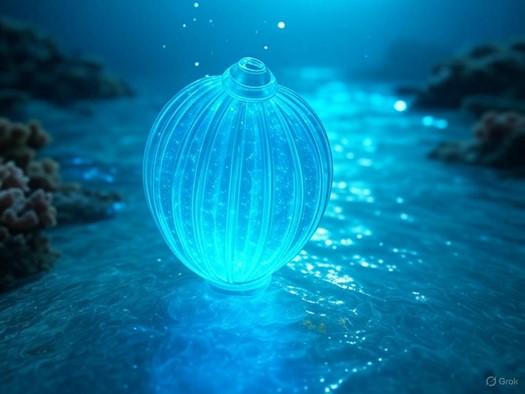
Perception of Activation: The Aquatic Harmonizer, a shell-shaped whistle in the world of Saṃsāra, emits vibrant azure hues and resonant tones when activated, creating a multisensory experience that resonates with both the user and observers. This common Tier 1 item, with its +3 Animal Call Bonus and gill slot, facilitates communication with aquatic creatures, and its activation produces distinct sensory and extrasensory perceptions. Below is a detailed exploration of these perceptions from the user’s and observer’s perspectives, including positives and negatives, across the five senses and additional metaphysical senses like the Mind’s Eye and magical awareness.
- User’s Perspective
- Sight: When the user blows the Aquatic Harmonizer, it glows with a vibrant azure light that pulses rhythmically, casting shimmering reflections on nearby surfaces. The light dances like sunlight filtering through ocean waves, creating a mesmerizing pattern of blue hues that seem to ripple outward. If underwater, the glow illuminates bioluminescent corals and fish, enhancing the underwater spectacle.
- Sound: The user hears a resonant tone emanating from the Harmonizer, a blend of a whale’s haunting song and the gentle lapping of waves. The sound varies based on the user’s intent—soft and soothing for calming creatures, or sharp and commanding for aggressive summons. The tone reverberates through the user’s body, particularly if they have gills, creating a sensation of harmony with the sea.
- Touch: The Harmonizer feels warm to the touch as it activates, its shell-like surface vibrating subtly with each note. The user senses a tingling in their hands or gills (if applicable), as if magical energy is flowing through them. The vibration intensifies with the tone’s pitch, creating a tactile connection to the item’s magic.
- Smell: A faint scent of saltwater and kelp wafts from the Harmonizer, evoking the crisp aroma of the ocean. This smell is subtle but invigorating, grounding the user in the aquatic essence of the item’s power.
- Taste: If the user’s lips touch the Harmonizer while blowing, they taste a hint of salt and a metallic tang, reminiscent of ocean spray mixed with the item’s magical essence. This taste lingers briefly, reinforcing the connection to the sea.
- Extrasensory Perceptions:
- Mind’s Eye: The user’s metaphysical ability activates passively, revealing the Harmonizer’s stats: its +3 Animal Call Bonus and gill slot. With active use (requiring a minute of concentration and an identify item), the user visualizes the potential aquatic creatures they can summon, seeing their stats (e.g., a reef shark’s strength or a jellyfish’s bioluminescence) as glowing runes in their mind.
- Magical Awareness: The user feels a surge of magical energy, a tingling warmth that flows from their thoughts through the Harmonizer as a conduit. This awareness confirms the item’s attunement (automatic when held) and the ebb of magic that connects them to aquatic life.
- Emotional Resonance: The user experiences a deep sense of empathy and connection to the sea, feeling the emotions they intend to convey—calmness, urgency, or aggression—mirrored in the Harmonizer’s tones. This can be uplifting but also overwhelming if the user is not emotionally prepared.
- Positives:
- The sensory feedback (vibrant glow, resonant tones, and ocean scent) enhances the user’s immersion, making them feel like a true mediator between land and sea.
- The Mind’s Eye provides strategic insights, allowing the user to summon creatures with confidence, knowing their strengths and weaknesses.
- The emotional resonance fosters a deeper roleplaying experience, encouraging the user to explore their character’s connection to aquatic life.
- Negatives:
- The glowing light and loud tones can attract unwanted attention in unsafe areas (halved AC), making the user a target for predators or foes.
- Overuse of the Mind’s Eye (active activation) may lead to overwhelm, causing temporary debuffs like dizziness or inability to use the ability again without a cooldown.
- The emotional resonance can be a double-edged sword; if the user is stressed or conflicted, the Harmonizer may amplify these feelings, leading to unintended tones that confuse summoned creatures.
- Observer’s Perspective
- Sight: Observers see the Aquatic Harmonizer glow with a vibrant azure hue, its light pulsing in sync with the tones it emits. The glow creates a halo effect around the user, illuminating the surroundings with a blue shimmer. In underwater environments, the light interacts with bioluminescent flora, creating a dazzling display that draws the eye. On land, the glow stands out starkly against darker environments like caves or jungles.
- Sound: The resonant tones are audible to observers, sounding like a mix of a distant whale call and the rhythmic crash of waves. The sound carries far, especially in open or enclosed spaces, and can evoke a sense of wonder or unease depending on the tone’s intent. Observers might hear faint echoes of the user’s emotional intent—calm melodies for defense, or sharp notes for offense.
- Touch: Observers don’t directly touch the Harmonizer, but they may feel a subtle vibration in the air or water as the tones resonate. In underwater settings, the vibrations create ripples that observers can sense on their skin or gills, adding a tactile layer to the experience.
- Smell: Observers catch a faint whiff of saltwater and kelp, carried by the magical aura of the Harmonizer. The scent is stronger in enclosed spaces like caves, where it lingers, but dissipates quickly in open air or underwater currents.
- Taste: Observers don’t taste anything directly, but if they’re close to the user in an underwater environment, they might sense a salty tang in the water as the Harmonizer’s magic interacts with the surroundings, subtly altering the water’s flavor.
- Extrasensory Perceptions:
- Mind’s Eye: Observers with the Mind’s Eye (all sentient beings in Saṃsāra) passively perceive the Harmonizer’s basic stats: its name, rarity (Common), and purpose (communication with aquatic life). With active use, they might identify its +3 Animal Call Bonus and gill slot, seeing these as glowing symbols in their mind.
- Magical Awareness: Observers sense a ripple of magical energy emanating from the Harmonizer, a faint hum that resonates with Saṃsāra’s high-magic environment. They can tell the item is a conduit for the user’s magic, though they may not feel the full extent of its power.
- Emotional Resonance: Observers feel a subtle emotional pull from the Harmonizer’s tones, mirroring the user’s intent. A soothing melody might calm them, while an aggressive tone might make them tense or alert, even if they don’t fully understand the user’s goal.
- Positives:
- The visual and auditory spectacle of the Harmonizer’s activation can inspire awe in observers, enhancing the user’s reputation as a communicator with aquatic life.
- The magical ripple can reassure allies, confirming the user’s control over the situation, especially in defensive scenarios where summoned creatures create barriers.
- The emotional resonance can foster group cohesion, as observers feel the user’s intent (e.g., calmness in a tense situation), aligning the party’s emotions.
- Negatives:
- The bright glow and loud tones can reveal the party’s position in unsafe (halved AC) or deathly areas (nullified AC), drawing the attention of monsters or foes.
- Observers without aquatic affinity might find the saltwater scent or vibrations unsettling, especially if they’re unfamiliar with the Harmonizer’s purpose.
- The emotional resonance can be disruptive; an aggressive tone might unsettle allies, causing tension or fear, particularly if they misinterpret the user’s intent.
- Broader Implications in Saṃsāra
- Roleplaying Opportunities: The sensory and extrasensory perceptions encourage immersive roleplay. Users might describe the tingling in their gills as “the sea’s heartbeat,” while observers narrate the azure glow as “a beacon of the deep.” These perceptions deepen the narrative, tying characters to Saṃsāra’s aquatic themes.
- Strategic Considerations: The Harmonizer’s activation can be a double-edged sword. In designated safe areas (tripled AC), the glow and sound are less risky, allowing users to focus on the positives (e.g., summoning allies). In deathly areas (nullified AC), the negatives dominate, as the sensory output might attract overwhelming threats.
- Cultural Context: In aquatic communities like Abyssara, the Harmonizer’s activation is seen as a sacred act, and observers might react with reverence, joining in with their own harmonizing chants. In land-based megacities like Starhaven, the item’s use might be viewed as exotic, drawing curiosity or skepticism from observers.
The activation of the Aquatic Harmonizer creates a rich, multisensory experience that immerses both user and observer in Saṃsāra’s high-magic world. Its sensory and extrasensory effects enhance roleplay, offering opportunities for strategic and emotional engagement, while also presenting risks that characters must navigate carefully.
Azure Resonator Crafting Recipe
- Materials Needed
- Azure Coral (1 large piece): Harvested from the bioluminescent reefs of Saṃsāra, this coral naturally emits a faint blue glow and resonates with magical energy. It forms the main body of the Resonator.
- Seashell Fragments (5 small pieces): Collected from Saṃsāra’s beaches, these fragments are used to shape the Resonator’s mouthpiece and reinforce its structure.
- Kelp Fibers (10 strands): Durable and flexible, these fibers are used to bind the components and channel magical energy through the item.
- Mana-Infused Pearl (1): A small pearl imbued with magical energy, sourced from underwater emporiums or crafted by enchanting a regular pearl with a minor mana crystal. It amplifies the Resonator’s tones.
- Elemental Water Essence (1 vial): A magical liquid derived from elemental water, often traded in coastal markets, used to infuse the Resonator with aquatic affinity.
- Elemental Fire Essence (1 vial): A magical liquid derived from elemental fire, used in tandem with the water essence to create a balanced magical resonance.
- Tools Required
- Carving Knife: A precise tool for shaping the azure coral and seashell fragments, often enchanted to handle magical materials without shattering them.
- Steam-Powered Drill: A small, handheld device fueled by magical steam (combining elemental water and fire), used to hollow out the coral and create sound channels.
- Binding Loom: A mechanical loom powered by magic circuits, used to weave the kelp fibers into a durable binding material.
- Infusion Crucible: A magical device that blends elemental essences with physical materials, often found in arcane workshops or coastal forges.
- Polishing Cloth: A soft cloth infused with minor enchantments to polish the Resonator, enhancing its glow and magical conductivity.
- Skill Requirements
- Crafting (Aquatic Artifacts) – Novice Level: The crafter must have basic training in crafting items tied to aquatic magic, understanding how to channel water-based energies.
- Magical Infusion – Novice Level: The crafter needs rudimentary knowledge of infusing items with magical essences, ensuring the Resonator can conduct magic as a conduit.
- Harmonizing – Basic Proficiency: The crafter must be able to test the Resonator’s tones, requiring a basic ability to harmonize with aquatic creatures (similar to the skill needed to use the item effectively).
- Crafting Steps
- Prepare the Azure Coral: Using the carving knife, carefully shape the large piece of azure coral into a shell-like form, approximately 4 inches long and 3 inches wide. Carve vertical ridges along its surface to mimic the Aquatic Harmonizer’s design, ensuring the coral’s natural glow is preserved.
- Hollow the Coral: Use the steam-powered drill to hollow out the coral, creating a central chamber for sound resonance. Drill a small hole at the top to form the mouthpiece, ensuring it aligns with the chamber for proper airflow.
- Shape the Seashell Fragments: Carve the five seashell fragments into thin, curved pieces using the carving knife. Attach four fragments around the coral’s exterior to reinforce its structure, and shape the fifth into a mouthpiece cap, securing it over the drilled hole with a small kelp fiber knot.
- Weave the Kelp Fibers: Using the binding loom, weave the 10 strands of kelp fibers into a single, durable cord. Wrap the cord around the coral and seashell fragments, securing them tightly while leaving the mouthpiece accessible. The kelp fibers will channel magical energy through the item.
- Infuse the Pearl: Place the mana-infused pearl into the infusion crucible. Add a few drops of elemental water essence and elemental fire essence, then activate the crucible to blend the essences into the pearl. This process takes 10 minutes and imbues the pearl with balanced magical resonance.
- Embed the Pearl: Insert the infused pearl into the hollow chamber of the coral, securing it with a small knot of kelp fiber. The pearl will amplify the Resonator’s tones and enhance its +3 Animal Call Bonus.
- Infuse the Resonator: Pour the remaining elemental water essence and elemental fire essence over the assembled Resonator in the infusion crucible. Activate the crucible for 5 minutes to infuse the item with aquatic affinity, ensuring it can connect with underwater creatures.
- Polish the Resonator: Use the polishing cloth to buff the Resonator’s surface, enhancing its azure glow and smoothing any rough edges. This step also strengthens the item’s magical conductivity, ensuring it can serve as a conduit for the user’s thoughts.
- Test the Resonator: Blow gently into the mouthpiece to test the Resonator’s tones. The crafter, using their basic harmonizing proficiency, should hear a resonant sound similar to a whale’s call, confirming the item’s functionality. If the tone is off, adjust the mouthpiece or re-infuse with elemental essences as needed.
- Attune the Resonator: Hold the Resonator for at least 1 minute to attune it (per Saṃsāra’s attunement rules for held items). This step ensures the item is ready for use, granting its +3 Animal Call Bonus and gill slot functionality.
The completed Azure Resonator mirrors the Aquatic Harmonizer’s stats: Common rarity, Tier 1, +3 Animal Call Bonus, and gill slot. It glows with a vibrant azure hue and can be used to communicate with and attract aquatic creatures, making it a valuable tool for adventurers in Saṃsāra’s aquatic environments.
Song of the Sea Whisper
In the ancient days of Saṃsāra, when the oceans roared with untamed magic and the islands were but whispers of dreams, there existed a tale, passed through generations, of a sacred relic known as the Sea Whisper. This artifact, now called the Aquatic Harmonizer, was forged by the Aqua Sages, a people of water and light, whose voices could tame the tides. The story, etched in fragmented scrolls and sung in broken chants, has been poorly translated from an even older tongue, its meanings shrouded in the mists of time. Yet, it remains the most known legend of the Sea Whisper, a tale of harmony, hubris, and the deep’s eternal song.
In the dawn of the third cycle, when the gods still walked among the 73 islands, there lived a sage named Thalra, a daughter of the Aqua Sages, whose hair shimmered like coral under moonlight. Thalra was not like her kin, who spoke to the waves with ease. Her voice was weak, her magic frail, and the sea creatures shunned her calls. The Aqua Sages, keepers of the ocean’s balance, crafted tools to speak with the deep—shells that sang with the breath of the gods. But Thalra, being unworthy in their eyes, was denied such a gift. She sat upon the cliffs of Coralspire, gazing at the endless waters, her heart heavy with longing to join the symphony of the sea.
One eve, as the twin moons cast their silver glow, Thalra heard a cry from the abyss—a mournful wail that stirred her soul. It was the voice of Kaelith, a great leviathan, whose scales were as blue as the deepest trench, and whose eyes held the sorrow of eons. Kaelith was trapped, bound by chains of shadow forged by the Umbral Kin, a tribe of cave-dwellers who sought to harness the leviathan’s power to flood the islands and claim their riches. Thalra, though weak, felt the call of duty. She descended into the depths, her breath held by a charm of kelp, her hands trembling with fear.
In the dark waters, Thalra found Kaelith, his massive form thrashing against the chains, his cries shaking the ocean floor. She tried to speak, but her voice was but a whisper in the roaring tide. The Umbral Kin, cloaked in darkness, mocked her, their laughter like the grinding of stone. “Foolish sage,” they hissed, “the sea does not heed the weak. Leave, or be swallowed by the deep!” Thalra, though terrified, refused to flee. She remembered the tales of her kin, of shells that could sing the ocean’s song, and in her desperation, she gathered what she could—fragments of coral, a pearl glowing with faint magic, and strands of kelp that pulsed with life.
With hands unsteady, Thalra carved the coral into a shell, her fingers bleeding from the sharp edges. She bound the pieces with kelp, her tears mixing with the saltwater, and placed the pearl within, praying to the gods for aid. Her craft was crude, a far cry from the works of her kin, but her heart poured into it a longing so pure that the gods themselves took notice. The god of waves, Maris, touched the shell with a breath of magic, and it glowed with an azure light, its form humming with power. Thalra named it the Sea Whisper, for it spoke what her voice could not.
She blew into the shell, and a sound emerged—a tone so pure, so resonant, that the waters stilled. It was the song of the sea itself, a melody of creation and harmony. Kaelith ceased his thrashing, his eyes meeting Thalra’s, and in that moment, they understood one another. The leviathan’s strength surged, and with Thalra’s song guiding him, he shattered the chains of shadow, sending the Umbral Kin fleeing into the depths. But the battle was not without cost. The Umbral Kin, in their retreat, unleashed a curse upon the waters—a tide of darkness that poisoned the reefs and drove the creatures mad.
Thalra, now bonded with Kaelith through the Sea Whisper, journeyed across the islands to heal the ocean’s wounds. She traveled to the floating cities of Skyloft Nexus, where airships carried her over poisoned waters, and to the underwater realms of Abyssara, where merfolk joined her cause. With each blow of the Sea Whisper, she called forth creatures of the deep—jellyfish to purify the waters, sharks to guard the reefs, and whales to sing the poison away. Her song grew stronger, her voice no longer a whisper but a chorus, and the Aqua Sages, once dismissive, bowed to her as their greatest.
Yet Thalra’s heart grew heavy with pride. She believed the Sea Whisper was hers alone, a gift of her making, and she forgot the gods who had blessed it. She sought to command the ocean itself, to bend its will to hers, and called upon Kaelith to flood the lands of her enemies. The leviathan, loyal to her song, obeyed, but the gods were angered. Maris, who had given the Sea Whisper its power, descended in a tempest, his voice like thunder across the waves. “Thalra,” he roared, “you were to heal, not to destroy! The sea is not yours to command!” With a wave of his hand, he stripped the Sea Whisper of its divine blessing, leaving it a mere tool, its light dimmed, its song weakened.
Thalra fell to her knees, her pride broken, and Kaelith, sensing her sorrow, nudged her gently with his massive snout. She blew the Sea Whisper one last time, a soft, mournful note, and the leviathan sang with her—a duet of forgiveness and understanding. The Aqua Sages took the Sea Whisper, vowing to pass its tale to all who would listen, and Thalra returned to the cliffs of Coralspire, where she spent her days teaching others to sing with the sea, her voice now a guide for the humble.
The Sea Whisper, now known as the Aquatic Harmonizer, remains a tool of harmony, its azure glow a reminder of Thalra’s journey那么, its song a lesson for those who would seek to command the sea without humility.
Moral of the Story: True power lies not in dominion, but in harmony with the world around us; for pride can dim even the brightest light, while humility can heal the deepest wounds.
Suggested conversions to other systems:
Call of Cthulhu (7th Edition)
Item Name: Whispering Conch
- Description: A shimmering, azure-hued conch shell etched with ancient aquatic motifs, said to have been crafted by a lost civilization that revered the Deep Ones. When blown, it emits a haunting tone that resonates with the primal instincts of aquatic entities, drawing them near or influencing their behavior.
- Stat Block:
- Type: Magical Artifact
- Sanity Cost: 1d4 Sanity points to attune (one-time); 1 Sanity point per use if the user fails a POW roll (see below).
- Requirements: Must be held and blown (takes 1 round). User must have at least 20% in the Swim skill to attune properly, reflecting familiarity with aquatic environments.
- Effects:
- Call Aquatic Creatures: The user can attempt to summon or communicate with nearby aquatic creatures (within 100 yards). Roll a POW test (difficulty based on creature’s power: Easy for fish, Hard for Deep Ones). Success attracts the creature or allows basic communication (e.g., conveying simple emotions or requests). Failure risks the creature becoming hostile (Keeper’s discretion).
- Influence Behavior: If communication is established, the user can attempt a Charm or Persuade roll (opposed by the creature’s POW) to influence its behavior (e.g., calm aggression, request aid). Failure may provoke hostility or confusion.
- Drawbacks:
- Each use risks attracting unwanted attention from eldritch aquatic entities (1-in-6 chance per use, cumulative). If this occurs, the Keeper rolls on an aquatic encounter table (e.g., Deep Ones, Shoggoths).
- Prolonged use (more than 3 times per day) requires a CON roll (Hard difficulty). Failure causes 1d6 damage from magical strain, as the conch’s power overwhelms the user.
- Balance Notes: The Sanity cost and risk of attracting eldritch entities tie the item to Call of Cthulhu’s horror themes, while the POW and skill checks ensure it’s not a guaranteed solution, reflecting the system’s focus on investigation and risk. The Swim skill requirement grounds its use in the user’s familiarity with aquatic settings.
Blades in the Dark (Version 1.0)
Item Name: Siren’s Shell
- Description: A glowing shell-whistle, its azure surface etched with spiraling patterns, used by scoundrels to call upon the creatures of Doskvol’s murky canals and underground rivers. It’s a favored tool among smugglers and whisperers who navigate the city’s waterways.
- Stat Block:
- Type: Arcane Implement (Fine Quality)
- Load: 1 (Light)
- Effects:
- Summon Aquatic Aid: When used (1 action, 1 stress), the wielder rolls Attune to call aquatic creatures (e.g., eels, ghostfish) from nearby waters. Effect is based on Tier:
- Tier 0-1: Limited (a small swarm of fish distracts a foe, 1 tick on a clock).
- Tier 2-3: Standard (a large eel attacks, dealing minor harm, 2 ticks).
- Tier 4+: Great (a spectral whale disrupts a boat, 3 ticks).
- Add +1d to the roll if used in a canal or underground river (reflecting Saṃsāra’s aquatic focus).
- Communicate with Creatures: As a downtime activity (1 action), the wielder can use Attune to communicate with summoned creatures, gaining +1d on a Gather Information roll about waterways or aquatic threats.
- Summon Aquatic Aid: When used (1 action, 1 stress), the wielder rolls Attune to call aquatic creatures (e.g., eels, ghostfish) from nearby waters. Effect is based on Tier:
- Drawbacks:
- Heat: Each use adds +1 Heat to the crew’s score, as the shell’s eerie tones draw attention from Doskvol’s authorities or rival gangs.
- Overuse: Using the shell more than twice per score risks a 4-segment “Aquatic Backlash” clock. Each additional use ticks the clock by 1. If filled, an aquatic threat (e.g., a vengeful spirit-shark) emerges, creating a new obstacle.
- Balance Notes: The Siren’s Shell integrates with Blades’ focus on risk-reward mechanics, using Attune to reflect its magical nature in Saṃsāra. The Heat and backlash clock ensure its use has consequences, fitting the system’s gritty tone, while the fine quality and +1d bonus in aquatic settings maintain its utility.
Dungeons & Dragons (5th Edition)
Item Name: Tidal Caller
- Description: This azure shell-whistle, adorned with intricate aquatic motifs, hums with the magic of the sea. When blown, it emits a resonant tone that calls or influences aquatic creatures, a relic from a world where magic flows like the tides.
- Stat Block:
- Type: Wondrous Item, Common
- Attunement: Requires attunement (1 minute, per Saṃsāra’s rules).
- Properties:
- Animal Call Bonus: Grants a +3 bonus to Wisdom (Animal Handling) checks made to interact with aquatic creatures (e.g., fish, sharks, whales).
- Call Aquatic Ally: As an action, the user can blow the Tidal Caller to summon a friendly aquatic beast (CR 1/4 or lower, e.g., a Giant Crab or Reef Shark) within 60 feet, provided water is nearby. The creature acts on its own initiative, obeys simple commands (no action required), and remains for 1 minute or until killed. Once used, this feature cannot be used again until the next dawn.
- Communicate with Aquatics: The user can cast Speak with Animals (aquatic creatures only) once per day without expending a spell slot.
- Drawbacks:
- Using the Call Aquatic Ally feature in a hostile environment (e.g., a battlefield) has a 10% chance (roll a d10, triggers on a 1) to attract a hostile aquatic creature (CR 1/2, e.g., a Hunter Shark) instead, which attacks indiscriminately.
- The item occupies a “gill slot” (a custom magic item slot per Saṃsāra’s rules), limiting the user to one such item unless they have additional slots from other gear.
- Balance Notes: The Tidal Caller fits D&D 5e’s magic item framework, with its Common rarity and limited uses (once per day) ensuring balance at low levels. The +3 bonus mirrors Saṃsāra’s stat, translated into Wisdom (Animal Handling), while the summon and Speak with Animals reflect its communication focus. The drawback adds risk, aligning with Saṃsāra’s unsafe areas, and the gill slot ties it to the setting’s mechanics.
Knave (2nd Edition)
Item Name: Ocean’s Echo
- Description: A small, azure shell-whistle that glows faintly, etched with swirling patterns. It sings with the voice of the sea, calling forth aquatic allies or soothing their tempers, a tool for adventurers in a world of endless waters.
- Stat Block:
- Type: Magic Item
- Slots: 1 (occupies 1 inventory slot; also counts as a “gill slot” per Saṃsāra’s rules, limiting the user to 1 such item unless modified by gear).
- Effects:
- Call Aquatic Creature: Once per day, the user can blow the Ocean’s Echo (1 action) to summon an aquatic creature (HD 1, e.g., a swarm of fish or a giant eel). The creature has 1d6 HP, an armor defense of 11, and deals 1d4 damage with a bite or slam. It acts as an ally for 10 minutes or until killed, obeying simple commands. Roll a d6 when summoning: on a 1, the creature is hostile instead (reflecting Saṃsāra’s risks).
- Pacify Aquatics: The user can blow the Echo (1 action) to calm a hostile aquatic creature within 30 feet. The creature makes a morale check with disadvantage (roll 2d6, take the lower result). If it fails, it becomes neutral for 1 hour or until provoked.
- Drawbacks:
- Using the Echo in a dangerous area (GM discretion, akin to Saṃsāra’s unsafe areas) imposes a -1 penalty to the user’s armor defense for 1 hour, as the tones attract unwanted attention (e.g., predators or rivals).
- The item cannot be used if the user is carrying more items than their Constitution score allows (per Knave’s slot rules), as the gods of Saṃsāra impose limits on magical gear (20 minus tier, adjusted for Knave).
- Balance Notes: Knave’s minimalist system focuses on simplicity and risk. The Ocean’s Echo provides utility through summoning and pacification, balanced by its once-per-day limit and hostile summon chance. The armor penalty reflects Saṃsāra’s unsafe area mechanics (halved AC), adapted for Knave, and the slot restriction ties into both Knave’s inventory system and Saṃsāra’s gear limits.
Fate Core System (2013)
Item Name: Coral Songshell
- Description: A shimmering azure shell that hums with the magic of Saṃsāra’s oceans, the Coral Songshell allows its bearer to call upon aquatic creatures and forge bonds with the denizens of the deep. Its resonant tones echo the primal songs of the sea, making it a tool for adventurers in a world of endless waters.
- Stat Block:
- Type: Extra (Magical Item)
- Aspects:
- Voice of the Deep
- Azure Resonance
- Fragile Conduit of Magic
- Stunt:
- Call of the Tide: Once per scene, you can spend a fate point to create an advantage like Summoned Aquatic Ally or Aquatic Distraction by blowing the Songshell. Roll Create an Advantage using Lore (or an appropriate skill like Survival) against a difficulty of +2. Success creates a situation aspect with one free invoke, representing an aquatic creature (e.g., a swarm of fish or a giant eel) aiding you for the scene. Success with style grants two free invokes.
- Stress and Consequences:
- Using the Songshell in a high-stress environment (e.g., a conflict in an unsafe area, per Saṃsāra’s halved AC equivalent) risks the Fragile Conduit of Magic aspect being compelled. If compelled, the Songshell temporarily loses its power for the scene, requiring a downtime action to re-attune (1 minute, per Saṃsāra’s rules).
- Cost: 1 Refresh (to reflect its power and the risk of overuse).
- Balance Notes: The Coral Songshell integrates with Fate’s narrative focus through aspects and stunts, allowing flexible use in aquatic scenarios. The fate point cost and compel risk balance its power, reflecting Saṃsāra’s high-magic setting and the item’s limitations (e.g., attracting unwanted attention in unsafe areas). The Refresh cost ensures it’s a meaningful choice for character builds.
Numenera & Cypher System (Numenera 2nd Edition, Cypher System 2023)
Item Name: Aquavox Resonator
- Description: A glowing, shell-shaped device from the Ninth World (Numenera) or a fantasy setting (Cypher System), the Aquavox Resonator emits harmonic vibrations that resonate with aquatic life. Its azure surface pulses with energy, a relic of a lost civilization that mastered the art of water magic, akin to Saṃsāra’s Aqua Sages.
- Stat Block (Numenera):
- Type: Cypher
- Level: 3
- Usable: Handheld device (1 minute to attune, per Saṃsāra’s rules).
- Effect: When blown (an action), the Resonator summons an aquatic creature (level 2, e.g., a school of fish or a small eel) within short range (50 feet) if water is present. The creature acts as an ally for 10 minutes, following simple commands (e.g., distract a foe, scout underwater). Alternatively, the user can communicate with an aquatic creature, understanding and conveying simple ideas (difficulty 3 Intellect task).
- Drawback: Using the Resonator in a dangerous area (equivalent to Saṃsāra’s unsafe areas) increases the difficulty of all tasks by 1 step for 1 hour, as the vibrations attract predators (GM intrusion: a level 4 aquatic predator appears).
- Depletion: 1 in 1d20 (checked after each use).
- Stat Block (Cypher System):
- Type: Artifact
- Level: 3
- Effect: When activated (1 action, 1 minute to attune), the user can summon a level 2 aquatic creature (as above) or communicate with one (difficulty 3 Intellect task). The creature remains for 10 minutes or until killed.
- Drawback: As above, with a GM intrusion risk in dangerous areas.
- Depletion: 1 in 1d20.
- Balance Notes: The Aquavox Resonator fits Numenera’s focus on weird tech and Cypher’s flexible artifact system. Its level 3 status reflects its Common rarity in Saṃsāra, with limited uses (depletion) ensuring balance. The drawback mirrors Saṃsāra’s unsafe area mechanics, and the attunement time aligns with the setting’s rules, grounding it in the world’s lore.
Pathfinder (2nd Edition)
Item Name: Seasong Whistle
- Description: A shell-shaped whistle glowing with azure light, the Seasong Whistle channels the magic of Saṃsāra’s oceans to call and communicate with aquatic creatures. Crafted by ancient sages, it hums with the primal energy of the deep, a tool for adventurers navigating the world’s endless waters.
- Stat Block:
- Item Level: 1
- Type: Wondrous Item
- Price: 15 gp (adjusted from Saṃsāra’s 150 gold pieces, scaled for Pathfinder’s economy).
- Bulk: L
- Usage: Held in 1 hand; requires 1 minute to attune (per Saṃsāra’s rules).
- Traits: Common, Magical, Evocation
- Activate [two-actions] (Auditory, Manipulate)
- Effect: You blow the Seasong Whistle, emitting a resonant tone. Choose one of the following effects:
- Summon Aquatic Ally: You summon a Tiny or Small aquatic creature (e.g., a fish swarm or a crab, equivalent to a 0-level creature like a Fish from the Bestiary). The creature appears in a body of water within 30 feet and follows simple commands for 1 minute or until killed. It has AC 14, HP 5, and can make a basic attack (Strike +4, 1d4 damage). This effect has a cooldown of 1 hour.
- Speak with Aquatics: You gain the ability to communicate with aquatic creatures for 10 minutes, as per the Speak with Animals spell (but only for aquatic creatures).
- Drawbacks:
- Using the Whistle in a hazardous area (akin to Saṃsāra’s unsafe areas) imposes a -1 circumstance penalty to your AC for 1 minute, as the tones attract hostile creatures (GM discretion).
- The Whistle occupies a “gill slot” (per Saṃsāra’s rules), limiting the user to one such item unless they have additional slots from other gear.
- Balance Notes: The Seasong Whistle aligns with Pathfinder 2e’s item level and action economy, with its level 1 status matching its Common rarity in Saṃsāra. The two-action activation and 1-hour cooldown balance its summoning ability, while the Speak with Animals effect provides utility. The AC penalty reflects Saṃsāra’s unsafe area mechanics, and the gill slot ties it to the setting’s gear restrictions.
Savage Worlds (Adventure Edition, SWADE)
Item Name: Wavechanter’s Shell
- Description: A glowing azure shell from the magical world of Saṃsāra, the Wavechanter’s Shell sings with the voice of the sea, calling aquatic allies or soothing their tempers. It’s a tool for explorers in a realm where magic powers steam-driven industry and the oceans teem with life.
- Stat Block:
- Type: Arcane Device
- Weight: 1
- Cost: 150 silver (scaled from Saṃsāra’s 150 gold pieces, adjusted for Savage Worlds’ economy).
- Effects:
- Summon Aquatic Ally: As an action (1 minute to attune, per Saṃsāra’s rules), the user blows the Shell (Spirit roll, TN 4). On a success, they summon a Minor aquatic creature (e.g., a school of fish or a crab, stats as a Swarm: Agility d6, Smarts d4 (A), Spirit d6, Strength d4, Vigor d6, Fighting d6, Pace 5, Parry 5, Toughness 4, Special: Swarm). The creature acts as an ally for 1 minute or until killed. On a raise, the creature gains +1 Toughness. On a failure, the Shell cannot be used again for 1 hour.
- Communicate with Aquatics: The user can spend 1 Power Point (PP) to communicate with aquatic creatures for 10 minutes (Spirit roll, TN 4). Success allows basic communication (e.g., conveying emotions or requests).
- Drawbacks:
- Using the Shell in a dangerous area (per Saṃsāra’s unsafe areas) imposes a -1 penalty to the user’s Parry for 1 minute, as the tones attract threats (GM discretion: a Wild Card aquatic predator may appear).
- The Shell counts as 1 of the 10 activated items an avatar can attune (per Saṃsāra’s rules), limiting its use if the user is at their attunement cap.
- Balance Notes: The Wavechanter’s Shell fits Savage Worlds’ fast-paced mechanics, using Spirit rolls to reflect its magical nature in Saṃsāra. The summon and communication effects are balanced by the roll requirement and PP cost, while the Parry penalty mirrors Saṃsāra’s unsafe area mechanics. The attunement limit ties it to the setting’s gear restrictions, ensuring compatibility.
Shadowrun (6th Edition)
Item Name: Thalassic Charm
- Description: A shimmering azure shell-whistle, etched with arcane runes, the Thalassic Charm channels the primal magic of Saṃsāra’s oceans to commune with aquatic spirits and creatures. In the Sixth World, it’s a rare talisman used by shamans and eco-mages to navigate Seattle’s polluted waterways or summon aid from the deep, relying on magic rather than tech to fit Saṃsāra’s tech-free setting.
- Stat Block:
- Type: Magical Focus (Enchanting)
- Force: 2
- Availability: 8R
- Cost: 4,000 nuyen (scaled from Saṃsāra’s 150 gold pieces, adjusted for Shadowrun’s economy).
- Karma to Bond: 2
- Effect:
- Summon Aquatic Spirit: As a Complex Action (1 minute to attune, per Saṃsāra’s rules), the user can summon a minor water spirit (Force 2, stats as a Spirit of Water: Body 3, Agility 4, Reaction 3, Strength 2, Charisma 4, Intuition 4, Logic 3, Willpower 4, Edge 2, Essence 2, Initiative 7 + 1d6, Skills: Assensing 4, Astral Combat 4, Perception 4, Unarmed Combat 4, Powers: Engulf, Materialization). Roll Conjuring + Magic vs. Spirit’s Force (2). Success binds the spirit for 1 hour or until a service is completed (e.g., distract a foe, scout underwater). On a glitch, the spirit is hostile.
- Commune with Aquatics: The user can roll Intuition + Magic (Threshold 3) to communicate with aquatic creatures within 50 meters, understanding and conveying simple ideas for 10 minutes.
- Drawbacks:
- Using the Charm in a polluted or dangerous area (akin to Saṃsāra’s unsafe areas) imposes a -1 dice pool penalty to all Physical tests for 1 hour, as the Charm’s magic attracts hostile spirits or creatures (GM discretion: a toxic water spirit may appear).
- The Charm counts as 1 of the 10 activated items an avatar can attune (per Saṃsāra’s rules), limiting its use if the user is at their attunement cap.
- Balance Notes: The Thalassic Charm fits Shadowrun’s magic system by acting as a focus, with its Force 2 status reflecting its Common rarity in Saṃsāra. The summoning and communication effects are balanced by dice rolls and the risk of glitches, while the penalty in dangerous areas mirrors Saṃsāra’s unsafe area mechanics (halved AC). The lack of tech components ensures compatibility with Saṃsāra’s setting.
Starfinder (1st Edition, 2023 Updates)
Item Name: Aquasonic Resonator
- Description: A shell-shaped whistle glowing with azure light, the Aquasonic Resonator is a magical artifact from Saṃsāra, adapted for Starfinder as a non-technological relic that harnesses mystical energies to communicate with aquatic life across alien oceans. It’s prized by explorers on water-rich planets, relying on magic rather than tech to align with Saṃsāra’s constraints.
- Stat Block:
- Type: Magic Item
- Level: 2
- Price: 750 credits (scaled from Saṃsāra’s 150 gold pieces, adjusted for Starfinder’s economy).
- Bulk: L
- Usage: Held in 1 hand; requires 1 minute to attune (per Saṃsāra’s rules).
- Effect:
- Summon Aquatic Creature: As a standard action, the user can blow the Resonator to summon a Tiny or Small aquatic creature (e.g., a fish swarm or crab, stats as a Tiny creature: AC 12, HP 5, Attack +4 [1d4 damage], Fort +2, Ref +2, Will +0) within 30 feet, provided water is present. The creature acts as an ally for 1 minute or until killed, following simple commands. This effect has a 1-hour cooldown.
- Speak with Aquatics: The user can activate the Resonator (1 action) to communicate with aquatic creatures within 30 feet for 10 minutes, as per the telepathic message spell (limited to aquatics).
- Drawbacks:
- Using the Resonator in a hostile environment (akin to Saṃsāra’s unsafe areas) imposes a -1 penalty to the user’s AC for 1 minute, as the tones attract hostile creatures (GM discretion: a CR 1 aquatic predator may appear).
- The Resonator occupies a “gill slot” (per Saṃsāra’s rules), limiting the user to one such item unless they have additional slots from other gear.
- Balance Notes: The Aquasonic Resonator fits Starfinder’s magic item framework, with its level 2 status reflecting its Common rarity in Saṃsāra. The summon and communication effects are balanced by the cooldown and limited duration, while the AC penalty mirrors Saṃsāra’s unsafe area mechanics. The non-technological nature ensures it fits Saṃsāra’s tech-free setting, focusing on mystical energy instead.
Traveller (2nd Edition, Mongoose Publishing 2022 Update)
Item Name: Nautical Resonator
- Description: A shell-shaped whistle from Saṃsāra, the Nautical Resonator glows with azure light and emits tones that resonate with aquatic life. In Traveller’s universe, it’s a rare artifact from a low-tech, magic-rich world, used by explorers to interact with alien sea creatures on ocean planets. Its analog, magical nature fits Saṃsāra’s tech-free constraints, relying on mystical resonance rather than electronics.
- Stat Block:
- Type: Artifact
- TL: 0 (reflecting Saṃsāra’s lack of advanced tech).
- Weight: 0.5 kg
- Cost: Cr 1,500 (scaled from Saṃsāra’s 150 gold pieces, adjusted for Traveller’s economy).
- Effect:
- Summon Aquatic Ally: The user can blow the Resonator (1 minute to attune, per Saṃsāra’s rules; 1 significant action) to summon a small aquatic creature (stats as a Small Animal: Stamina 2d6, Strength 1d6, Dexterity 2d6, Instinct 2d6, Pack 1d6, Skills: Survival 1, Attack 0/1d6 damage). Roll Survival 8+ (DM +1 if on an ocean planet). Success summons the creature for 10 minutes, following basic commands (e.g., scout, distract). Failure means the Resonator cannot be used again for 1 hour.
- Communicate with Aquatics: The user can roll Persuade 8+ to communicate with aquatic creatures within 15 meters for 10 minutes, conveying simple ideas (e.g., request aid, calm aggression).
- Drawbacks:
- Using the Resonator in a dangerous environment (akin to Saṃsāra’s unsafe areas) imposes a -1 DM to all physical skill checks for 1 hour, as the tones attract hostile creatures (GM discretion: a larger aquatic predator may appear).
- The Resonator counts as 1 of the 10 activated items an avatar can attune (per Saṃsāra’s rules), limiting its use if the user is at their attunement cap.
- Balance Notes: The Nautical Resonator fits Traveller’s exploration focus, with its TL 0 status aligning with Saṃsāra’s tech-free setting. The Survival and Persuade rolls ensure skill-based use, while the drawback reflects Saṃsāra’s unsafe area mechanics. The attunement limit ties it to the setting’s gear restrictions, maintaining compatibility.
Warhammer Fantasy Roleplay (4th Edition)
Item Name: Siren’s Call
- Description: A glowing azure shell-whistle, the Siren’s Call is a relic from Saṃsāra, imbued with the magic of the deep to summon and commune with aquatic creatures. In the Old World, it’s a tool for sailors and adventurers navigating the seas, said to be blessed by Manann, god of the oceans, though its use risks drawing the wrath of the deep.
- Stat Block:
- Type: Trapping (Magical)
- Encumbrance: 1
- Price: 15 gold crowns (scaled from Saṃsāra’s 150 gold pieces, adjusted for WFRP’s economy).
- Availability: Rare
- Effect:
- Summon Aquatic Ally: As an Action (1 minute to attune, per Saṃsāra’s rules), the user can blow the Siren’s Call to summon a minor aquatic creature (e.g., a school of fish or a crab, stats: WS 25, BS 0, S 20, T 20, I 30, Ag 30, Dex 20, Int 10, WP 20, Fel 10, W 5, Skills: Swim 50, Attacks: 1, Damage +2). Roll Charm Animal (TN based on user’s Fel) to summon the creature for 10 minutes, following simple commands (e.g., distract a foe, scout). On a failure, the Call cannot be used again for 1 hour. On a Critical Failure, a hostile creature (e.g., a sea serpent) appears.
- Commune with Aquatics: The user can roll Language (Magick) to communicate with aquatic creatures within 10 yards for 10 minutes, conveying simple ideas (e.g., request aid, calm aggression).
- Drawbacks:
- Using the Call in a dangerous area (akin to Saṃsāra’s unsafe areas) imposes a -10 penalty to Toughness tests for 1 hour, as the tones attract hostile sea creatures (GM discretion: a creature of Manann’s wrath may appear).
- The Call occupies a “gill slot” (per Saṃsāra’s rules), limiting the user to one such item unless they have additional slots from other gear.
- Balance Notes: The Siren’s Call fits WFRP’s gritty tone, with its summoning and communication effects balanced by skill rolls and the risk of critical failures. The Toughness penalty reflects Saṃsāra’s unsafe area mechanics, and the gill slot ties it to the setting’s gear limits. The Manann connection adds flavor, aligning with WFRP’s lore while maintaining Saṃsāra’s magical focus.
Comments
One response to “Aquatic Harmonizer”
[…] Aquatic Harmonizer (Tier 1): Must be in pristine condition. Its physical components will be repurposed, and its aquatic-song magic will be extracted. […]