
From: Vigilism
Lore: Within the captivating lore of Vigilism, the Blade of Precision is a renowned weapon said to be forged with unmatched craftsmanship and imbued with the magical influence of Auron, the Ever-Watchful. It is believed that Auron bestowed this exceptional blade upon their most loyal followers, enabling them to exhibit unrivaled precision and accuracy in combat. The Blade of Precision is seen as a symbol of Auron’s divine guidance and serves as a testament to the devotee’s commitment to the path of Vigilism.
Tier One Stats:
- Attack Bonus: The Blade of Precision grants a +2 bonus to attack rolls, reflecting the enhanced precision and accuracy it provides to its wielder.
- Critical Focus: The weapon increases the chance of scoring a critical hit, granting a +1 bonus to critical hit confirmation rolls or an increased critical hit multiplier.
Skills Gained:
- Weapon Proficiency: The Blade of Precision requires proficiency in either swords or daggers to wield effectively. The wielder gains proficiency in the chosen weapon type or gains advantage on related skill checks.
Cost and Requirements:
- Cost: The Blade of Precision is a rare and sought-after weapon, making it relatively expensive and difficult to acquire. It may require a significant investment or be obtained through quests, challenges, or as a reward for exceptional combat prowess and dedication to Vigilism.
- Requirements: To wield the Blade of Precision, one must demonstrate a deep understanding of Vigilism’s teachings, proficiency in the chosen weapon type (swords or daggers), and earn the approval of experienced Vigilists who recognize their commitment to the faith.
Tags:
- Magical Weapon: The Blade of Precision is a weapon infused with Auron’s magical influence, granting unique properties beyond conventional weapons.
- Precision Enhancement: The blade enhances the wielder’s precision and accuracy, providing a bonus to attack rolls and critical hit potential.
- Divine Favor: The weapon represents the divine favor bestowed by Auron upon the chosen followers, marking them as instruments of precision and justice.
- Additional: Vigilism, Auron, Weapon, Sword, Dagger, Accurate, Critical, Skill, Precise, Divine
The Blade of Precision, being a valuable and revered weapon associated with Vigilism, would not be commonly sold through traditional means. Instead, it is typically obtained through specific channels within the Vigilism community. Here’s more information on how it might be acquired and utilized:
- Sanctuaries of Insight: The primary place where the Blade of Precision might be obtained is within the Sanctuaries of Insight, the temples and strongholds of Vigilism. These sanctuaries serve as repositories of knowledge and training grounds, where the clergy and experienced Vigilists safeguard and occasionally bestow such exceptional weapons upon individuals who have demonstrated exceptional combat prowess and unwavering dedication to the faith.
- Trials of Valor: To acquire the Blade of Precision, followers may need to undergo rigorous trials or tests that assess their skill in combat, their understanding of Vigilism’s principles, and their ability to wield the weapon effectively. These trials could involve demonstrating precision in combat, showcasing strategic thinking, or proving one’s commitment to justice and protecting the innocent.
- Personal Quests: The Blade of Precision might be acquired through personal quests or quests assigned by the clergy or prominent figures within Vigilism. These quests could involve pursuing justice, thwarting evildoers, or overcoming significant challenges that test the follower’s resolve and combat prowess.
Regarding usage, the Blade of Precision is primarily utilized in environments and scenarios that require exceptional precision and accuracy in combat:
- Combat Encounters: The Blade of Precision shines in combat situations, allowing the wielder to strike with unmatched accuracy, target weak points, and bypass enemy defenses. It is a weapon that delivers decisive blows and maximizes the chances of critical hits, providing an advantage over adversaries.
- Dueling and Challenges: The Blade of Precision is often showcased in duels and challenges, where followers of Vigilism can prove their combat skills and demonstrate their mastery over precision and accuracy. It is a weapon that emphasizes finesse, technique, and the ability to strike with calculated precision.
- Guardianship and Protection: The Blade of Precision is used by followers to protect the innocent, uphold justice, and defend against forces of darkness. It serves as a symbol of their commitment to Vigilism and their dedication to safeguarding the realms from threats.
The Blade of Precision is not an item that can be readily bought or sold, but rather obtained through specific trials, quests, or tests that recognize the follower’s combat prowess, devotion, and alignment with the principles of Vigilism. It is a highly regarded weapon within the Vigilism community, representing the divine favor bestowed by Auron and the unwavering commitment of its wielder to justice and precision in combat.
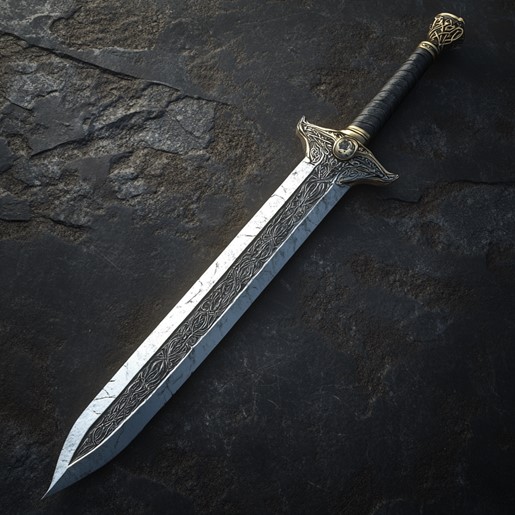
Perception of Activation: The Blade of Precision, unlike some magical items, doesn’t have a dramatic, visually obvious “activation.” Its power is subtle and inherent, a constant enhancement of the wielder’s abilities rather than a sudden burst of energy. However, there are subtle perceptual shifts that accompany drawing and focusing on the blade.
- User’s Perspective:
- Sight: The world doesn’t visually change, but the user’s perception of it sharpens. Details become crisper, edges more defined. Movement seems slightly slower, allowing the user to track fast-moving objects with greater ease. The polished surface of the blade itself might seem to reflect light with preternatural clarity, almost as if guiding the user’s gaze.
- Hearing: Ambient sounds don’t become amplified, but the user’s ability to distinguish them improves. They might pick up on the subtle sounds of an enemy’s breathing, the faint creak of a floorboard, or the whisper of a blade being drawn. Irrelevant noises fade into the background, allowing the user to focus on sounds that are tactically significant.
- Touch: The grip of the blade feels incredibly secure and comfortable, as if it were custom-made for the user’s hand. There’s a subtle sense of balance and control. The weight of the blade feels right, neither too heavy nor too light. The user might feel a faint tingling sensation in their hand and arm, a subtle flow of energy connecting them to the weapon.
- Smell: No specific scent is associated with the blade’s activation.
- Taste: No direct taste is associated with the blade.
- Extra-Sensory (Mind’s Eye): This is where the blade’s true power manifests. The user experiences a heightened sense of awareness. They become acutely aware of their own body, their position in space, and the movements of those around them. They might experience brief, intuitive flashes of insight – predicting an enemy’s next move, identifying a weak point in their defense, or sensing a hidden danger. There’s a feeling of certainty and precision.
- Extra-Sensory (Emotional): The blade promotes a state of calm focus and unwavering determination. Feelings of fear, doubt, or hesitation are suppressed, replaced by a sense of purpose and control. The user feels ready and confident in their abilities. This is not a berserker rage, but rather a state of heightened awareness and disciplined action.
- Observer’s Perspective:
- Sight: There’s no visible aura or glow emanating from the blade. However, an astute observer might notice a subtle change in the wielder’s posture and demeanor. They might appear more alert, focused, and graceful in their movements. Their gaze might seem more intense and unwavering. The blade itself, with its polished surface and intricate etchings, might catch the light in a way that draws the eye.
- Hearing: No audible changes are associated with the blade itself. However, the wielder’s movements might become quieter and more precise, making them harder to detect by sound.
- Smell: No olfactory changes are associated with the blade.
- Extra-Sensory (General): Individuals with sensitivity to magic or mental energy might feel a subtle sense of focus and intent emanating from the wielder. There’s a feeling that the wielder is operating at a heightened level of awareness and precision.
- Extra-Sensory (Mind’s Eye): Other’s with the Mind’s eye ability would see the user’s combat rolls increase slightly.
- Positives:
- Enhanced Accuracy: The blade significantly improves the user’s accuracy and precision in combat.
- Improved Reflexes: The heightened awareness and sharpened senses allow the user to react more quickly to danger.
- Increased Confidence: The feeling of control and certainty boosts the user’s confidence in their abilities.
- Subtle Power: The blade’s lack of flashy displays makes it less likely to attract unwanted attention.
- Negatives:
- Tunnel Vision: The focus on immediate threats might make the user less aware of broader context or less receptive to subtle cues outside of combat.
- Emotional Detachment: While generally positive in combat, the emotional control could lead to a degree of detachment from the consequences of their actions.
- Over-Reliance: The user might become overly dependent on the blade’s enhancements, neglecting to develop their own natural skills.
- Subtle, Not Invincible: The blade enhances existing abilities; it doesn’t grant superhuman powers or make the wielder invulnerable. It’s a tool for improving precision, not a guarantee of victory.
Recipe: Forging a Blade of Precision — This recipe details the arduous and precise process of crafting a blade that emulates the legendary Blade of Precision. True replication is beyond mortal skill, as the original is blessed by Auron, but this method aims to create a weapon of exceptional quality and accuracy.
- Materials Needed:
- High-Carbon Steel (Folded):
- Source: Steel specifically prepared for high-performance blades. It must be high-carbon steel, suitable for folding and tempering. The source should be reputable, ensuring the steel’s purity and consistency. Ideally, the steel should come from a region known for its skilled blacksmiths or a mine with a reputation for producing exceptional ore.
- Quantity: Approximately 3 pounds (for a sword) or 1 pound (for a dagger). This will account for material lost during forging.
- Silver Ingot (Pure):
- Source: 99.9% pure silver.
- Quantity: 1 ounce
- Grindstone Dust (Diamond):
- Source: Fine dust collected from the grinding of diamonds. This is used in the final polishing stages to achieve a mirror sheen.
- Quantity: 1/2 ounce
- Honing Oil (Blessed):
- Source: A specially prepared oil, often used by weaponsmiths and blessed by a priest of a deity associated with skill, precision, or craftsmanship (in this case, a priest of Vigilism, ideally). This may require a separate quest or significant expense to obtain.
- Quantity: 4 ounces
- Quenching Oil:
- a blend of quick cooling oils.
- 8 ounces.
- Ink of Precision:
- A special mix of rare components used by scribes and cartographers.
- 1 vial
- Charcoal:
- High-grade charcoal used for sketching.
- 2 sticks.
- High-Carbon Steel (Folded):
- Tools Required:
- Forge (High-Temperature): A forge capable of reaching and maintaining the high temperatures required for folding and tempering steel.
- Anvil (High-Quality): A sturdy anvil, ideally made of hardened steel, with a smooth, flat surface.
- Hammers (Various Sizes and Shapes): A range of hammers for different stages of the forging process, including a heavy hammer for drawing out the steel, a lighter hammer for shaping, and a planishing hammer for smoothing the surface.
- Tongs (Various Sizes): Tongs for securely holding the hot steel during forging.
- Grinding Wheel (Multiple Grits): A grinding wheel with various grits, from coarse to fine, for shaping and sharpening the blade.
- Honing Stones (Multiple Grits): A set of honing stones with progressively finer grits, for achieving a razor-sharp edge.
- Polishing Wheel and Compounds: A polishing wheel and various polishing compounds, including the diamond dust, for achieving a mirror finish.
- Etching Tools: Fine tools for etching intricate designs into the blade.
- Leatherworking Tools: Tools for crafting the hilt, including knives, awls, needles, and a stitching horse (if the grip will be leather-wrapped).
- Containers:
- Heatproof
- 3 containers
- Skill Requirements:
- Master Blacksmith (20+ ranks): Forging the blade, including folding the steel, shaping it, and achieving the correct temper, requires exceptional skill and experience.
- Expert Weaponsmith (15+ ranks): Crafting the hilt and ensuring the blade is properly balanced requires specialized weaponsmithing knowledge.
- Expert Etcher/Engraver (10+ ranks): Creating the intricate designs on the blade requires a steady hand and artistic skill.
- Expert in a relevant Lore skill (e.g., Vigilism, Warfare) (10+ ranks): Understanding the principles of precision and combat is crucial for imbuing the blade with its intended properties.
- Crafting Steps:
- Preparation (1 week): The forging process should ideally begin during a period associated with precision and focus, such as a new moon (symbolizing new beginnings and clear intent) or a day dedicated to Auron. The smith should meditate and prepare mentally, focusing on the principles of precision and accuracy. The workshop must be meticulously cleaned and organized.
- Folding the Steel (4 weeks): This is the most crucial and time-consuming step. The high-carbon steel must be repeatedly heated, folded, and hammered, removing impurities and creating a layered structure that enhances the blade’s strength and flexibility. This process should be repeated at least 15 times, and ideally more than 20, to achieve a fine grain structure. Each fold must be performed with precision and consistency.
- Shaping the Blade (2 weeks): Once the steel is properly folded, it must be carefully shaped into the desired blade form (sword or dagger). This involves drawing out the steel, shaping the point and edges, and creating the fuller (if desired). The smith must constantly check the blade’s balance and symmetry, making adjustments as needed.
- Quenching and Tempering (1 week): The blade must be quenched (rapidly cooled) in a precisely controlled medium (often a specific type of oil or water) to harden the steel. It must be quenched multiple times. Then, it must be tempered (heated to a lower temperature and allowed to cool slowly) to reduce brittleness and achieve the desired balance of hardness and flexibility. This is a critical step that determines the blade’s final properties.
- Grinding and Sharpening (2 weeks): Using the grinding wheel and progressively finer grits, carefully grind the blade to its final shape, removing any imperfections and creating a sharp, even edge. Then, use the honing stones to achieve a razor-sharp edge.
- Polishing (1 week): Using the polishing wheel and various compounds, including the diamond dust, polish the blade to a mirror sheen. This is not merely cosmetic; it reduces friction and enhances the blade’s cutting ability.
- Etching (1 week): Using the etching tools, carefully etch the chosen designs (Eye of Auron, geometric patterns, runes) onto the blade, near the hilt. The etching must be precise and aesthetically pleasing. Use charcoal for the layout and Ink of Precision to make the etching permanent.
- Hilt Construction (2 weeks): Craft the hilt components (grip, guard, pommel) from the chosen materials. The hilt must be designed for a secure and comfortable grip, allowing for precise control over the blade. If the grip is leather-wrapped, the leather must be carefully selected, treated, and stitched.
- Assembly (1 day): Carefully assemble the blade and hilt, ensuring a secure and balanced fit. The blade should be perfectly aligned with the hilt, and there should be no wobble or looseness.
- Consecration (1 day): The final step is a consecration ritual. This might involve:
- Presenting the blade to a priest of Vigilism for blessing.
- Using the blade to perform a series of precise cutting exercises, demonstrating its accuracy.
- Meditating on the principles of Vigilism while holding the blade.
- Anointing the blade with the blessed honing oil.
This recipe is extremely demanding, requiring mastery of multiple crafts and access to rare and high-quality materials. The resulting blade, while not possessing the full divine power of the original Blade of Precision, will be an exceptional weapon, capable of extraordinary accuracy and cutting performance. The process itself is a testament to the dedication and skill required to achieve true precision.
Flickering Edge
Why You Shouldn’t Trust Shiny Things in Caves (Probably)
Gather ’round, ye flea-bitten recruits, and listen to a tale… mangled by time, misinterpreted by morons, and probably embellished by bards with more ale than accuracy. This… this is the saga, as best as anyone can remember, of the… Flickering Edge. Or maybe it was the Whispering Point. Or… the Stabby Thing of… Accuracy. The ancient texts… they’re… a mess.
Long, long ago, before armor was… comfortable, before maps were… accurate (or even… existent, really), there was… a warrior. Or maybe a hunter. Or… possibly… a very confused baker with a… sharp… bread knife. They were called… Swift Hand. Or maybe Quick Finger. Or… Possibly… Margaret. The translations are… problematic, to say the least.
This Swift Hand, they were… known. For… something. Probably. Maybe for… their… swiftness? Or their… quickness? Or… their… suspiciously good… bread? The scrolls are… frustratingly vague.
One day, Swift Hand, they were… hunting. Or… maybe… fighting. Or… possibly… looking for… a lost… spatula. In a… cave. A dark cave. A very dark cave. Full of… rocks. And… bats. And… probably… other things. Unpleasant things.
And there, in the… darkness, they saw… it. A… glimmer. A… shimmer. A… faint, flickering light. It was… the Blade. The… Blade of… Precision. Or… Pointiness. Or… Possibly… “Don’t-Touch-That-You-Idiot-It’s-Probably-Cursed.” The original name is… lost.
This Blade, it was… beautiful. Or maybe it was just… very, very sharp. It… whispered. Or maybe it… creaked. Or… possibly… it just had a… loose… hilt. It was… hard to tell. It… felt… right. In Swift Hand’s… hand. Or maybe it just… fit… awkwardly. The scrolls… contradict each other. Frequently.
Swift Hand, they… took it. Obviously. Shiny thing in a dark cave? What could… possibly… go wrong? They… left the cave. And… something… changed. Or… maybe… nothing changed. The texts… are… maddening.
Suddenly, their… aim. It was… better. Much better. They could… hit… things. Small things. Far away things. Moving things. Things that… really didn’t want to be… hit. They could… throw… the Blade. (Not recommended, it was… expensive). And it would… hit. Always. Or… mostly… always. Sometimes. Occasionally. Depending on… the wind. And… the… phase of the… moon. And… whether or not they had… eaten… cheese. (The cheese thing is… unexplained).
Swift Hand, they… became… famous. A… legend. A… master… of… blade-… stuff. They… fought. In… battles. And… duels. And… probably… arguments over… who got the last… piece of… surprisingly good… bread.
They… won. Mostly. Sometimes. Occasionally. The Blade, it… helped. Or… maybe it… hindered. It was… complicated. It made them… precise. Too precise. They… obsessed. Over… details. Over… angles. Over… the… perfect… strike.
They… planned. Every… move. Every… parry. Every… insult. (Insults were… very important… in ancient… combat. Apparently). They… analyzed. Their… opponents. Their… weaknesses. Their… surprisingly bad… fashion choices.
But… in their… obsession… with… precision, they… lost… something. Spontaneity. Instinct. The… joy… of… a good… old-fashioned… brawl. They became… predictable. Rigid. A… robot. Of… stabby-… ness.
One day, Swift Hand, they… faced their… greatest… challenge. A… rival. Or maybe a… monster. Or… possibly… a very large, angry… tax collector. The scrolls are… damaged… here. This… opponent, they were… different. They were… chaotic. Unpredictable. Wild. They… didn’t… follow the… rules.
Swift Hand, they… planned. They… analyzed. They… calculated. They… prepared. The… perfect… strike. The… ultimate… maneuver. The… most… devastating… insult. (Something about… their opponent’s… mother… and a… goat. The translations are… disturbing).
But… it… failed. The… opponent… moved. Unexpectedly. Illogically. Impossibly. They… didn’t… follow the… plan. They… improvised.
And… Swift Hand, they… lost. Their… Blade. Their… confidence. Their… surprisingly good… reputation. They were… defeated. By… chaos. By… randomness. By… someone who… didn’t… play by the… rules.
Swift Hand, they… learned. Something. Important. Something about… balance. Something about… adapting. Something about… the… limitations of… pure… precision.
And the Blade? The… Blade of… whatever? It… vanished. Disappeared. Lost. Or… maybe… someone just… put it… back in the… cave. Waiting. For… someone else. Someone… foolish enough to… trust a… shiny thing… in the… dark.
Moral of the Story: Precision is good, but don’t let it make you a predictable, inflexible, bread-knife-wielding (maybe) robot. Embrace a little chaos. Adapt to the unexpected. And… seriously… don’t trust shiny things in caves. They’re probably cursed. Or… at least… very, very dirty. And… maybe… guarded by… bats. Or… worse. Much, much worse. Also, be nice with tax collectors.
Suggested conversions to other systems:
Call of Cthulhu (7th Edition)
Blade of Whispering Steel
- (Unique Artifact)
- This blade, whether a sword or a dagger, is unnaturally sharp and perfectly balanced. It seems to hum faintly when drawn, whispering secrets of angles and weak points to the wielder, but also blurring the line between reality and the cosmic truth.
- Damage:
- Sword: 1d8 + DB + 1
- Dagger: 1d4 + DB + 1
- Sanity Cost: 0/1d4 Sanity loss to wield the blade for the first time. Each successful attack that deals damage costs the wielder 1 Sanity point.
- Effects:
- Uncanny Accuracy: The wielder gains a +20% bonus to any Fighting skill roll made with the blade.
- Whispers of Madness: Each time the blade is used to attack, the wielder must make a successful POW x 5 roll. Failure means they glimpse a fleeting, horrifying truth about the universe, suffering an immediate Bout of Madness (see Keeper Rulebook). The specific nature of this vision should be tailored to the campaign and the wielder’s existing knowledge of the Mythos.
- Ignores Armor (Partially): The blade’s unnatural sharpness allows it to partially bypass mundane armor. Reduce the target’s armor protection by 2 points when calculating damage. This does not affect armor provided by magical means or unnatural toughness.
- Investigator Adaptation: The Blade of Whispering Steel is an extremely dangerous weapon for Investigators. It offers a significant combat advantage, but at a tremendous risk to their sanity and mental stability. It’s an item that should only be used in the most desperate situations, and even then, with extreme caution. Prolonged use will almost certainly lead to permanent insanity. It is much more likely to be found in the hands of a cultist or a deranged antagonist.
Blades in the Dark
The Razor’s Edge
- (Fine Weapon, Ghostly, Precise)
- This blade, whether a sword or a dagger, is impossibly sharp and seems to anticipate the wielder’s intentions. It whispers with the voices of dead duelists and forgotten assassins.
- Quality: 4
- Usage:
- Harm: When used as a weapon, it inflicts harm as appropriate for its size (light or medium), but always has the deadly tag.
- Precision: Grants +1d to Finesse rolls when using the blade for precise attacks, feints, or disarms.
- Ghostly Whispers: The wielder can spend 1 stress to gain a brief, cryptic clue about an opponent’s fighting style, weaknesses, or immediate intentions (GM’s discretion). This represents the whispers of the blade’s former wielders.
- Properties:
- Ghostly: The blade is partially phased into the ghost field, making it slightly translucent and unsettling to look at.
- Precise: The blade is exceptionally well-balanced and sharp, making it ideal for skilled combatants.
- Crew Adaptation: The Razor’s Edge is a perfect weapon for a crew of Assassins, Shadows, or Bravos. It rewards skill and finesse, providing a significant advantage to characters who specialize in close-quarters combat. The “Ghostly Whispers” ability adds a unique element of risk and reward, encouraging players to push their luck for valuable information.
Dungeons & Dragons (5e)
Blade of Precision
- (Weapon (any sword or dagger), Very Rare, Requires Attunement)
- This exquisitely crafted blade is perfectly balanced and unnaturally sharp. It seems to guide the wielder’s hand, enhancing their accuracy and precision.
- Properties:
- +2 Weapon: You gain a +2 bonus to attack and damage rolls made with this magic weapon.
- Finesse: Even if it is a sword that normally lacks the finesse property, this weapon can be used with Dexterity for attack and damage rolls.
- Improved Critical: Your weapon attacks score a critical hit on a roll of 19 or 20.
- Precision Strike: Once per turn, when you hit a creature with an attack using this weapon, you can choose to deal an extra 1d6 damage of the weapon’s type.
- Campaign Adaptation: The Blade of Precision is a powerful weapon, suitable for a rogue, fighter, ranger, or any character who relies on weapon attacks and precision. It’s a significant upgrade over a standard +2 weapon, thanks to the Improved Critical and Precision Strike features. The GM should consider the overall power level of the campaign and the other magical items available to the players before introducing this item.
Knave
Whispersteel Blade
- A blade of impossibly sharp, perfectly balanced steel. It seems to hum faintly when drawn.
- Bonus: +2 to rolls made to attack with this weapon.
- Abilities (Roll 1d6 each time the blade is used to attack):
- Critical Strike: The attack deals double damage.
- Precise Thrust: The attack ignores the target’s armor.
- Feint: Gain advantage on your next attack roll against the same target.
- Disarming Strike: The target must make a Defense roll or drop their weapon.
- Off-Balance: You are momentarily distracted by the blade’s whispers, suffering disadvantage on your next action.
- Maddening Whisper: You hear a disturbing whisper from the blade, suffering 1d4 damage to your Wisdom score (recoverable with rest).
- Drawback: Each time the blade is drawn, there is a 1 in 6 chance that it attracts the attention of unwanted otherworldly entities (GM’s discretion).
- Character Adaptation: The Whispersteel Blade is a high-risk, high-reward weapon. Its significant attack bonus and potential for powerful abilities make it a tempting choice for any character, but the random nature of its abilities and the potential drawback encourage careful consideration and tactical thinking. The GM should use the drawback to introduce complications and challenges, forcing the player to weigh the benefits of the blade against its potential dangers.
Fate (Core/Condensed)
Blade of Precision
- (Artifact)
- This exquisitely crafted blade, whether a sword or a dagger, seems to anticipate its wielder’s movements, guiding their strikes with uncanny accuracy.
- Aspects:
- High Concept: Uncannily Precise Blade
- Trouble: Whispers Distracting Truths (can lead to hesitation or mental instability)
- Other Aspects: Forged with Divine Guidance, Razor-Sharp Edge, Perfectly Balanced
- Skills:
- Provides a +2 bonus to overcome obstacles or create advantages related to attacking with the blade, disarming opponents, or performing precise cuts.
- Can be used to forcefully attack using Fight (as normal).
- Stunts:
- Flawless Strike: Spend a Fate point to declare that an attack with the blade automatically hits, ignoring any active defenses. This represents a perfectly aimed strike that finds a gap in the opponent’s armor.
- Disarming Flourish: Spend a Fate point to automatically disarm an opponent after a successful attack with the blade, provided they are wielding a weapon.
- Whispers of Weakness: Spend a Fate point to gain a cryptic clue about an opponent’s weaknesses, vulnerabilities, or fighting style. This could be a hidden injury, a fear, or a flaw in their technique.
- Consequences: The blade can be used to absorb physical consequences, but doing so can expose the wielder to the blade’s unsettling whispers. Each time a consequence is absorbed, add a “Haunted by Whispers” aspect to the blade.
- Character/Campaign Integration: The Blade of Precision is well-suited for a character who values skill, precision, and finesse in combat. The aspects and stunts encourage a proactive, tactical playstyle. The “Whispers Distracting Truths” aspect provides opportunities for roleplaying and potential complications, as the wielder struggles to balance the blade’s benefits with its unsettling influence.
Numenera/Cypher System
Blade of Whispering Edges
- (Artifact, Level 6)
- This blade, crafted from an unknown metal that seems to hum with internal energy, is impossibly sharp and perfectly balanced. It whispers secrets of angles and weak points to the wielder, but also carries a subtle psychic burden.
- Level: 6
- Form: Sword or Dagger (choose one)
- Effect:
- Precision Strike: Reduces the difficulty of all attack rolls made with the blade by two steps.
- Armor Piercing: The blade ignores 2 points of Armor.
- Whispers of Insight: The wielder can spend 2 Intellect points to gain a +3 bonus to their next action related to combat, observation, or understanding an opponent.
- Psychic Backlash: Each time “Whispers of Insight” is used, the wielder must make an Intellect defense roll (difficulty 6). Failure results in 1d4 Intellect damage (ignores Armor) as the blade’s psychic whispers overwhelm them.
- Depletion: 1 in 1d20 (each time “Whispers of Insight” is used). If depleted, the blade becomes inert and must be recharged by exposing it to a specific type of psychic energy (e.g., a psychic cypher, a creature with strong psychic abilities, a location with significant psychic residue).
- Character/Campaign Integration: The Blade of Whispering Edges fits perfectly into the Numenera setting, representing a piece of advanced technology from a prior world. Its power is balanced by the risk of psychic backlash and the need for a specific recharge method, encouraging careful use and creating opportunities for exploration and discovery.
Pathfinder (Second Edition)
Blade of Precision
- (Artifact)
- This exquisitely crafted blade, whether a sword or a dagger, is a masterpiece of weaponsmithing, imbued with magic that enhances accuracy and precision.
- Usage: held in 1 hand; Bulk: L (dagger) or 1 (sword)
- Traits: Artifact, Magical, Evocation
- Weapon Type Sword or Dagger.
- Properties:
- +2 striking weapon: You gain a +2 item bonus to attack rolls with this weapon, and it has striking runes, increasing the weapon damage dice to two.
- Finesse: You can use your Dexterity modifier instead of your Strength modifier on attack rolls using this weapon.
- Critical Focus: When you critically hit with this weapon, you can apply one of the following effects in addition to the weapon’s normal critical hit effect:
- Disarm: The target drops one item they are holding (GM’s choice).
- Hamstring: The target’s speed is reduced by 10 feet until the end of their next turn.
- Off-Balance: The target is flat-footed until the end of their next turn.
- Precise Strike: Once per round, when you hit a creature with this weapon, you can add your weapon’s damage die an additional time. (with a striking rune this is three total dice.)
- Campaign Integration: The Blade of Precision is a powerful weapon appropriate for a mid- to high-level campaign. It’s particularly well-suited for rogues, fighters, rangers, and swashbucklers, or any character who values precision and finesse in combat. The GM should consider the impact of the blade’s bonuses and special abilities on the campaign’s balance and adjust challenges accordingly.
Savage Worlds (Adventure Edition)
Blade of Precision
- (Artifact)
- This perfectly balanced blade, whether a sword or a dagger, seems to hum with potential energy, guiding the wielder’s strikes with uncanny accuracy.
- Device Type: Melee Weapon (Sword or Dagger)
- Damage:
- Sword: Str+d8+2
- Dagger: Str+d4+2
- Properties:
- AP 2: The blade ignores 2 points of Armor.
- Precise: The blade grants a +2 bonus to Fighting rolls made with it.
- Parry +1: The design grants a +1 to parry.
- Uncanny Aim: Once per round, the wielder can spend a Benny to reroll a Fighting attack made with the blade. They must take the second result.
- Notes: The blade is exceptionally well-crafted and radiates a subtle aura of precision and focus.
- Campaign Integration: The Blade of Precision is a valuable weapon for any character who relies on melee combat. Its bonuses to Fighting, Armor Piercing, and Parry make it a significant asset, and the “Uncanny Aim” ability adds an element of tactical flexibility. It’s a suitable reward for a challenging quest, a treasure found in a forgotten armory, or a signature weapon for a skilled warrior. The GM should consider the overall power level of the campaign and the availability of other magical items before introducing this weapon.
Shadowrun (6th World Edition)
Ares “Precision” Blade
- (Weapon Focus, Force 4)
- This blade, whether a katana, combat knife, or other melee weapon, is crafted from advanced materials and incorporates micro-technology that enhances the wielder’s accuracy and focus. It is a favorite among street samurai and adept assassins who value precision over brute force.
- Type: Weapon Focus (Blades) – This means the focus only enhances abilities related to the Blades skill.
- Force: 4 (Determines the maximum number of dice added to relevant tests).
- Availability: 20F (Forbidden, extremely difficult to acquire legally)
- Cost: 48,000¥ (base cost, plus the cost of the weapon itself)
- Weapon Type: Sword or Knife
- Effects:
- +4 Dice: Adds +4 dice to all Blades skill tests made with the bonded weapon.
- Accuracy Enhancement: Increases the weapon’s Accuracy by 2.
- Armor Penetration: The weapon gains an additional -2 AP.
- Called Shot Mastery: The wielder can perform Called Shots with the blade with a reduced penalty (-2 instead of -4).
- Bonding: To bond with the weapon focus, a magician or adept must spend 4 Karma.
- Runner/Campaign Adaptation: The Ares “Precision” Blade is a top-tier weapon focus, suitable for a highly skilled melee combatant. Its high Force, Accuracy bonus, and AP bonus make it incredibly deadly in the right hands. However, its Forbidden availability and high cost mean that acquiring it will likely be a major undertaking. The GM should consider the impact of this weapon on the campaign’s balance and ensure that challenges are appropriately scaled.
Starfinder
Precision Targeting Blade
- (Weapon Fusion, Level 12)
- This adaptation assumes we are adding the properties of the Blade of Precision as a weapon fusion to an existing melee weapon (sword or knife). A fusion adds properties to a weapon, but doesn’t change its base stats.
- Level: 12
- Price: 36,000 credits
- Applicable Weapons: Any melee weapon with the analog, powered, or technological special property.
- Weapon Type: Longsword or Dagger
- Properties:
- Targeting System: When making an attack roll with the fused weapon, you can spend 1 Resolve Point to gain a +4 insight bonus to the attack roll.
- Precision Strike: Once per round, when you hit a creature with the fused weapon, you can deal an additional 2d6 damage of the weapon’s type.
- Keen Edge: The critical hit range of the fused weapon increases by 1. For example, a weapon that normally critically hits on a 20 would now critically hit on a 19 or 20. (This does not stack with other effects that increase critical hit range).
- Character/Campaign Integration: The Precision Targeting Blade fusion is a powerful upgrade for any melee-focused character. It significantly enhances both accuracy and damage output, making it a desirable addition to a soldier’s, operative’s, or solarian’s arsenal. The level 12 requirement and high price reflect its advanced technology and combat effectiveness.
Traveller (Mongoose 2nd Edition)
Precision Blade
- (TL-12 Weapon)
- This blade, whether a sword or a knife, is crafted from advanced materials using precise manufacturing techniques. It is exceptionally sharp, well-balanced, and incorporates subtle gravitic technology that enhances the wielder’s accuracy.
- Tech Level: TL-12
- Weight: As base weapon.
- Weapon Type: Sword or Knife
- Cost: Cr12,000 (plus the cost of the base weapon)
- Effects:
- Damage: As base weapon +2
- Accuracy Enhancement: The blade grants a +2 DM to all Melee (Blades) skill checks made with it.
- Armor Penetration: The blade has an AP of 4.
- Character/Campaign Integration: The Precision Blade is a high-tech weapon, suitable for characters in a campaign with access to advanced technology. Its bonuses to attack rolls and damage make it a formidable weapon in skilled hands. The relatively high cost reflects its advanced materials and manufacturing process.
Warhammer Fantasy Roleplay (4th Edition)
Blade of Focused Strikes
- (Magical Weapon)
- This blade, whether a sword or a dagger, is a masterpiece of weaponsmithing, imbued with magic that enhances the wielder’s precision and focus.
- Encumbrance: As base weapon
- Availability: Very Rare
- Weapon Type: Sword or Knife
- Properties:
- Magical: The blade is considered a magical weapon.
- Precise: The blade grants a +10 bonus to Melee skill tests made with it.
- Fast: The blade has the Fast quality.
- Penetrating: The blade has the Penetrating quality.
- Focused Strikes: Once per round, the wielder can choose to make a Focused Strike with the blade. This attack gains an additional +1 SL (Success Level) on a successful hit.
- Character/Campaign Adaptation: The Blade of Focused Strikes is a powerful weapon, suitable for characters who specialize in melee combat. The combination of the Precise, Fast, and Penetrating qualities, along with the Focused Strikes ability, makes it incredibly effective in skilled hands. It would be a highly sought-after item by duelists, assassins, and elite warriors. The GM should carefully consider the impact of this weapon on the campaign’s balance.